
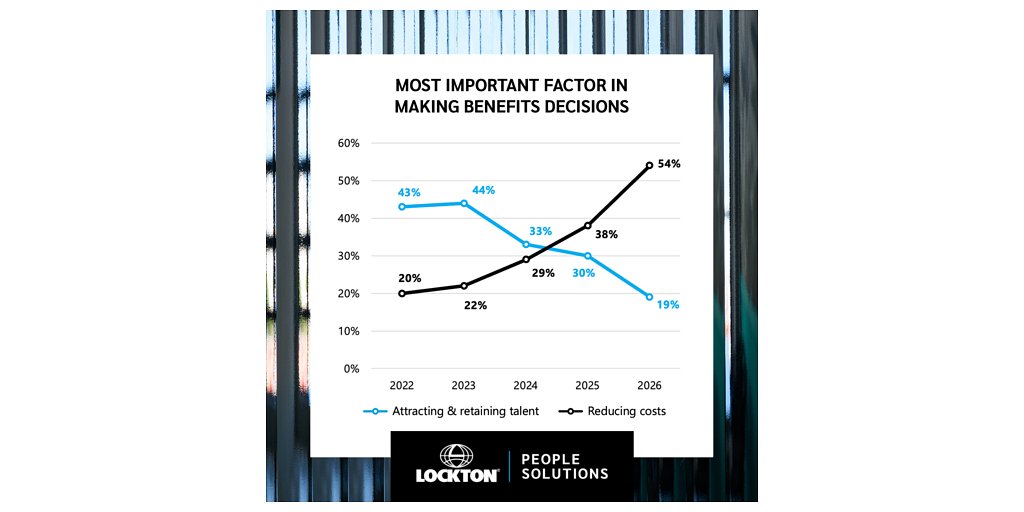
- 54% of employers now rank cost reduction as their top benefits priority, up from 38% in 2025.
- 46% of self-funded plan sponsors would consider international drug sourcing, with 7% already doing so.
Experts warn that while employers are desperate to cut costs, international drug sourcing poses significant legal, safety, and fiduciary risks that could undermine employee trust and long-term healthcare quality.
Employers Eye Risky Drug Sourcing as Healthcare Costs Force a Reset
KANSAS CITY, MO – April 16, 2026 – A seismic shift is underway in corporate America as employers, crushed by the weight of soaring healthcare costs, are now prioritizing aggressive cost-cutting over the long-reigning focus on attracting and retaining talent. A new report from Lockton reveals the startling extent of this pivot: nearly half of self-funded employers are now willing to consider sourcing prescription drugs from international markets, a strategy fraught with legal risks and safety concerns.
The Lockton 2026 National Benefits Survey, which gathered responses from over 1,700 plan sponsors, found that 54% of employers now rank cost reduction as their most important benefits priority. This is a dramatic leap from 38% in 2025 and marks a definitive end to an era dominated by the “war for talent.” In a stunning reversal, attracting and retaining employees, which stood as a top priority for 44% of employers in 2023, has plummeted to just 19%.
“With projected cost trends, employers face sustained challenges heading into 2027 and beyond, as the imperative to reduce costs is increasingly dominant,” stated Shannon Demaree, Executive Vice President at Lockton. “With the labor market softening... how plan sponsors are thinking has decidedly shifted. It’s a lot — organizations are grappling with cost-management strategies, striving to maintain employee experiences, ensure quality care accessibility, and limit disruptions.”
A High-Stakes Gamble in a Legal Gray Zone
The most telling indicator of this desperation is the newfound willingness to look abroad for cheaper medications. The survey found that 46% of self-funded plan sponsors would consider international drug sourcing, while 7% are already doing so. This approach, however, operates in a legal and regulatory minefield.
Under federal law, the importation of prescription drugs by entities other than the original manufacturer is generally prohibited. The U.S. Food and Drug Administration (FDA) has consistently warned that it cannot guarantee the safety, efficacy, or quality of drugs imported outside its secure supply chain, raising the specter of counterfeit, substandard, or improperly stored medications reaching patients. The agency has previously issued cease-and-desist letters to vendors offering such import services, highlighting the danger to employees who trust their health plan to provide safe and legitimate medicines.
For the majority of employers who are self-funded, the Employee Retirement Income Security Act (ERISA) adds another critical layer of risk. ERISA mandates that plan fiduciaries act solely in the best interest of plan participants. Knowingly engaging in a legally ambiguous practice could be viewed as a breach of this fundamental duty, exposing employers to significant legal and financial liabilities should something go wrong.
The Hidden Costs and Industry Headwinds
While the allure of paying 50-75% less for high-cost brand-name drugs is powerful, the financial equation is more complex than it appears. A major hidden cost is the forfeiture of manufacturer rebates, which are a significant component of the U.S. drug pricing system. These rebates can substantially lower the net cost of a drug for a health plan, and losing them could erode or even eliminate the savings gained from international sourcing.
Furthermore, the pharmaceutical industry is staunchly opposed to these programs. Lobbying groups like the Pharmaceutical Research and Manufacturers of America (PhRMA) argue that importation not only threatens the safety of the U.S. drug supply but also undermines the research and development pipeline for new, life-saving therapies. They contend that the high prices in the U.S. market are necessary to fund innovation.
This is not just a domestic issue. The Canadian government, whose country is often seen as the primary source for these programs, has actively pushed back. Citing concerns over potential drug shortages for its own citizens, Canadian health officials have made it clear they cannot and will not serve as a large-scale pharmacy for the United States, adding a significant hurdle of supply chain instability to an already risky proposition.
The Employee Paradox: Balancing Cost Control and Trust
This aggressive push for savings creates a central paradox for employers. According to Lockton’s survey, 81% of respondents said employee impact remains an important consideration when evaluating changes. Employers are caught between the urgent need to control spending and the desire to maintain a competitive benefits package that fosters employee trust and well-being.
Offering internationally sourced drugs with a $0 copay can seem like a win-win, lowering costs for both the plan and the employee. However, it places employees in a difficult position, forcing them to weigh cost savings against potential, albeit unquantified, safety risks. This dynamic could erode the very trust that employers claim they want to preserve, especially as overall satisfaction with benefits is already on the decline due to rising out-of-pocket costs.
“The challenge for employers is not simply cutting spend,” said Chris Bartnik, Senior Vice President at Lockton. “It's finding sustainable ways to manage cost while maintaining a competitive and meaningful benefits offering. This year's survey shows that employers are looking for practical strategies that deliver savings without sacrificing trust, access, or outcomes.”
This search for practical strategies extends far beyond the pharmacy. The survey shows employers are adopting a wide range of tactics, from the foundational to the more progressive. Thirty-nine percent are leveraging narrower, high-performing provider networks to control medical costs, while 30% are implementing specialized cardiometabolic management programs to reduce high-cost claims. On the eligibility front, 23% are now applying spousal surcharges to discourage spouses with other coverage options from joining the plan. This multi-pronged approach demonstrates that employers are leaving no stone unturned in their quest to rein in costs, signaling a fundamental and likely permanent recalibration of the employer-sponsored healthcare landscape.