
- $350 billion: Annual healthcare cost for 21 million Americans covered by PBGH members
- 6-7%: Expected average increase in premiums for 2026 (PBGH report)
- 8.5%-9.5%: Projected rise in medical cost trends (PwC & Aon analyses)
Experts agree that employers are leveraging new legislative tools and data-driven strategies to combat unsustainable healthcare costs, marking a shift from passive acceptance to active market disruption.
Employer Rebellion: Big Business Wages War on Healthcare Costs
OAKLAND, CA – April 15, 2026 – Faced with relentlessly climbing healthcare costs, America's largest employers are moving from frustration to open revolt. A new survey reveals that these corporate giants are no longer willing to write blank checks for health services, instead leveraging new legislative powers and data-driven strategies to force a reckoning on the entire healthcare industry.
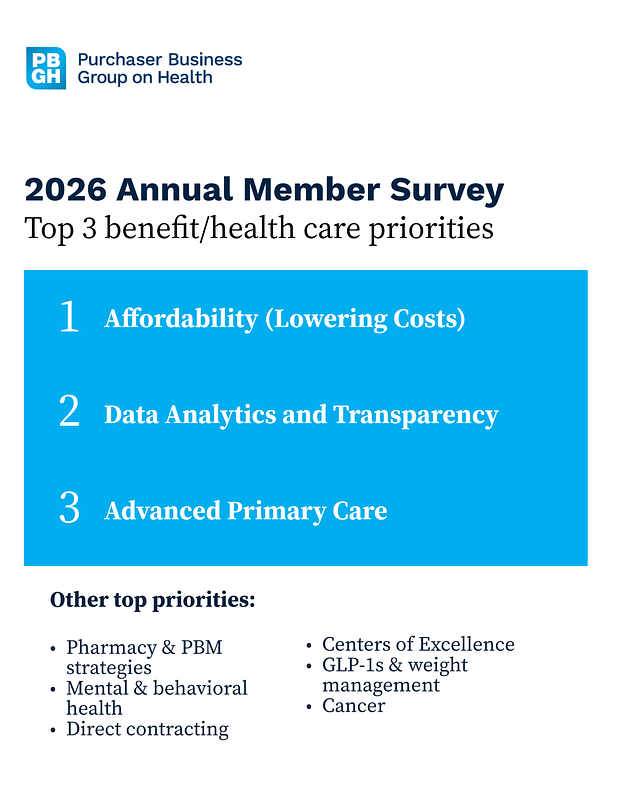
The 2026 Annual Member Survey from the Purchaser Business Group on Health (PBGH), a coalition whose members cover 21 million Americans at a cost of $350 billion annually, confirms that affordability is the resounding top concern for the second year running. But unlike previous years, this concern is now backed by a formidable arsenal of legal tools and a clear playbook for market disruption.
The Legislative Hammer: CAA 2026 Arms Employers
A pivotal development fueling this employer-led charge is the "Consolidated Appropriations Act, 2026" (CAA 2026), signed into law earlier this year. The legislation delivers a powerful blow to the opaque business practices that have long shielded parts of the healthcare system, particularly pharmacy benefit managers (PBMs), from scrutiny.
Research into the act reveals several game-changing provisions. Most notably, the law will mandate that PBMs pass 100% of drug rebates they receive from manufacturers directly to their employer clients. This move is designed to eliminate hidden revenue streams and ensure that negotiated savings benefit the plans and their members, not just the middlemen. The CAA 2026 also imposes strict new transparency requirements, compelling PBMs to provide detailed reports on drug spending, net costs, and their complex arrangements with pharmacies.
This legislative backing has emboldened employers to demand more from their partners. "Thanks to new legislation and transparency requirements, the days of rising health care costs with little to no accountability are rapidly coming to an end," said Michael Costello, a PBGH Board Member and Total Rewards Commercial Strategy Director for NextEra Energy, Inc. "Employers are taking their fiduciary obligations seriously, innovating their procurement strategies and seeking aligned partners that are truly interested in working to address employer needs, not just to maximize their own profits."
A Crisis of Costs Outpacing Inflation
The urgency of this employer pushback is underscored by staggering cost projections that continue to outpace inflation. While the PBGH report notes an expected 6-7% average increase in premiums for 2026, independent industry analyses paint an even more dire picture. Leading consulting firms like PwC and Aon are forecasting medical cost trends to rise by 8.5% and 9.5% respectively, pushing the average cost per employee well above $17,000 for some companies.
These increases are fueled by a perfect storm of factors: a post-pandemic surge in healthcare utilization, rising hospital operating and labor costs, and the proliferation of expensive new therapeutics, including the popular GLP-1 drugs used for diabetes and weight loss. The result is a financial burden that employers—and by extension, their employees—can no longer sustainably absorb, forcing them to seek more aggressive solutions.
“These priorities coupled with the growing frustrations our members are expressing should be a wake-up call for many health care stakeholders who think the status quo is acceptable and that the days of blank checks will never end,” explained Elizabeth Mitchell, President and CEO of PBGH.
The New Playbook: Data-Driven Procurement and Direct Action
In response, employers are tearing up the old procurement playbook of passive annual renewals. The PBGH survey reveals a significant uptick in market activity, with 37% of members conducting a request for proposal (RFP) for their medical plans and 23% for their pharmacy benefits. Furthermore, 27% of these major purchasers have already abandoned traditional PBMs in favor of more transparent, 'non-traditional' alternatives.
This shift is part of a broader movement towards using newly available data to make smarter purchasing decisions. Employers are now leveraging transparency tools to dissect cost and quality variations, which can be significant for the same procedure even within the same geographic area.
This data-first approach is enabling a range of innovative strategies:
* Direct-to-Employer (D2E) Contracting: Companies are increasingly bypassing insurance intermediaries to contract directly with high-performing health systems and providers, negotiating predictable prices and customizing plans to their workforce's specific needs.
* Centers of Excellence (COEs): For complex and costly procedures like joint replacements or cancer care, employers are directing employees to meticulously vetted, high-quality facilities. By bundling payments and covering all costs, including travel, companies are achieving better outcomes and significant savings, with some studies showing cost reductions of over $16,000 per procedure.
* Bundled Payments: Instead of paying for each individual service, employers are using single, all-inclusive payments for an entire episode of care, incentivizing providers to deliver efficient, coordinated, and high-quality results.
“Getting access to price and quality data to effectively evaluate whether employers and families are paying a fair price for health care services is still too hard, but PBGH and our members are taking action to combat these challenges,” Mitchell stated.
Beyond Cost: A Pivot to 'Whole-Person Health'
While cost containment is the immediate catalyst, the most forward-thinking employers are also playing a long game by investing in the overall well-being of their employees. 'Advanced primary care' emerged as a top priority in the survey, signaling a strategic pivot from reactive sick care to proactive, whole-person health.
This model moves beyond the traditional doctor's visit, creating a comprehensive healthcare home that integrates physical and behavioral health, coordinates care across specialists, and focuses on prevention and chronic disease management. By investing in robust primary care, employers aim to improve employee health and productivity while preventing the costly downstream consequences of unmanaged conditions. This includes a crucial focus on integrating behavioral health services—a growing area of need and cost—directly into the primary care setting to ensure mental wellness is treated with the same importance as physical health.
The initiatives championed by PBGH reflect this holistic approach. “The 2026 survey is an affirmation of our strategic roadmap,” added Mitchell. “PBGH’s initiatives include tactical programs and services that focus on affordable, high-quality, whole-person health, to establish fair pricing, ensure accountability and enable fiduciary success; we’ll be continuing to work with members to develop and refine these tools to enable them to fully leverage all newly available data and resources at their disposal.”