
- 77% of e.l.f.'s community expressed interest in haircare, leading to the launch.
- 96% positive sentiment and 65% new customers from limited-edition hair product trial.
- 6-product line priced at $9 or less, targeting value-conscious Gen Z and millennials.
Experts would likely conclude that e.l.f. Beauty’s digital-first, community-driven strategy has shown promising early results, but success in the competitive haircare market remains uncertain and will depend on sustained consumer engagement and execution.
e.l.f.'s Hairy Gamble: Can Digital Savvy Disrupt the Haircare Aisle?
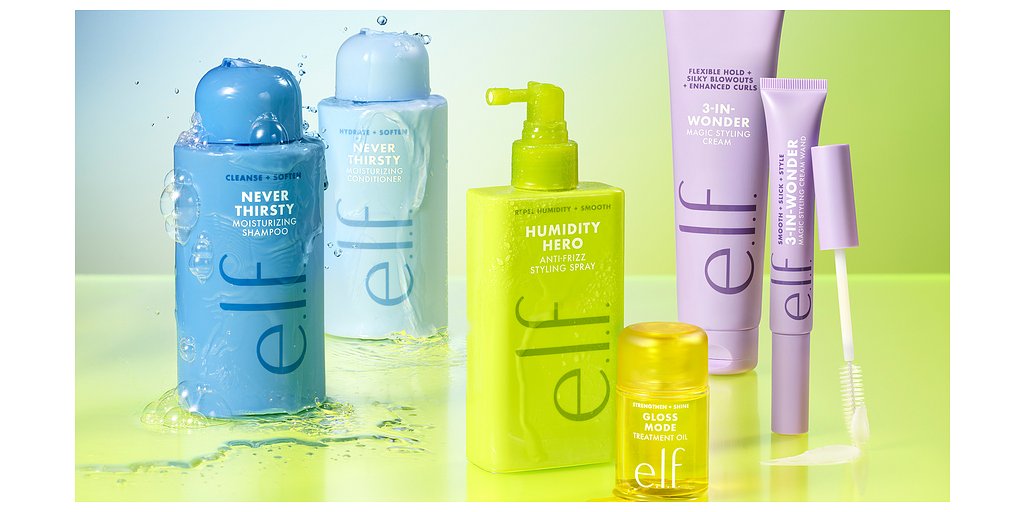
OAKLAND, CA – June 15, 2026 – e.l.f. Beauty, the company that turned affordable cosmetics into a viral sensation and a Wall Street darling, is stepping into a new arena. Tomorrow, it officially launches e.l.f. Hair, a six-product line promising “prestige-quality” results at its signature accessible price points. While a move into an adjacent beauty category may seem like a natural brand extension, this launch is far more significant. It represents a high-stakes test of whether the company’s digitally-native, community-driven playbook—honed to perfection in cosmetics and skincare—can be replicated to disrupt the notoriously crowded and brand-loyal haircare market.
From Cult Cosmetics to Category Conqueror
To understand the gravity of this move, one must appreciate the machine that e.l.f. has become. The company is currently riding an unprecedented wave of success, having just closed its 29th consecutive quarter of sales growth. This isn't a fluke; it's the result of a meticulously executed strategy rooted in what the company calls its “Zero Distance” philosophy. By leveraging social media, particularly TikTok, as a direct line to its consumer base, e.l.f. has mastered the art of listening and responding at lightning speed.
This approach was on full display in the lead-up to the haircare launch. The company didn't just rely on market research; it ran a live experiment. After discovering that 77% of its community expressed interest in haircare, it released two limited-edition hair styling products. The results were staggering: 96% positive sentiment across social platforms and, crucially, 65% of purchasers were new to the e.l.f. brand entirely. This data-backed confidence is the foundation upon which e.l.f. Hair is built, transforming consumer insights “into something meaningful, with a little wit and a lot of intention,” as Kory Marchisotto, President of e.l.f. Brands, stated.
This track record of successful expansion from color cosmetics into the equally competitive skincare category (e.l.f. SKIN) demonstrates that the company’s model is not a one-trick pony. It has proven its ability to earn consumer trust and shelf space in new verticals, setting a powerful precedent for its latest venture.
The 'e.l.f.fordable Luxury' Playbook
The core of the strategy is disarmingly simple: deliver what consumers want at a price they can't ignore. The initial e.l.f. Hair lineup includes a shampoo, conditioner, treatment oil, and styling creams, with all but one item priced at $9 or less. This aggressive pricing, dubbed “e.l.f.fordable luxury,” is designed to directly challenge both mass-market incumbents and prestige brands. By positioning its products as high-performing “dupes” for more expensive alternatives, e.l.f. taps directly into a value-conscious consumer mindset, particularly among Gen Z and millennials who view hair as a key form of self-expression, according to market data from Mintel.
The company’s commitment to its brand values—vegan, cruelty-free, and 'e.l.f. clean' formulas—further strengthens its appeal. In a market where consumers are increasingly scrutinizing ingredient lists and ethical standards, e.l.f. has already done the legwork to build a foundation of trust. This isn't just about selling a product; it's about aligning with a lifestyle and a set of values that resonate deeply with its target demographic.
A Digitally Native Launch for a Digital-First World
Where e.l.f. truly distinguishes itself from legacy competitors is in its go-to-market strategy. The launch is not a traditional retail blanket drop. Instead, it’s a carefully orchestrated digital-first rollout, beginning exclusively on TikTok Shop on June 16. This move is brilliant in its simplicity. It leverages the very platform where the brand built its community and tested the product concept, turning a social media app into a direct point of sale and creating a sense of urgency and exclusivity.
This is followed by a broader online launch and, critically, an exclusive retail partnership with Target. The synergy is clear: Target, which accounts for a significant portion of e.l.f.'s sales, provides the physical footprint and credibility to reach a wider audience, while the digital-first launch ensures the brand controls the narrative and captures invaluable early sales data.
The marketing campaign itself, titled “What the h.e.l.f.?”, is pure e.l.f. It’s quirky, self-aware, and built for social sharing, featuring actress Peyton List and an absurdly charming Bigfoot. This is complemented by a deep integration into the metaverse via Roblox, where players can incorporate the new hair products into their virtual businesses and customize their avatars. This multi-pronged approach demonstrates a profound understanding of where its audience spends their time and how they want to be engaged: not as passive consumers, but as active participants in a shared cultural experience.
Navigating the Competitive Fray
Despite its formidable strategy, success in the haircare aisle is not guaranteed. The market is saturated, with global giants like L'Oréal and P&G commanding vast resources and shelf space, while a new wave of nimble, science-backed indie brands captures the attention of discerning consumers. Furthermore, e.l.f. Beauty's stock (NYSE: ELF), while a long-term outperformer, has shown recent volatility, with some analysts adopting a more cautious stance amidst concerns over market guidance.
However, the company has consistently defied expectations by turning its perceived limitations into strengths. Its agile supply chain, which has diversified production away from a total reliance on China, and its lower marketing costs, a direct benefit of its immense organic social reach, give it a structural advantage. While legacy brands spend fortunes on traditional advertising, e.l.f. creates a viral TikTok challenge. The exclusive partnership with Target also de-risks the physical retail component, ensuring prime placement in one of the most important beauty destinations for its target consumer.
The launch of e.l.f. Hair, therefore, is more than just an attempt to capture a new revenue stream. It is a referendum on a modern business model—one that places digital community, rapid innovation, and radical value at its core. The coming months will reveal whether the magic that e.l.f. captured in a makeup palette can be bottled in a shampoo, but for now, the entire industry is watching to see what the h.e.l.f. happens next.