
- 5X Growth: EKA Mobility reported a five-fold year-on-year volume growth for FY 2025-26, selling 1,143 electric commercial vehicles (ECVs) and producing 1,344 units.
- 6,000 Bus Orders: The company has secured orders for over 6,000 electric buses to be delivered in the next two years.
- Manufacturing Expansion: EKA plans to achieve an annual capacity of 10,000 buses, 6,000 trucks, and 24,000 small commercial vehicles (SCVs).
Experts would likely conclude that EKA Mobility's rapid growth and strategic expansions highlight its strong position in India's competitive EV market, driven by supportive policies and technological innovation, though success will depend on navigating intense competition and global market challenges.
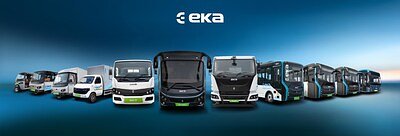
EKA Mobility's 5X Growth Signals Major Shift in India's EV Sector
PUNE, India – April 01, 2026 – Pune-based electric vehicle manufacturer EKA Mobility has announced a dramatic five-fold year-on-year volume growth for the fiscal year 2025-26, a figure that underscores the rapid acceleration within India's commercial electric vehicle market. The company reported the sale of 1,143 electric commercial vehicles (ECVs) and the production of 1,344 units, marking a pivotal year defined by portfolio expansion and significant manufacturing scale-up.
This growth comes as the company diversifies its offerings, adding Medium and Heavy Commercial Vehicle (M&HCV) trucks to its existing lineup of electric buses and small commercial vehicles (SCVs). With a confirmed order book for over 6,000 electric buses to be delivered in the next two years, EKA is positioning itself as a key player in the nation's ambitious transition to clean mobility.
A Crowded and Competitive Field
While EKA Mobility's 5X growth is a significant headline, it occurs within one of the world's most dynamic and competitive electric bus markets. A closer look at the numbers reveals a fiercely contested landscape. Of the 1,143 units sold by EKA, 363 were electric buses. This places the company as a formidable, fast-growing contender, but behind the current volume leaders for FY26. Competitors like Switch Mobility reported sales of 1,166 electric buses, while PMI Electro Mobility sold 1,147 units during the same period. Other major players, including JBM Auto with 1,061 buses, also command a substantial share.
The market has seen dramatic shifts, with former leader Tata Motors experiencing a significant drop in e-bus sales in FY26. This volatility highlights the intense competition for government tenders and private contracts. EKA's success in securing wins under the national PM e-Bus Sewa and PM E-DRIVE schemes has been crucial, enabling it to deploy vehicles across more than 15 states.
Similarly, the company's new venture into the electric truck segment pits it against established giants like Tata Motors and Ashok Leyland, as well as specialized EV manufacturers such as Omega Seiki Mobility. Success in this area will require navigating a complex logistics market that is just beginning its electrification journey.
Fueled by Policy and Production
EKA Mobility's trajectory is heavily influenced by a supportive, and demanding, government policy framework. As a designated 'Champion OEM' under India's Automotive Production Linked Incentive (PLI) Scheme, the company benefits from incentives designed to bolster domestic manufacturing and technological development. These programs are not just subsidies; they are a core component of the national strategy to build a self-reliant EV ecosystem.
"FY 2025–26 is a defining year for EKA Mobility. We are not only scaling volumes but also expanding our manufacturing footprint," stated Dr. Sudhir Mehta, Founder & Chairman of EKA Mobility. "With the widest range of fully homologated, born-electric platforms from last-mile to long-haul, we are uniquely positioned as a full-stack EV company. Our growth across electric buses, small commercial vehicles, and now trucks validates both market demand and our execution capability."
To meet this demand, the company is undertaking a major expansion of its manufacturing capabilities. With two operational facilities in Pune and a new plant in Pithampur set to come online shortly, EKA plans to achieve a massive annual capacity of 10,000 buses, 6,000 trucks, and 24,000 SCVs. This aggressive scale-up is a clear bet on sustained market growth and its ability to capture a larger share.
From Pune to the Global Stage
Beyond its domestic focus, EKA is laying the groundwork for international expansion. The company has commenced electric bus deployments in Africa and established key strategic partnerships to enter new markets. A significant agreement with the Kerchanshe Group, an Ethiopian conglomerate, aims to establish a Completely Knocked Down (CKD) assembly facility in Ethiopia, positioning it as a hub for distribution across East Africa.
This move into Africa presents both immense opportunity and considerable challenges. The continent's EV market is nascent, hampered by inadequate charging infrastructure, high upfront vehicle costs, and a lack of robust regulatory frameworks. EKA's success will depend on its ability to adapt its technology and business models to local conditions and navigate these complex market dynamics. In a parallel move, the company has also secured an agreement with NBFI Capital for manufacturing electric buses in Australia, signaling a multi-pronged global strategy.
These international ventures are supported by a strong consortium of global backers, including Mitsui & Co. of Japan, VDL Groep from the Netherlands, and the NIIF India-Japan Fund, providing both the capital and strategic expertise needed for such ambitious expansion.
Beyond the Battery: A Bet on Future Tech
EKA's strategy extends beyond just manufacturing volume. The company emphasizes its technological prowess, built on what it calls 'born-electric' platforms and proprietary AI-powered fleet management software. This 'full-stack' approach integrates vehicle production with data-driven services for optimized fleet operations, offering customers an end-to-end solution.
A key differentiator is the company's foray into hydrogen fuel cell technology. In a pioneering project with KPIT Technologies and Bharat Petroleum Corporation Limited (BPCL), EKA has deployed a 9-meter hydrogen fuel cell bus at Cochin International Airport. This Proof of Concept initiative, the first of its kind in the state of Kerala, is a strategic move to explore alternative clean energy solutions for commercial transport, positioning the company at the forefront of technological innovation.
This forward-looking approach is critical as the Indian EV industry grapples with systemic challenges, particularly its heavy reliance on imported lithium-ion cells and battery components. While government schemes aim to foster domestic battery manufacturing, supply chain vulnerability remains a significant risk for the entire sector. By investing in hydrogen, EKA is diversifying its technological portfolio and hedging against the uncertainties of a single battery-dependent future, demonstrating a long-term vision that extends far beyond immediate sales figures.