
- 13 organ donors at Long Beach Medical Center led to 41 life-saving transplants in the past year.
- 20 tissue donors and 12 ocular donors improved the lives of 1,550+ people.
- 20,000+ Californians are currently waiting for a life-saving organ.
Experts emphasize that organ donation is a deeply personal act that transforms lives, and streamlined registration processes, like those integrated into patient portals, are critical in increasing donation rates and honoring patients' wishes.
Echo of Generosity: How Organ Donors Transform Lives in Long Beach
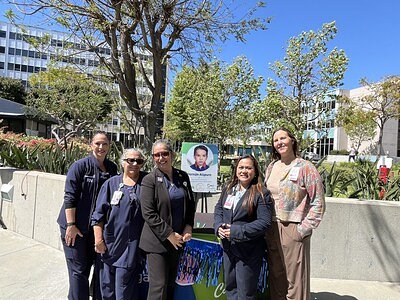
LONG BEACH, CA – April 16, 2026 – Against the backdrop of a shared medical campus, a Donate Life flag was raised today, its colors a vibrant symbol of life given and received. The ceremony at MemorialCare's Long Beach Medical Center and Miller Children's & Women's Hospital was a poignant tribute, bringing together hospital staff, community members, and partners from OneLegacy to mark National Donate Life Month. It was a moment to honor the profound generosity of organ donors whose final act continues to ripple through Southern California, saving and transforming countless lives.
Among those gathered was Eva Perez, a OneLegacy ambassador whose advocacy is born from personal loss and enduring love. She shared the story of her son, Hernán, whose decision to be an organ donor became his lasting legacy. As attendees paused to write messages of gratitude on a display featuring Hernán’s photo, the abstract concept of donation became deeply personal. Perez’s call for others to register as donors was not a statistic-driven plea, but a mother’s testament to the hope that can emerge from tragedy.
This annual ceremony serves as a powerful reminder of the dual realities that frontline healthcare workers witness daily: the sorrow of loss and the incredible hope sparked by the gift of life. The event, punctuated by an opening blessing and reflections from care teams, centered on the human stories behind the statistics.
A Ripple Effect of Hope
The impact of organ, eye, and tissue donation is staggering. Over the past year at Long Beach Medical Center alone, the selflessness of 13 organ donors resulted in 41 life-saving organ transplants. Beyond that, 20 tissue donors and 12 ocular donors helped improve the health and quality of life for more than 1,550 people. Each number represents a person—a parent, a child, a friend—given a second chance.
"At MemorialCare, organ donation is deeply personal, as we witness both the loss and the lifesaving hope it creates," said Joan Romero, DNP, RN, CENP, CCRN, executive director of Emergency Department, Trauma & Critical Care at the medical center. She described the solemn tradition of the “honor walk,” where care teams, leadership, and volunteers line the hospital hallways to pay silent respect as a donor is taken to the operating room. "These moments remind us that behind every donation is a family, a story and a lasting legacy."
MemorialCare's contribution is a vital part of a much larger effort. The hospital's long-standing partnership with OneLegacy, the non-profit organ procurement organization (OPO) for Southern California, is critical. OneLegacy, one of the largest OPOs in the world, serves seven counties and in 2023 facilitated 1,749 organ transplants from 557 donors. The 13 donors from Long Beach Medical Center represent a significant contribution from a single institution, underscoring the vital role hospitals play in the donation process. Yet, the need remains immense. Across California, more than 20,000 people are currently on the waiting list for a life-saving organ, part of a national list that exceeds 100,000.
Tech Meets Compassion: Streamlining the Path to Donation
Recognizing that intention must be matched with accessibility, MemorialCare is leveraging technology to make the decision to donate simpler and more secure than ever. The health system recently launched a new feature allowing its patients to register as organ, eye, and tissue donors directly through their MyChart patient portal.
This innovative integration is a significant step forward. While many healthcare organizations provide links to external registries, building the registration process directly into the patient portal removes a key barrier. It allows individuals to make this crucial decision within a familiar and trusted digital environment where they already manage their health information. The registration is securely transmitted to the National Donate Life Registry, ensuring a patient's wishes are officially documented and will travel with them, regardless of where they live or receive care in the future. The information remains private from their care teams, protecting patient confidentiality while formalizing their decision.
This digital solution addresses a modern challenge by meeting people where they are. By embedding the option within MyChart, MemorialCare is not only simplifying a process but also normalizing the conversation around donation as a fundamental aspect of personal healthcare planning. This approach is at the forefront of a movement in digital health, using patient engagement platforms to advance critical public health goals.
Building a Culture of Preparedness and Generosity
The flag-raising ceremony coincided with National Healthcare Decisions Day (NHDD), an observance dedicated to inspiring people to engage in advance care planning. This synergy highlights a core message from MemorialCare and its partners: the importance of making one's wishes known before a medical crisis occurs. Advance care planning involves contemplating and documenting future medical treatments, including end-of-life preferences and the decision to become an organ donor.
Research consistently shows that when individuals have documented their wishes and discussed them with family, the donation process is smoother and the burden on grieving loved ones is significantly lessened. An advance directive that includes the desire to donate provides clear, legally recognized guidance that empowers healthcare providers and families to honor the patient's autonomous choice. This proactive conversation is one of the most powerful tools for increasing donation rates.
To support this, MemorialCare has committed to breaking down communication barriers by offering its advance directive forms free of charge in seven languages: English, Spanish, Khmer, Vietnamese, Farsi, Chinese, and Tagalog. This commitment to health equity ensures that more members of the diverse Long Beach community can access the tools needed to make and document these important decisions. Through sustained community outreach, innovative digital tools, and solemn acts of remembrance, the hospital and its partners are fostering a culture where the conversation about donation is not about death, but about the profound and lasting echo of generosity.