
- 60-hour flight: DZYNE's ULTRA Turbo drone completed a continuous 60-hour flight, setting a new endurance record for Group 5 UAS.
- 25,000 feet altitude: The drone operated at a cruising altitude of 25,000 feet, allowing it to avoid most weather and commercial air traffic.
- 100-knot speed: The drone maintained a speed of 100 knots, providing superior penetration against headwinds.
Experts would likely conclude that DZYNE's ULTRA Turbo drone represents a significant advancement in long-endurance unmanned aerial systems, offering a cost-effective alternative to traditional military drones and redefining persistent aerial surveillance capabilities.
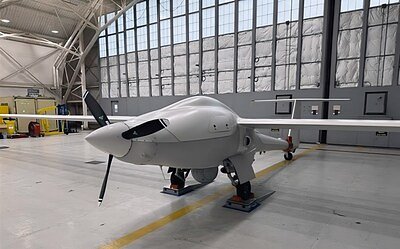
DZYNE's ULTRA Turbo Drone Shatters Record with 60-Hour Flight
IRVINE, Calif. – February 04, 2026 – DZYNE Technologies has announced a landmark achievement in aviation, with its ULTRA Turbo unmanned aerial system (UAS) completing a continuous 60-hour flight. The mission, conducted at a cruising altitude of 25,000 feet and a speed of 100 knots, sets a formidable new endurance benchmark for Group 5 UAS, the largest class of military drones. This flight is not just a record; it is a clear signal that the landscape of persistent aerial surveillance is undergoing a fundamental transformation.
The successful mission positions the Irvine-based company as a major contender in the high-stakes global defense market, challenging established giants with a platform engineered for what it calls "strategic reach at tactical cost." By sustaining flight for two and a half days, the ULTRA Turbo demonstrates a capability that could redefine military reconnaissance, homeland security patrols, and a host of commercial monitoring applications.
Redefining Persistent Operations
The concept of "persistence" is a holy grail in intelligence, surveillance, and reconnaissance (ISR). The ability to keep an unblinking eye over a target area for days, rather than hours, dramatically enhances situational awareness. DZYNE's 60-hour flight pushes the boundary of what was previously possible for many platforms in this class, offering operational commanders an unprecedented level of sustained overwatch.
This level of endurance minimizes the operational risks and logistical burdens associated with frequent takeoffs and landings. It reduces the number of aircraft needed to maintain continuous coverage over a single area, thereby lowering personnel requirements and overall mission costs. The ULTRA Turbo’s performance at 25,000 feet also allows it to operate above most weather and commercial air traffic, while its 100-knot speed provides superior penetration against headwinds that can hinder slower drones.
"ULTRA Turbo showcases DZYNE's ability to anticipate, adapt, and deliver solutions that directly support mission requirements," said Ed Smetak, EVP of Programs at DZYNE Technologies, in the company's announcement. "This milestone demonstrates how endurance, paired with altitude and speed at this scale, can transform operational awareness for our clients. ULTRA Turbo strengthens the foundation of our long-endurance aircraft portfolio by delivering the persistent reach, sensing, and responsiveness that modern mission networks depend on as they evolve toward more distributed concepts of operation."
A Cost-Disruptive Challenge to the Status Quo
The market for Group 5 UAS—which includes iconic platforms like Northrop Grumman's RQ-4 Global Hawk and General Atomics' MQ-9 Reaper—is dominated by established defense contractors. These systems are incredibly capable but come with price tags reaching tens of millions of dollars per aircraft. Recent conflicts have highlighted the vulnerability of these expensive assets, creating a clear demand for more affordable, yet highly capable, alternatives.
DZYNE appears to be targeting this exact niche. By emphasizing a "cost-disruptive" approach, the company is positioning ULTRA Turbo as a powerful alternative that doesn't require a colossal budget. While other platforms, such as Aurora Flight Sciences' Orion, have demonstrated even longer endurance flights in the past, DZYNE's focus on balancing performance with tactical cost and rapid, U.S.-based production offers a compelling new value proposition.
The U.S. Air Force has already taken notice, with its 2025 budget request including an initial $35 million procurement for four of the earlier ULTRA drones, a program developed in partnership with the Air Force Research Laboratory (AFRL). This new 60-hour flight record for the enhanced Turbo variant is poised to accelerate the platform's path toward becoming a formal "program-of-record," solidifying its role in the U.S. military's arsenal.
Technology Fueling the Future of Flight
The ULTRA Turbo's remarkable performance is not accidental; it is the result of clever engineering and strategic design choices. The aircraft's lineage traces back to the Stemme S12, a high-performance commercial sport glider. By adapting this aerodynamically efficient airframe, DZYNE created a military-hardened drone with a long wingspan (over 80 feet) and exceptional fuel efficiency.
The "Turbo" designation comes from its turbocharged piston engine, a key innovation that allows the aircraft to maintain power and performance at higher altitudes like 25,000 feet. This contrasts with many other long-endurance drones that are optimized for lower or significantly higher altitudes. The platform is also equipped with a GPS-hardened architecture, providing crucial resilience against jamming and spoofing in contested electronic warfare environments.
Furthermore, the system is designed for operational flexibility. It supports a wide range of multi-mission payloads, including advanced ISR sensors, electronic warfare packages, communications relay equipment, and even launched effects. This versatility, combined with a compact logistical footprint for rapid deployment, makes it an attractive option for a variety of mission sets.
Beyond the Battlefield: A Multitude of Applications
While its development was driven by defense needs, the capabilities demonstrated by the ULTRA Turbo have profound implications for civil and commercial sectors. A platform that can affordably monitor vast areas for days at a time opens up a world of possibilities.
In homeland security, it could provide persistent surveillance over long stretches of border or vast maritime economic zones. For civil authorities, its applications are numerous: monitoring the spread of wildfires in real-time, conducting wide-area damage assessments after hurricanes or earthquakes, and ensuring the security of critical infrastructure like pipelines and power grids.
In the commercial realm, the ULTRA Turbo could revolutionize environmental science by tracking ice floes, monitoring deforestation, or studying animal migration patterns. The agricultural sector could use it for large-scale crop health analysis and precision farming. This flight milestone validates a technology that could soon become an indispensable tool for protecting assets, managing resources, and responding to crises on a global scale.