
- 45 million followers: DUIU has pre-onboarded creators with a combined reach of 45 million followers to kickstart engagement. - 134 million users: Brazil, DUIU's launch market, has 134 million Instagram users and 92 million TikTok users, highlighting the competitive landscape. - Prize-backed campaigns: DUIU's new advertising model incentivizes user participation through branded challenges and rewards.
Experts view DUIU's community-driven platform as a bold but high-risk experiment that challenges the dominance of algorithmic feeds, with its success hinging on overcoming user adoption barriers and maintaining fairness in its voting system.
DUIU's Gamble: Can Community Voting Dethrone TikTok's Algorithm?
STOCKHOLM, SWEDEN – May 08, 2026 – In a direct challenge to the social media status quo, Swedish startup DUIU has announced new funding to launch a video platform that aims to replace the endless, algorithm-driven scroll with a system built on active participation. The company is betting that users and brands are ready for a new social contract—one where visibility is earned through interaction, not dictated by the opaque machinations of platforms like TikTok and Instagram.
At a time of increasing regulatory scrutiny and public debate over algorithmic influence, DUIU is proposing a radical departure from the consumption-at-scale model. Instead of serving up a personalized, passive feed, the platform is architected around community-driven competition. This move signals a potential shift in social media's philosophical underpinnings, questioning whether the future of digital connection lies in watching or in doing.
The Anti-Algorithm Revolution?
DUIU’s core concept dismantles the familiar one-to-many broadcast model. On the platform, content isn't published into a void, hoping to be picked up by an algorithm. Instead, users respond to initial videos in structured, competitive threads. Each video reply vies for attention, with the community voting on contributions to determine which ones rise to the top. This creates an evolving, collaborative context where the audience is also the curator.
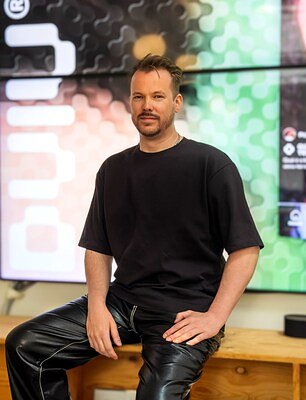
"The way a platform is monetised directly shapes how it behaves," said Pontus Hörnby Liljeblad, CEO and co-founder of DUIU, in the company's announcement. "DUIU is built to unlock participation at scale, where value is created through what people do — not just what they watch."
This democratic-sounding approach, however, is fraught with challenges that have stymied similar efforts in the past. The first hurdle is overcoming the "cold start problem"—attracting a critical mass of users to create and vote on content. While DUIU has pre-onboarded creators with a reported combined reach of 45 million followers, sustaining engagement beyond an initial launch requires a seamless and rewarding user experience. Any system based on voting is also inherently vulnerable to manipulation, from coordinated upvoting by niche groups to bad actors attempting to game the rankings, demanding robust safeguards.
Furthermore, the history of social media is littered with platforms that tried to offer an alternative to centralized, algorithmic control. Many decentralized or federated platforms, while ideologically appealing, have struggled with the technical complexities, scalability, and user experience friction that prevent mass adoption. DUIU's success will depend on its ability to make its more complex, thread-based interaction model feel as intuitive and compelling as the simple flick of a thumb.
Beyond Impressions: A New Playbook for Brands and Creators
Perhaps the most disruptive element of DUIU's strategy is its complete overhaul of the advertising model. The platform is sidestepping the impression-based advertising that fuels its rivals. Instead, it invites brands to launch "prize-backed participatory campaigns." In this model, brands don't just pay for eyeballs; they incentivize and reward users for becoming active contributors.
This turns traditional marketing on its head. A sneaker brand, for example, might launch a campaign challenging users to submit videos of their best athletic feats, with the community voting on winners who receive prizes. The brand receives a trove of authentic user-generated content (UGC), drives deep engagement, and generates organic distribution as participants share their entries. As participation grows, so does the campaign's reach, creating a self-perpetuating marketing cycle.
"Creators have what every marketer wants: an audience that listens. The brands winning today are the ones smart enough to partner, not interrupt," noted Greg Paull, a pioneer in marketing consulting and an early strategic investor in the company.
This model taps into a powerful trend. Marketers increasingly recognize that authentic UGC builds trust and influences purchasing decisions far more effectively than polished corporate ads. However, it also introduces significant legal and ethical complexities. Clear terms of service will be required to navigate the intellectual property rights of user-submitted content. Campaigns must be structured carefully to comply with competition laws in various jurisdictions, ensuring transparency and fairness to avoid being classified as unregulated lotteries. Above all, brands will demand robust content moderation to ensure their campaigns are not associated with harmful or inappropriate user submissions.
For creators, this system offers a new and potentially more equitable path to monetization. It promises a world where visibility is tied to the quality of their interactions rather than the whims of an algorithm. It also provides a novel revenue stream that moves beyond sponsorships and ad-revenue sharing, allowing them to facilitate and benefit from the brand-audience co-creation happening on the platform.
The Brazilian Gambit: A High-Stakes Launch in a Crowded Market
To test its ambitious model, DUIU is bypassing the saturated markets of North America and Europe for its initial launch, instead heading to Brazil. The choice is a calculated risk. As one of the world's most active social media markets—ranking in the top three for daily usage—Brazil offers a massive, highly engaged user base that is accustomed to juggling multiple platforms for different social needs.
However, it is also a market where global giants are deeply entrenched. YouTube, Instagram, and TikTok command the attention of over 134 million, 134 million, and 92 million Brazilians, respectively. Convincing users to dedicate time to a new, unproven platform with a different interaction model will be an immense challenge. The network effects that keep users loyal to established platforms are powerful, and creator reluctance to rebuild an audience from scratch on a new service is a significant barrier to entry.
To navigate this complex landscape, DUIU has enlisted João Villa Savatin, an early member of TikTok's own Brazil expansion team, to lead its rollout. His local market expertise will be critical in adapting the platform's strategy to the nuances of Brazilian culture and consumer behavior. The initial strategy appears to be a validation phase; using Brazil as a real-world laboratory to refine the participation model before attempting a broader global expansion.
The success or failure of DUIU in Brazil will be a closely watched bellwether. It will test whether a social media platform can scale by rewarding action over attention and whether a community-curated ecosystem can genuinely compete with the powerful, personalized allure of the algorithmic feed. For a digital world grappling with the consequences of passive consumption, the outcome of this experiment could point toward a very different future.