
- First Adult SMA Gene Therapy Outside US: Medcare Royal Speciality Hospital in Dubai administered Itvisma, a newly licensed gene therapy, to a 22-year-old Egyptian man with SMA.
- Global Impact: SMA affects approximately 1 in 10,000 live births worldwide.
- Cost: The wholesale acquisition cost of Itvisma is $2.59 million in the United States.
Experts view this as a groundbreaking advancement in SMA treatment, offering a one-time gene therapy solution that addresses the root cause of the disease, particularly for adult patients who previously had limited options.
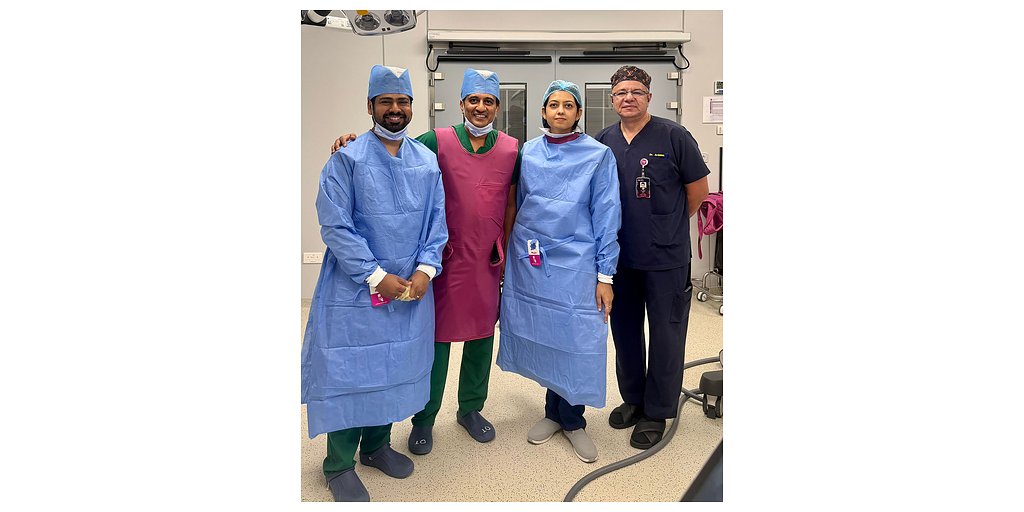
Dubai Hospital Delivers World-First Adult SMA Gene Therapy
DUBAI, UAE – April 28, 2026 – In a landmark medical achievement, Dubai’s Medcare Royal Speciality Hospital (MRSH) has become the first facility outside of the United States to administer a newly licensed gene therapy to an adult patient with Spinal Muscular Atrophy (SMA). The one-time treatment, Itvisma, was successfully given to a 22-year-old Egyptian man, marking a significant expansion of hope for thousands of adults living with the debilitating neuromuscular disease.
This pioneering procedure not only represents a major clinical milestone but also solidifies Dubai's growing reputation as a global hub for advanced medical innovation and treatment. The patient, who was diagnosed with SMA at 18 months and has been confined to a wheelchair for most of his life, traveled to the UAE specifically for this groundbreaking therapy, which was previously unavailable to adults.
A Paradigm Shift in SMA Treatment
Spinal Muscular Atrophy is a rare and severe genetic disorder caused by a mutation or deletion in the survival motor neuron 1 (SMN1) gene. This defect leads to a deficiency of the SMN protein, which is critical for the function and survival of motor neurons, resulting in progressive muscle weakness, loss of mobility, and, in its most severe forms, impacts on breathing and swallowing. Globally, SMA affects approximately 1 in 10,000 live births.
For years, the frontier of gene therapy for SMA was largely confined to infants under the age of two with treatments like Zolgensma. While other disease-modifying therapies such as Spinraza and Evrysdi are available for adults, they require chronic, lifelong administration—either through repeated spinal injections or daily oral medication—to manage the condition. Itvisma represents a fundamental shift in this treatment paradigm.
“For years, curative treatment options were not available for adult SMA patients,” said Dr. Vivek Mundada, the Gene Therapy Unit clinical lead at Medcare who led the multidisciplinary team. “The one-time gene therapy, Itvisma, works by delivering a functional copy of the missing SMN1 gene directly into the cerebrospinal fluid, addressing the root cause. This opens new possibilities for many patients who were previously left without hope.”
Approved by the U.S. FDA in late 2025 for patients aged two and older, Itvisma uses a harmless adeno-associated virus (AAV9) as a vector to deliver the replacement gene. Clinical studies, such as the STEER trial, have demonstrated statistically significant improvements in motor function for patients, offering stabilization and gains in abilities not seen in the natural progression of the disease.
The Patient's Journey to Hope
The human impact of this scientific advancement is embodied in the journey of the 22-year-old patient. Facing a lifetime of progressive muscle deterioration, the prospect of a one-time treatment that could halt or even improve his condition was transformative. His decision to travel from Egypt to Dubai highlights the international draw of such specialized medical services.
Reflecting on the procedure, the patient expressed relief and optimism. “The experience of taking the treatment was very positive and comfortable, with no pain felt around the injection area,” he remarked. “I am glad that I don’t have to take multiple injections like I used to before.” His statement underscores the significant quality-of-life advantage of a single-dose therapy compared to the burden of chronic treatment regimens.
Dr. Mundada confirmed the patient's specific purpose for the trip, stating, “Our patient travelled from Egypt to Dubai specifically for this treatment.” The procedure was carried out by a specialized team at Medcare, including adult neurologist Dr. Sagar Kawale and anaesthesia specialists Dr. Neha Shahane and Dr. Ardalan Papari, showcasing the collaborative expertise required for such advanced interventions.
Dubai Cementing its Role as a Global Healthcare Hub
This medical first is a powerful testament to Dubai's strategic ambition to become a world-leading destination for medical tourism and advanced healthcare. The UAE’s regulatory body, the Emirates Drug Establishment, demonstrated remarkable agility by approving Itvisma in December 2025, making it only the second country in the world to do so after the United States. This proactive regulatory environment is crucial for attracting pioneering treatments and clinical expertise.
Dr. Shanila Laiju, Group CEO of Medcare Hospitals and Medical Centres, commented on the broader implications of this achievement. “We believe expanding SMA treatment for adults can transform thousands of lives across the Middle East and beyond,” she said. “The introduction of Itvisma at Medcare builds on our pioneering role in treating older SMA patients, as recognised by Novartis.”
Medcare’s Gene Therapy Unit is no stranger to handling complex genetic cases. The hospital has successfully treated over 190 SMA patients and 20 patients with Duchenne Muscular Dystrophy (DMD) since 2020, drawing individuals and families from across the Middle East, Africa, Asia, and Europe. This extensive track record established the hospital as a trusted center of excellence long before this latest milestone.
Navigating Access and the Future of Gene Therapy
While the clinical promise of Itvisma is immense, its accessibility remains a complex issue. With a wholesale acquisition cost of $2.59 million in the United States, the price tag is substantial. The manufacturer, Novartis, argues that the one-time cost is significantly less than the cumulative 10-year expense of existing chronic therapies. For many families, however, this upfront cost presents a formidable barrier.
Healthcare providers like Medcare have experience helping international patients navigate these challenges, often through a combination of crowdfunding, charitable support, and institutional assistance. As these therapies become more common, discussions around innovative payment models and broader insurance coverage are intensifying globally.
The momentum for Itvisma continues to build. Just last week, the European Medicines Agency's (EMA) Committee for Medicinal Products for Human Use (CHMP) adopted a positive opinion recommending its marketing authorization in the EU. This signals that access to this life-changing therapy for adults is on the verge of expanding even further, bringing hope to a much larger segment of the global SMA community.