
- $50 billion: Projected market size of the global automotive smart surfaces sector within the next decade.
- ¥5 billion: DNP's target cumulative sales for the new film by fiscal year 2030.
- 150 years: DNP's history in printing and materials science, underpinning the technology.
Experts view DNP's 'invisible' film as a significant innovation in automotive interiors, offering a seamless blend of luxury design and advanced display technology that enhances both aesthetics and functionality.
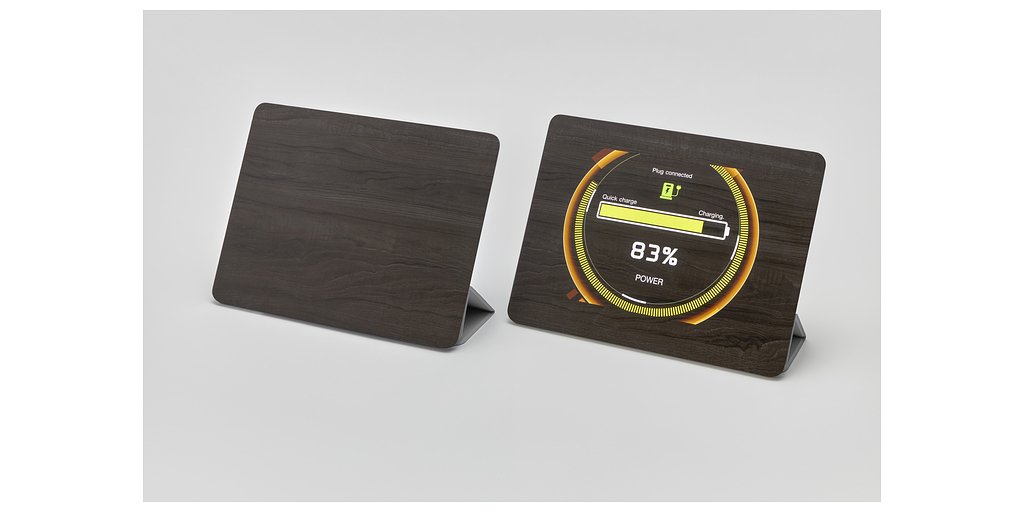
DNP's 'Invisible' Film Blends Car Luxury with Hidden Display Tech
TOKYO, JAPAN – April 22, 2026
This month, Japanese printing and technology giant Dai Nippon Printing (DNP) begins mass production of a product that sounds like science fiction: a decorative film that allows automakers to turn surfaces like woodgrain dashboards into high-definition displays that appear only when needed. The innovation marks a significant step in the evolution of automotive interiors, moving away from static screens toward fully integrated, intelligent surfaces.
The new film, set to debut in the highly competitive Chinese market, addresses a core challenge for modern car designers: how to pack more technology into cabins without creating a cluttered, distracting environment. As screens have grown larger and more numerous, the push for a more minimalist, luxurious aesthetic has intensified. DNP’s solution allows a seamless slab of what appears to be rich wood or a sleek metallic finish to transform into a vibrant navigation map, climate control interface, or infotainment system with the touch of a button or a voice command. When not in use, the display vanishes, leaving behind only the uninterrupted decorative surface.
This technology enters a market ripe for disruption. The global automotive smart surfaces sector is experiencing explosive growth, with some analysts projecting it to surge from a few billion dollars today to over $50 billion within the next decade. DNP’s entry is a calculated move to capture a piece of this lucrative pie, leveraging its deep history in printing and materials science to redefine the car cabin experience.
The Technology Behind the Illusion
The magic of DNP's new film lies in the sophisticated layering of proprietary technologies honed over the company's 150-year history. The key is a unique light-transmitting layer created using advanced microfabrication techniques. This microscopic structuring allows light from a display mounted behind the film to pass through the decorative pattern—be it wood, stone, or a custom design—without distortion or interference.
Unlike earlier attempts at similar technologies, which often suffered from hazy visuals or visible seams, DNP claims its film ensures sharp, vivid rendering of images and text. The company has optimized both the decorative design layer and the underlying optical functional layer to maintain high visibility across a wide range of lighting conditions, from the dim glow of a garage to the harsh glare of direct sunlight. This ensures the display is always readable and functional when active, and perfectly hidden when not.
Beyond its visual prowess, the film is engineered for the rigors of the automotive environment. The outermost surface features a topcoat layer created with DNP's proprietary Electron Beam (EB) technology. This process, which uses electron beams to cure and harden resins, creates a surface with superior resistance to scratches, stains, and chemical exposure compared to conventional urethane or UV coatings. This durability is critical for meeting the stringent quality and longevity standards demanded by global automotive manufacturers for high-touch interior components.
By offering this combination of aesthetic flexibility and rugged performance, DNP provides automakers a single, elegant solution to integrate design and function, enabling a unified look across the entire dashboard and other interior panels.
A Strategic Play in a Crowded Market
DNP is not alone in the race to create the car interior of the future. Established automotive suppliers like Continental, with its "ShyTech Display," and display specialists like CarUX and Tianma, with their own "InvisiView" hidden display concepts, are also vying for dominance. These companies are all targeting the same trend: a seamless, tech-infused cabin that feels more like a premium living space than a traditional vehicle cockpit.
However, DNP's strategic approach could give it a distinct edge. By starting with a product that is fundamentally a film, it leverages its core competency and offers a potentially more scalable and integrable solution for automakers. The ability to combine this new light-transmitting film with its existing portfolio of decorative films allows for a cohesive design language throughout the entire vehicle, from the dashboard and center console to door panels and trim.
The company’s go-to-market strategy is equally deliberate. Launching first in China places the product at the epicenter of the world's largest automotive market and a hotbed for electric vehicle (EV) innovation and consumer adoption of advanced in-car technology. Following the initial rollout, DNP plans a global expansion into Europe, Japan, the United States, and other key automotive hubs. To fuel this growth, the company has set an ambitious target of achieving ¥5 billion in cumulative sales for the new film by fiscal year 2030.
While this figure represents a modest fraction of the multi-billion-dollar smart surface market, it signals a focused effort to secure a profitable niche in a high-value segment. Success will depend on securing partnerships with major OEMs, a process that involves a long and rigorous qualification period. DNP’s long-standing relationships as a supplier of interior materials will be a crucial asset in these negotiations.
Redefining the Automotive Cabin Experience
The impact of technologies like DNP’s decorative film extends far beyond simple aesthetics. They represent a fundamental shift in how humans will interact with their vehicles. By embedding technology invisibly into the environment, these smart surfaces reduce cognitive load on the driver, presenting information contextually and only when necessary. This aligns with the broader industry push toward safer, more intuitive Human-Machine Interfaces (HMI).
For passengers, it opens up new possibilities for entertainment and productivity. A decorative panel on the passenger side could remain an elegant woodgrain surface during a casual drive, then transform into a screen for watching a movie on a long journey. The technology enables a customizable, responsive environment that adapts to the needs of its occupants.
Looking forward, DNP envisions applications for this technology beyond the dashboard. The press release hints at expansion to exterior components that require light transmission, such as grilles or body panels on EVs that could display charging status or other information. The principles could also be applied to non-automotive fields, from high-end appliances to architectural design, where the line between surface and interface is increasingly blurring.
As the first rolls of this innovative film leave the factory, they represent more than just a new product. They embody a future where technology integrates so seamlessly into our surroundings that it disappears entirely, leaving only its function and a beautifully designed space behind.