
- 400 million square meters: The area of land to be tokenized, larger than the city of Detroit.
- $150 billion: Estimated cost of Africa123's 25-year urban development pipeline.
- 2.4 billion: Africa's projected population by 2063, with 1.5 billion in urban areas.
Experts view this initiative as a transformative approach to urban development in Africa, leveraging blockchain technology to enhance transparency, liquidity, and global investment access, though significant regulatory and practical challenges remain.
Digital Land: Can Blockchain Build Africa's Future Cities?
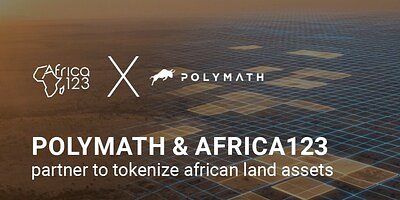
TORONTO, ON – April 16, 2026 – A groundbreaking partnership announced today aims to digitize vast tracts of African land, leveraging blockchain technology to channel global capital into one of history's most significant urbanization drives. Digital asset infrastructure provider Polymath and pan-African platform Africa123 have launched a collaboration to explore the tokenization of more than 400 million square meters of land—an area larger than the city of Detroit.
The initiative represents a bold attempt to connect one of the world's largest and most undercapitalized asset classes with modern financial markets. By converting land ownership rights into digital tokens, the partners hope to create a transparent, liquid, and globally accessible investment vehicle to fund a 25-year pipeline of ambitious urban development projects across the continent.
The Grand Vision: Building Cities on the Blockchain
At the heart of this venture is Africa123's sweeping vision to address the continent's rapid urbanization. With Africa's population projected to reach 2.4 billion by 2063, and its urban population set to exceed 1.5 billion, the demand for housing and infrastructure is staggering. The World Bank estimates that without massive intervention, over 216 million people in Sub-Saharan Africa could be living in slums by mid-century.
Africa123's proposed solution is a model called "Regenerative SMARTER Urban-Ecosystem" (RSU) city-building. This framework moves beyond simple construction, aiming to develop integrated, sustainable cities that provide not just housing but also food, water, and energy security, alongside economic opportunities. The platform has previously announced plans to develop as many as 123 new cities over two decades, a monumental undertaking with an estimated cost of up to $150 billion, designed to address the continent's housing deficit. These plans have reportedly involved partnerships with major infrastructure groups like SMEC Africa, a subsidiary of Singapore's Surbana Jurong, and have garnered support from the African Union Development Agency (AUDA).
"Africa123 has established land access, partnerships, and a regenerative city-building framework that unlocks Africa’s long-term urban infrastructure opportunity at scale," stated Gita Goven, Chairperson of Africa123, in the official announcement. "Our collaboration with Polymath represents a critical step in transforming land and urban infrastructure into a transparent, well-governed, and globally investable platform." Goven emphasized her belief that Africa is "not only investable—but essential to the future of global real estate allocation."
The Digital Blueprint: How Tokenization Unlocks Value
While Africa123 provides the land and development vision, Polymath brings the technological and financial architecture to make it a reality. Founded in 2017, Polymath has focused on creating institutional-grade infrastructure for real-world assets (RWAs), moving blockchain beyond speculative cryptocurrencies. The company was instrumental in developing the ERC-1400 token standard, a framework designed for compliant digital securities.
Recognizing the limitations of public blockchains for regulated assets, the firm launched Polymesh, a purpose-built, public permissioned blockchain. This network requires all participants, from issuers to investors, to complete Know-Your-Customer (KYC) verification, a crucial feature for attracting institutional capital. Polymath's platform has already been used to tokenize over 200 assets, with a reported pipeline of over $4 billion in potential projects, a significant portion of which is in real estate. For example, REtokens USA Inc. has already tokenized approximately $100 million in real estate offerings on the Polymesh chain.
Through this partnership, land assets controlled by Africa123 will be structured to institutional standards, digitized, and managed on Polymath's blockchain infrastructure. This process aims to solve several long-standing problems. Tokenization enables fractional ownership, allowing smaller investors to participate in large-scale projects. It enhances liquidity by creating a secondary market for what is traditionally an illiquid asset. Most importantly, it promises radical transparency, with every transaction recorded on an immutable ledger.
"Africa's next generation of infrastructure needs new ways to attract capital that are transparent, trusted, and open to global investors," said Martin Halford, CEO of Polymath. "By working with Africa123, we have a chance to show how tokenization can connect major land development opportunities with long-term investment in a more efficient and accountable way."
Navigating a Complex Continent: The Regulatory and Practical Hurdles
Despite the ambitious vision, the path to tokenizing a continent is fraught with significant challenges. The primary obstacle is Africa's fragmented and evolving regulatory landscape. While nations like Kenya, Nigeria, and South Africa are exploring digital assets, a clear, unified legal framework for tokenized real estate remains elusive.
In Nigeria, for instance, current law does not recognize digital tokens as valid instruments for transferring land titles, which still require governor's consent and physical registration. While the country's 2025 Investments and Securities Act provides a foundation for digital assets, the specific application to real estate is unclear. Similarly, Kenya passed a landmark crypto law in 2025, but coordination between its central bank and capital markets authority is still needed to provide full clarity for investors. In many jurisdictions, blockchain-based title registries operate in parallel with traditional systems, lacking full legal supremacy.
Beyond regulation, there are practical governance questions. The press release states Africa123 "controls" over 400 million square meters of land, but independent verification of such vast, cross-jurisdictional holdings is inherently difficult. Building institutional trust will require unprecedented transparency regarding land titles, valuations, and the legal structures underpinning the tokens. The partnership's initial phase—a "structured discovery and feasibility" study—is a tacit acknowledgment of these complexities. This phase will evaluate legal pathways, asset classes, and go-to-market strategies on a jurisdiction-by-jurisdiction basis before any pilot projects are launched.
A New Asset Class for Global Investors?
If these hurdles can be overcome, the initiative could create a powerful new asset class for global investors. The tokenization of real-world assets is a rapidly growing market, with some analysts forecasting it to reach over $16 trillion by 2030. While U.S. Treasuries have dominated the space so far, real estate is seen as the next major frontier. Large-scale tokenization projects are already underway globally, from a $1 billion commercial real estate initiative in the U.S. to a $300 million residential development in Canada.
This partnership aims to position African real estate squarely within this global trend. By offering a structured, transparent, and potentially liquid way to invest in African development, Polymath and Africa123 hope to attract long-term institutional capital that has historically been wary of the continent's perceived risks and market opacity. The project’s success will hinge on its ability to build a robust framework that combines technological innovation with rigorous legal and financial structuring.
The collaboration begins with this feasibility study, a crucial first step in a long journey. Its outcome will determine whether the tokenization of African land can move from a bold concept to a tangible force for economic development, potentially redefining how the world's great infrastructure projects are funded.