
- Trading Volume Surge: On-chain gold instruments like Tether Gold (XAUT) and Pax Gold (PAXG) experienced a significant surge in trading volume during the geopolitical crisis. - 24/7 Access: Digital asset platforms maintained stable liquidity and smooth order execution, enabling trading outside traditional market hours.
Experts view the surge in on-chain gold trading as a structural evolution in financial markets, highlighting the growing necessity for continuous liquidity and real-time risk management during crises.
Digital Gold Rush: On-Chain Assets Remake Safe Havens in Crisis
VICTORIA, SEYCHELLES – March 02, 2026 – As geopolitical tensions in the Middle East reached a fever pitch over the weekend, investors scrambled for safety. A dramatic escalation in the U.S.-Iran conflict sent shockwaves through global markets, triggering a classic flight to safe-haven assets. Yet, as the crisis unfolded, a new dynamic emerged, not in the storied halls of traditional commodity exchanges, but on the decentralized, 24/7 ledgers of the blockchain.
While traditional markets were closed over the weekend, a new class of digital assets—tokenized gold—was already reacting. On-chain gold instruments, such as Tether Gold (XAUT) and Pax Gold (PAXG), experienced a significant surge in trading volume and were the first to begin pricing in the heightened geopolitical risk. This event has cast a spotlight on the structural evolution of financial markets, where the demand for continuous liquidity is challenging the established order.
By the time exchanges like COMEX opened on Monday, March 2nd, the digital asset space had already established a sentiment benchmark. The incident served as a real-world stress test, demonstrating how blockchain-based assets can provide an immediate outlet for capital during so-called “black swan” events that occur outside conventional trading hours.
A Market That Never Sleeps
The fundamental appeal of on-chain gold in a crisis is its perpetual availability. Geopolitical risks do not adhere to a 9-to-5 schedule, a reality that creates significant friction for investors reliant on traditional market structures. The recent conflict underscored this vulnerability. As news of strikes and retaliations broke, investors holding traditional gold positions were forced to wait for markets to open, leaving their portfolios exposed to overnight and weekend risk.
In contrast, the digital asset ecosystem operates without interruption. “This is a fundamental shift in how we perceive and access value in real-time,” noted one financial analyst. “The ability to hedge exposure to a major geopolitical event on a Sunday afternoon is a paradigm shift for risk management.”
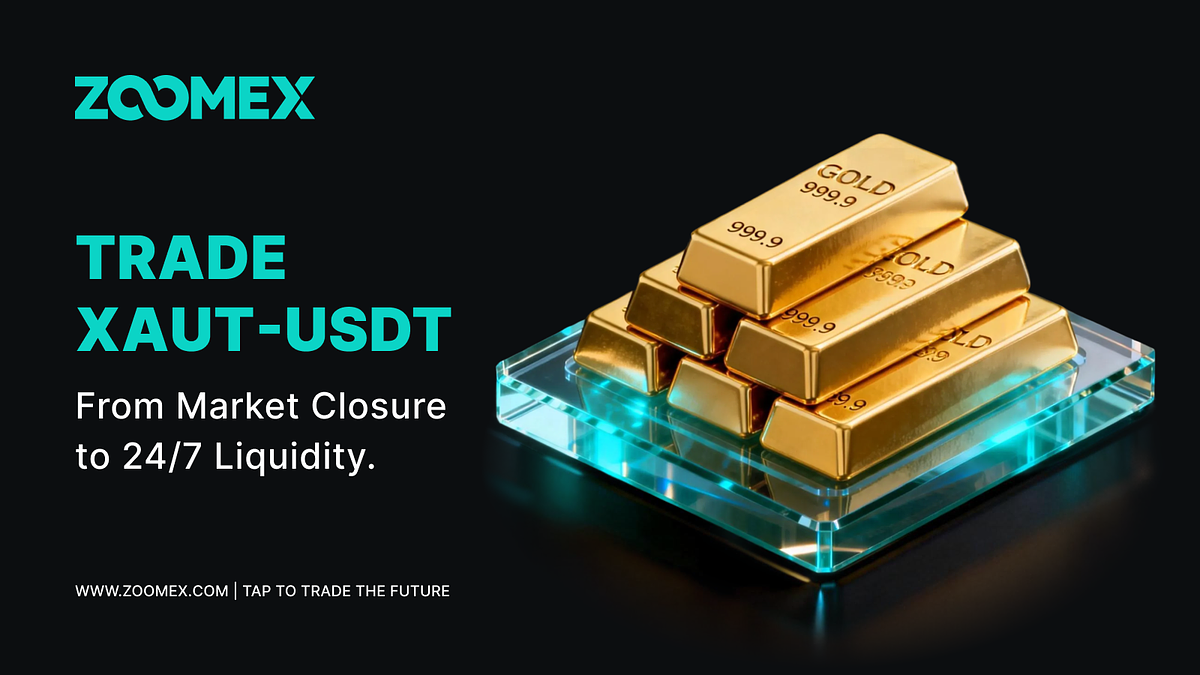
Platforms offering these assets saw a flurry of activity. The XAUT-USDT trading pair on the cryptocurrency exchange Zoomex, for example, became a focal point for investors seeking to manage their gold exposure. According to a press release from the company, the platform maintained stable liquidity and smooth order execution, enabling users to trade gold-backed tokens without delay. This capability highlights a growing trend where the quality of a trading venue is judged not just by its fees or features, but by its resilience and performance under extreme duress.
The Digital Safe Haven Emerges
Tokenized gold represents more than just a technological novelty; it is the convergence of one of the world's oldest safe-haven assets with cutting-edge financial infrastructure. Each token, like XAUT or the NYDFS-regulated PAXG, is backed by and redeemable for physical gold held in secure vaults. By placing ownership records on a blockchain, these assets gain the benefits of digital currencies: near-instantaneous settlement, global transferability, and fractional ownership, all while retaining the intrinsic value of gold.
This hybrid nature is attracting a new wave of investors, from crypto-natives seeking portfolio diversification to traditional investors looking for more efficient access to precious metals. The ability to hold a digital token that represents a direct claim on a physical gold bar bridges the gap between the tangible and the virtual, offering a powerful tool for wealth preservation in an increasingly uncertain world.
“We are seeing the maturation of the digital asset space beyond speculative currencies,” commented a market structure expert. “Asset-backed tokens provide real-world utility. They solve a clear problem: providing constant access to stable assets. This is not a temporary fad; it is a structural evolution.”
Platforms Tested Under Fire
For the exchanges that facilitate this activity, such moments of intense volatility are the ultimate test of their infrastructure. The promise of 24/7 trading is only valuable if platforms can deliver stable order books and reliable execution when traders need them most. In a crowded marketplace of digital asset exchanges, reliability during black swan events has become a key differentiator.
Zoomex, a global crypto exchange founded in 2021, highlighted its performance during the recent market turbulence as a validation of its systems. The company, which holds regulatory licenses including MSB registrations in the U.S. and Canada and has passed security audits by firms like Hacken, claims its integration of multi-source liquidity and optimized risk controls were crucial in maintaining a fair and transparent trading environment for the XAUT-USDT pair.
The broader regulatory environment is also beginning to provide clearer frameworks for these assets. Europe’s Markets in Crypto-Assets (MiCA) regulation and the stringent oversight from bodies like the New York Department of Financial Services are helping to legitimize tokenized assets, providing investors with greater confidence and protection. This growing regulatory clarity is essential for fostering wider adoption and integrating these digital tools into mainstream finance.
As the line between traditional and digital finance continues to blur, the ability to transact in trusted, stable assets around the clock is becoming less of a feature and more of a necessity. The recent surge in on-chain gold trading during a global crisis has provided a compelling glimpse into a future where market access is constant and risk management is instantaneous.
Topics & Related
Fintech
Software & SaaS
Capital Markets
Cloud & Infrastructure
Geopolitical Risk
Cloud Migration
Artificial Intelligence
IPO
Acquisition
Merger
Bitcoin
Stablecoins
Revenue
EBITDA
Related Company Pulse