
- $4 million: Market capitalization of WUSD, WSPN's flagship stablecoin
- 8+ blockchains: Cross-chain capabilities demonstrated by WSPN
- $3 trillion: Projected stablecoin market size by 2028 (Bernstein forecast)
Experts view WSPN's white-label stablecoin solution as a strategic pivot that could lower barriers to institutional adoption, positioning stablecoins as essential tools for global commerce and reinforcing the U.S. dollar's dominance in digital finance.
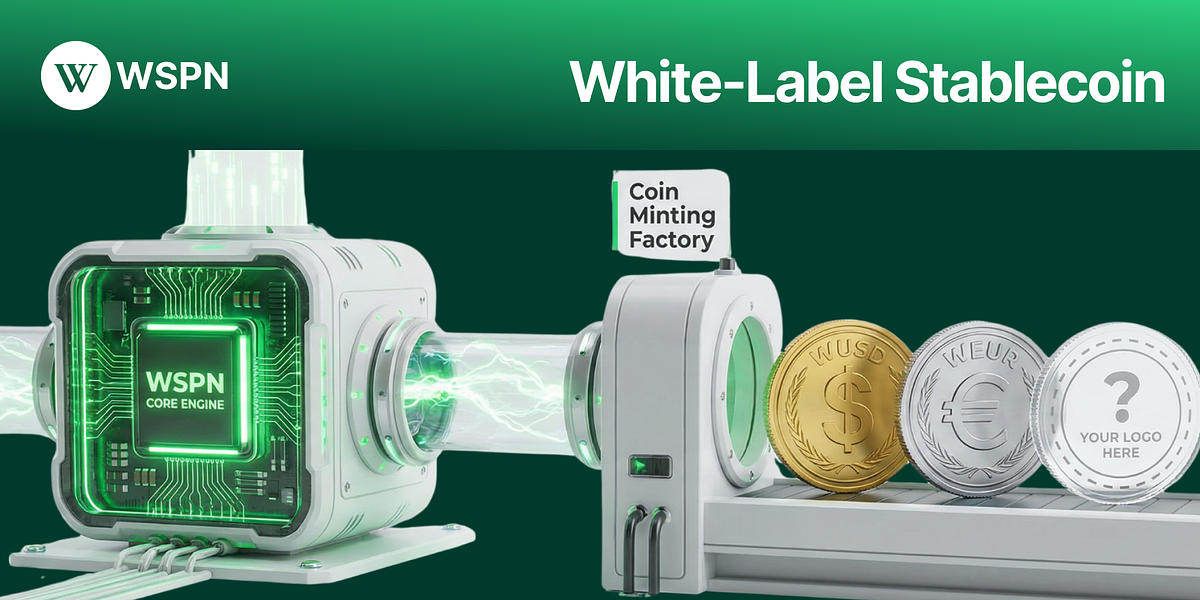
Digital Dollar Dominance: WSPN Arms Enterprises with Stablecoin Tech
TORTOLA, British Virgin Islands – December 05, 2025 – In a move that signals a significant maturation of the digital asset market, the Worldwide Stablecoin Payment Network (WSPN) has launched a white-label solution enabling enterprises to issue their own branded stablecoins. While the announcement may seem like another niche development in the complex world of Web3, its strategic implications are profound. WSPN is effectively providing the 'picks and shovels' for the institutional gold rush into digital currencies, a shift from merely offering its own product to building the foundational plumbing for a new era of corporate finance.
This development comes at a critical inflection point, as regulatory frameworks finally begin to provide the clarity that institutional players have long demanded. By offering a compliant, turnkey infrastructure, WSPN is lowering the formidable barriers to entry that have kept many corporations and financial institutions on the sidelines, potentially transforming stablecoins from a speculative trading instrument into an essential tool for global commerce.
From Product to Platform: A Strategic Pivot
Until now, WSPN has been primarily known for its flagship product, WUSD, a stablecoin pegged 1:1 to the U.S. Dollar. While modest in scale, with a market capitalization of around $4 million, WUSD has served as a crucial proof-of-concept for the company's underlying technology. The platform has demonstrated its robustness, processing significant daily transaction volumes and showcasing its cross-chain capabilities across more than eight leading blockchains. The recent appointment of former Visa Inc. President John Partridge to its Board of Directors further bolstered its credibility within traditional financial circles.
With its new White-Label Stablecoin Solution, WSPN is executing a strategic pivot from being a product company to an infrastructure-as-a-service provider. The offering bundles the core components needed to launch a stablecoin: client-controlled smart contracts for minting and burning tokens, custody and wallet infrastructure, a user front-end, and, most critically, a compliance layer to manage regulatory adherence.
"Building a scalable stablecoin from scratch requires significant engineering resources, regulatory expertise, and operational infrastructure," noted Raymond Yuan, Founder & CEO of WSPN, in the official announcement. "Our White-Label Solution allows enterprises to launch their own branded stablecoins in a fraction of the time and cost."
This model is not unlike the cloud computing revolution, where Amazon Web Services enabled countless startups to build powerful applications without investing in their own server farms. WSPN, along with competitors like Paxos and Circle, is vying to become the foundational layer upon which the next generation of financial services is built.
Navigating the New Regulatory Maze
The most significant tailwind for services like WSPN's is the recent dawn of regulatory clarity. For years, the lack of clear rules was the single greatest impediment to institutional adoption. That ambiguity has largely dissipated in 2025. In the United States, the passage of the Guiding and Establishing National Innovation for US Stablecoins (GENIUS) Act in July 2025 created a federal framework for payment stablecoins. The act mandates 1:1 reserves in high-quality liquid assets, places issuers under the oversight of federal regulators like the OCC, and clarifies that such assets are not securities, resolving a major source of legal uncertainty.
Similarly, the European Union's Markets in Crypto-Assets (MiCA) regulation, whose stablecoin provisions took full effect in 2024, established stringent requirements for reserves, governance, and transparency. By early 2025, crypto exchanges were delisting non-compliant stablecoins, cementing a new standard for operating in the EU.
WSPN's solution is designed to navigate this complex new landscape. Its inclusion of a KYT (Know Your Transaction) compliance layer is a direct answer to institutional needs. This goes beyond simple identity verification (KYC), enabling transaction monitoring, suspicious activity reporting, and adherence to global standards like the FATF's Travel Rule. For a bank or multinational corporation, the ability to outsource this immense compliance burden while retaining control over a branded digital asset is a powerful value proposition.
Unleashing Enterprise Demand for Digital Cash
The strategic rationale for enterprises to adopt—or issue—stablecoins is now clearer than ever. The technology promises to solve long-standing inefficiencies in corporate finance. For multinational corporations, cross-border payments that traditionally take days to settle through correspondent banking networks can be completed in minutes, drastically reducing costs and freeing up working capital.
Corporate treasurers are eyeing stablecoins as a revolutionary tool for cash and liquidity management. The 24/7 nature of blockchain networks allows for real-time cash positioning and automated, programmable payments, eliminating idle balances and optimizing capital efficiency. In an era of volatile global markets, holding reserves in a regulated, dollar-backed digital asset can also serve as a hedge against local currency fluctuations.
The appeal of a branded stablecoin adds another dimension. By issuing its own token, a large enterprise or payment provider can create a closed-loop ecosystem, reducing reliance on third-party payment rails, cutting transaction fees, and building customer loyalty. The reserves backing the stablecoin can also become a new source of revenue, generating yield from high-quality assets like short-term U.S. Treasuries.
The Future of Financial Infrastructure
WSPN is entering a competitive but rapidly expanding market. Established players like Paxos, which powers PayPal's PYUSD, and Circle, issuer of the widely used USDC, have already made significant inroads with institutional clients. However, the projected market size suggests there is ample room for multiple providers. Brokerage firm Bernstein forecasts the stablecoin market could reach $3 trillion by 2028, with others projecting even higher figures.
From a geopolitical perspective, the rise of regulated, dollar-pegged stablecoins has significant implications. Far from being a threat to the existing financial order, these instruments are increasingly seen as a way to project and reinforce the U.S. dollar's primacy in the digital age. The GENIUS Act itself was framed as a tool to ensure the dollar remains the world's dominant reserve currency as finance migrates onto blockchain rails.
Initiatives like WSPN's white-label solution are therefore more than just a new product. They represent the creation of a new, foundational layer of financial infrastructure—a globally accessible, efficient, and increasingly regulated system for moving value. As this technology becomes embedded into corporate treasury and payment systems, it will become as essential, and as invisible, as the TCP/IP protocol that powers the internet today.