
- Global population by 2050: 10 billion, requiring significantly more sustainable food production
- AI impact: Reduces sales forecasting errors by over 20% and optimizes labor costs
- Blue foods demand: Projected to nearly double by 2050
Experts agree that the future of food must balance sustainability, profitability, and technological innovation to address global challenges like climate change and population growth.
Designing Tomorrow's Plate: CIA Summit Charts Food's Future with AI
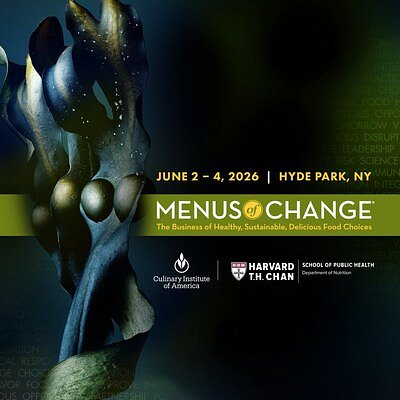
HYDE PARK, N.Y. – April 21, 2026 – As the global food system stands at a pivotal crossroads, beset by climate change, accelerating costs, and rapid technological shifts, the Culinary Institute of America (CIA) is convening a global brain trust to design the menu of 2035. The 14th annual Menus of Change® Leadership Summit, scheduled for June 2-4 at the college's flagship New York campus, aims to move beyond discussion and actively build a healthier, more sustainable, and profitable food future.
This year's summit gathers a formidable coalition of chefs, foodservice executives, policy experts, and scientists to address the pressing question: What will we eat in the next decade, and how will it get to our plates? The agenda is ambitious, tackling everything from the potential of aquatic ecosystems to the burgeoning role of artificial intelligence in the kitchen.
"The global food system is at a crossroads," said Robert E. Jones, vice president of partnerships, industry leadership, and impact at the CIA, in a statement. "External pressures and the pace of change are accelerating to reshape the way we produce, consume, and think about food. Menus of Change is designed to help businesses navigate this challenge."
The Crossroads of 2035: A System Under Pressure
The urgency of the summit is underscored by stark global realities. Experts predict the world will need to produce significantly more food to feed a population nearing 10 billion by 2050, all while contending with the severe impacts of climate change on agriculture. The challenge is not merely to produce more, but to do so sustainably and equitably.
For the first time, the conference will dedicate each day to a specific deep dive. The agenda reflects a comprehensive strategy to address these multifaceted challenges. The summit is not just a forum for ideas but a workshop for actionable solutions, a mission it has pursued for over a decade. Since its inception as a collaboration with the Harvard T.H. Chan School of Public Health, Menus of Change has been instrumental in shifting industry paradigms, most notably by popularizing the "plant-forward" dining concept—a style that emphasizes plant-based ingredients without necessarily eliminating animal products.
This legacy of influence positions the summit as a critical platform for addressing the next wave of challenges and opportunities, from navigating volatile supply chains to harnessing disruptive technologies.
Blue Foods and AI: The New Frontiers
Two of the most forward-looking themes of the summit are the deep dives into blue foods and artificial intelligence, highlighting a dual focus on natural ecosystems and technological innovation.
On June 2, the focus turns to the world's oceans and waterways. With global demand for aquatic foods projected to nearly double by 2050, the summit will explore how "blue foods"—including kelp, sea vegetables, and sustainably farmed species—can build a more resilient food system. These foods offer a powerful combination of high nutritional value and a lower environmental footprint compared to many land-based proteins. Farmed bivalves like mussels and oysters, for example, have remarkably low greenhouse gas emissions. The conversation will be enriched by insights from presenters like Josh Niland, the Australian chef and owner of Saint Peter, whose revolutionary "whole-fish" cookery has made him a global icon of seafood sustainability.
On June 4, the summit pivots from the ocean to the algorithm, examining the role of AI in foodservice. Far from a dystopian future of robot chefs, the discussion will focus on AI as a powerful tool for enhancing transparency, efficiency, and even storytelling. Research shows AI can already reduce sales forecasting errors by over 20% and cut labor costs through optimized scheduling. For an industry grappling with tight margins and labor shortages, AI offers practical solutions for inventory management, waste reduction, and personalized customer experiences, ultimately freeing up human chefs to focus on creativity and hospitality.
Fortifying the Business of Food
Beyond future-facing technologies and novel ingredients, the summit remains grounded in the pressing economic realities facing today's foodservice operators. The second day, June 3, is dedicated to helping businesses navigate an ever-changing landscape marked by rising costs, supply chain disruptions, and the ongoing challenge of building and retaining a skilled workforce.
This practical focus is what makes the summit invaluable for its target audience of C-suite executives, restaurant owners, and hospitality managers. The sessions are designed to provide tangible strategies for building resilience and maintaining profitability while advancing health and sustainability goals. The dialogue will feature leaders who are actively implementing these strategies, including Rene van Camp, chief hospitality officer for ISS North America, and Paul Yang, head of Global Sustainability for Restaurant Brands International.
This emphasis on the intersection of profitability and purpose is a core tenet of the Menus of Change initiative. It operates on the principle that sustainable and healthy choices must also be good for business if they are to achieve widespread adoption.
A Confluence of Visionaries
Reinforcing the summit's intellectual heft is a roster of distinguished presenters. The lineup includes some of the most influential voices in nutrition, food science, and public health, such as Dr. Marion Nestle of New York University, a leading authority on food politics; Dr. Christopher Gardner of Stanford Medicine, whose research on dietary patterns has gained widespread attention; and Dr. Teresa Fung of Simmons University and Harvard, an expert on the impact of diet on chronic disease. They are joined by chefs, activists, and futurists like Mavis-Jay Sanders and Mike Lee, ensuring a rich, multi-disciplinary conversation.
By bringing these diverse perspectives together, the Culinary Institute of America is fostering a collaborative environment where the future of food is not just predicted, but actively co-created. The summit serves as a critical annual checkpoint for the industry, a place to measure progress, confront challenges, and chart the course for the year—and the decade—ahead.
Topics & Related
Food & Agriculture
Financial Services
Artificial Intelligence
ESG
Digital Transformation
Related Company Pulse