
- $140M Investment: Groupe Desgagnés has invested over $140 million in fleet expansion over the past three years.
- 40 New Jobs: The acquisition of the M/V Johane A. Desgagnés creates over 40 direct jobs.
- 500-Ton Lift Capacity: The ship features two 250-metric-ton cranes, combinable for 500-ton lifts, critical for Arctic project cargo.
Experts would likely conclude that Desgagnés's strategic investment in Arctic shipping reinforces its market leadership while addressing critical supply chain needs in remote northern communities, though it must navigate environmental and operational challenges in the fragile Arctic region.
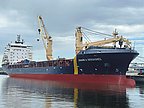
Desgagnés's Arctic Push: A New Ship, a $140M Strategy, and a Personal Legacy
QUEBEC CITY, QC – June 11, 2026 – As the M/V Johane A. Desgagnés sits at the Port of Québec, freshly registered under the Canadian flag, it represents far more than just the latest addition to a storied shipping fleet. Its arrival marks the culmination of a strategic, multi-year investment aimed at cementing Groupe Desgagnés's dominance in one of the world's most challenging maritime environments. Acquired from German partner Briese Schiffahrts, the vessel is poised to begin its maiden voyage north on June 12, but its true journey is part of a much larger narrative about Arctic sovereignty, supply chain resilience, and corporate legacy.
This isn't just another ship; it's a statement. With over $140 million invested in fleet expansion over the last three years, Desgagnés is making a calculated bet on the future of the Canadian Arctic and its own role within it. The acquisition creates over 40 direct jobs and signals a deep commitment to the communities and industries that depend on a reliable sea-lift lifeline.
A Modern Lifeline for the Canadian North
The Canadian Arctic is a region of vast distances and logistical extremes. For dozens of remote communities in Nunavut and Nunavik, the annual sea-lift is not a matter of convenience but of survival. With a short shipping season, often lasting from June to November, these communities rely on vessels to deliver a year's worth of essential goods, construction materials, vehicles, and fuel. For decades, Desgagnés has been a key player in this critical operation.
The M/V Johane A. Desgagnés is purpose-built to enhance this lifeline. At 147 meters long, the general cargo carrier boasts a cargo hold capacity of over 17,600 cubic meters, expandable to more than 24,000 m³ using the main deck. Its most critical feature for project cargo—essential for building new infrastructure or supporting mining operations—is its two 250-metric-ton cranes, which can be combined to lift a staggering 500 tons. This heavy-lift capability is a game-changer in a region where many communities lack conventional port infrastructure, requiring complex ship-to-shore transfers via barges.
Furthermore, its Ice Class 1A rating provides the structural integrity and power needed to navigate the unpredictable ice conditions of Arctic waters, potentially extending its operational window and increasing service reliability. As vessel traffic in the Canadian Arctic has nearly tripled in recent decades, driven by climate change and resource development, the need for such capable, modern ships has become acute. The Johane A. Desgagnés and its sister ships are a direct response to that demand, ensuring capacity keeps pace with the North's growing needs.
A $140 Million Gambit for Maritime Supremacy
The arrival of the Johane A. Desgagnés is not an isolated event but the latest move in an aggressive, long-term expansion strategy. The company has invested over $140 million in its fleet over the past three years, bringing in the Marcellin A. Desgagnés in 2023 and both the Annette A. Desgagnés and Berthe A. Desgagnés in 2024. This rapid modernization and expansion is a clear signal to competitors like Nunavut Eastern Arctic Shipping (NEAS) and Fednav that Desgagnés intends to not only maintain but expand its leadership position.
"[We are] very pleased with this acquisition, which... allows Desgagnés to maintain its position as a leader in maritime services to the Arctic, which it has served for nearly 60 years," said Louis-Marie Beaulieu, Chairman of the Board and CEO of Desgagnés. This investment shores up the company’s core business of serving remote communities while also positioning it to capture more lucrative contracts for project cargo related to mining and infrastructure, a growing sector in the North.
By adding a fourth sister ship with identical specifications, Desgagnés achieves significant operational efficiencies in crew training, maintenance, and parts management. This fleet-within-a-fleet of heavy-lift, ice-class vessels provides a level of service and redundancy that is difficult for competitors to match, strengthening the company's nearly half-billion-dollar revenue base and solidifying its role as a cornerstone of the Quebec and Canadian maritime industry.
Navigating a Fragile Frontier
Operating in the Arctic comes with immense responsibility. The region's ecosystem is fragile, and its indigenous communities rely on the marine environment for their livelihood and culture. Increased shipping, while economically necessary, brings heightened risks of environmental damage from spills, underwater noise, and air emissions like black carbon. The M/V Johane A. Desgagnés will operate under the stringent International Code for Ships Operating in Polar Waters (Polar Code) and Canada's own Arctic Shipping Safety and Pollution Prevention Regulations. These rules govern everything from vessel construction and equipment to operational procedures and pollution prevention, including a forthcoming ban on the use of heavy fuel oil.
While Desgagnés has previously invested in cutting-edge dual-fuel LNG vessels for other parts of its fleet, the focus for this ship is its operational robustness and safety. The Ice Class 1A rating is not just for performance but is a critical safety standard, reducing the risk of hull damage in icy waters. As shipping companies continue to call for federal investment in better Arctic infrastructure, including improved port facilities and navigational charting, the onus remains on operators to deploy vessels that are fit for purpose and meet the highest standards of environmental stewardship.
Beyond the Steel Hull: A Legacy in a Name
Perhaps the most telling detail of this new chapter for Desgagnés is the ship's name. In a tradition dating back to the 1970s, the company has often named its vessels after the women of the Desgagnés family, recognizing their foundational, if often behind-the-scenes, contributions. The M/V Johane A. Desgagnés honors Johane Desjardins, the spouse of CEO Louis-Marie Beaulieu.
Mr. Beaulieu explained the decision was made to continue highlighting the contributions of women whose role in the company's growth has been significant. He noted that Johane Desjardins "undeniably played a highly significant role in Desgagnés's evolution through her unwavering support, deep understanding, compassion, and endless patience." This public act of recognition is a powerful statement in an industry that has been historically male-dominated. It connects the company's modern, forward-looking business strategy with a deep-seated respect for its own history and the people who built it.
As the M/V Johane A. Desgagnés prepares to sail, it carries more than just cargo. It carries the weight of a strategic corporate vision, the hopes of the northern communities it will serve, and a name that honors the human foundation upon which the entire enterprise is built.