
- 82.4 million passengers served by Denver International Airport in 2024
- 10-year advertising contract with JCDecaux North America, pending approval
- $7 billion projected global airport advertising market by 2033
Experts view this partnership as a strategic move to enhance passenger experience and generate substantial non-aeronautical revenue, aligning with Denver Airport's ambitious expansion goals.
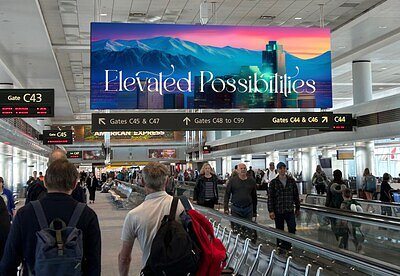
Denver Airport Taps Ad Giant for Major Digital Media Overhaul
DENVER, CO – March 03, 2026 – Denver International Airport (DEN), one of the world's busiest transportation hubs, is poised for a significant transformation of its public spaces after selecting JCDecaux North America for a landmark 10-year advertising contract. The deal, which awaits final approval from the Denver City Council, would hand the reins of the airport's media landscape to the world's largest outdoor advertising company, promising a complete digital overhaul and a substantial new revenue stream to fuel the airport's ambitious expansion plans.
The partnership, slated to begin in May 2026 if approved, marks a pivotal moment for DEN. The airport, which served a record 82.4 million passengers in 2024, is aggressively pursuing its 'Vision 100' strategic plan to accommodate 100 million annual passengers. This new agreement with JCDecaux is a key component of that strategy, leveraging cutting-edge technology to enhance the traveler experience and generate significant non-aeronautical income.
A Digital Transformation for a Growing Hub
The core of the new partnership is a massive investment in state-of-the-art digital advertising technology. JCDecaux plans to replace existing advertising fixtures with a sophisticated, integrated network of high-impact digital displays throughout the airport. The overhaul will be particularly focused on the recently redeveloped Great Hall and will extend across all concourses, transforming the visual environment for the millions of passengers who pass through the facility each month.
This move aligns directly with DEN's 'Vision 100' plan, a multi-billion dollar initiative to expand and modernize the airport's infrastructure. Announced in 2021, the plan aims to reach its 100-million-passenger target by 2027 through projects like a 39-gate expansion, a new Concourse C-West extension, and the final phase of the main terminal renovation. By creating a world-class digital media platform, the airport aims to create a more dynamic and engaging atmosphere that reflects its status as a modern global gateway.
For travelers, this means a shift away from static posters and toward dynamic, high-definition screens capable of delivering targeted and contextually relevant content. Based on JCDecaux's implementations in other major global airports like London Heathrow, Paris-Charles-de-Gaulle, and Singapore, Denver passengers could soon experience programmatic advertising that changes based on time of day, flight destinations, or even weather. The company's technology allows for real-time activation, such as displaying welcome messages in the native language of an arriving international flight, creating a more personalized and seamless journey through the airport.
Fueling Growth Beyond the Runway
Beyond enhancing the passenger experience, the contract is a strategic financial maneuver for Denver International Airport. The agreement is expected to generate "substantial non-aeronautical revenue," a critical funding source for airports that helps keep airline costs down and finances capital improvements without relying solely on passenger fees.
The global airport advertising market is a rapidly growing, multi-billion dollar industry, projected to exceed $7 billion by 2033. The shift from traditional to digital out-of-home (DOOH) advertising is the primary engine of this growth. Digital displays command premium rates due to their flexibility, ability to run full-motion video, and capacity to host multiple advertisers on a single screen. Furthermore, the rise of programmatic advertising—which allows for the automated, data-driven buying and selling of ad space—is making airport media more efficient and attractive to a wider range of brands. Programmatic was projected to account for over 30% of airport ad revenue in 2024, a share that continues to grow.
This new revenue will be instrumental in supporting DEN's 'Vision 100' and its longer-term 'Operation 2045' plan, which envisions accommodating over 120 million passengers. As a major economic engine for the region, generating an estimated $47.2 billion in annual economic impact, the airport's ability to self-fund its growth through innovative commercial partnerships is crucial for its continued success and its role in expanding global connections for Colorado.
A Strategic Win in a Competitive Market
For JCDecaux, securing the Denver contract is a significant strategic victory that reinforces its dominance in the highly competitive airport advertising sector. The company already manages advertising in 157 airports globally, including 14 of the world's 25 busiest. Adding DEN, the 10th busiest airport in the world, to its portfolio strengthens its foothold in the critical North American market.
"We are incredibly proud to partner with Denver International Airport, a true symbol of modern aviation and growth," said Jean-François Decaux, Chairman of the Executive Board and Co-Chief Executive Officer of JCDecaux, in a statement. "This significant win reinforces JCDecaux's market leadership in the global airport sector... We are committed to developing a sophisticated, world-class media platform that truly reflects DEN's pioneering spirit and delivers exceptional engagement for both travellers and brand partners."
The airport OOH landscape is fiercely contested by a handful of major players. JCDecaux's primary competitor, Clear Channel Outdoor, has also been aggressive in securing long-term digital-focused contracts, recently renewing major deals at Washington D.C.'s two airports and Detroit Metropolitan Airport. The decision by DEN to partner with JCDecaux underscores the French firm's reputation for premium digital implementation and global reach.
This trend of airports entering into long-term, high-investment partnerships with media companies highlights a fundamental shift in how airport commercial space is valued. Airports are no longer just transit points but powerful media environments, offering advertisers access to a captive, affluent, and diverse global audience. The new program at Denver International Airport is set to become a leading example of this new reality.