
- ₱9 trillion infrastructure plan ('Build Better More') to modernize the Philippines with climate-resilient projects
- 50% EV adoption target by 2040 set by the Department of Energy
- 590 charging stations in the Philippines as of 2023, mostly in Metro Manila
Experts view Danao City's EV charging hub as a model for sustainable transport infrastructure, aligning with national policies and addressing critical gaps in charging accessibility.
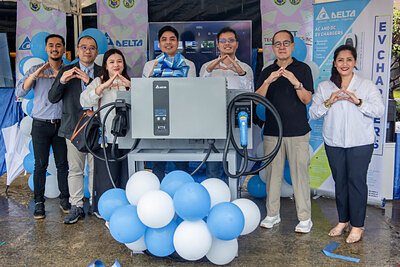
Danao City Powers Up Cebu's EV Future with New Charging Hub
DANAO CITY, Cebu – February 23, 2026 – Danao City has officially plugged into the future of transportation, launching a landmark public electric vehicle (EV) charging station in a strategic partnership with global tech leader Delta Electronics. The initiative, formally unveiled on February 3 at The Boardwalk, positions the city as a pioneer in sustainable transport for Northern Cebu and provides a tangible boost to the Philippines' national 'Build Better More' infrastructure agenda.
The new charging hub, located at a central government site, makes Danao City Hall one of the first government centers in the region to offer public-access charging. The project underscores a growing trend of public-private partnerships driving the nation's green transition.
"This initiative directly supports our vision for modern, resilient, and environmentally responsible cities," said Danao City Mayor Ramon 'Nito' Durano III during the launch. "By investing in Electronic Vehicle infrastructure today, we are positioning our city to contribute to long-term economic growth, energy efficiency, and improved quality of life for the people of Danao."
A Blueprint for National Ambition
The Danao City project is more than a local milestone; it serves as a crucial case study for implementing the Philippines' ambitious environmental and infrastructure policies. The initiative directly aligns with the 'Build Better More' program, the current administration's ₱9 trillion plan to modernize the country's infrastructure with a strong emphasis on climate resiliency and sustainability.
Furthermore, the project is a direct application of the Electric Vehicle Industry Development Act (EVIDA), or Republic Act No. 11697. Ratified in 2022, EVIDA created a comprehensive national framework to accelerate EV adoption through a suite of fiscal and non-fiscal incentives. These include exemptions from certain taxes, discounts on registration fees, and exemption from the number coding scheme, all designed to make EV ownership more attractive to the public and to commercial fleet operators.
By establishing EV-ready infrastructure and designated 'Green Slots' for parking and charging, Danao City is not only complying with the law but also creating a replicable model for other local government units (LGUs) across the archipelago. This proactive stance is critical for the Department of Energy's goal of having EVs constitute 50% of all vehicles on Philippine roads by 2040.
"This project reflects Delta's commitment to supporting the Philippines' transition to cleaner and more resilient transport infrastructure," said Vince Del Mundo, Country Manager for Delta Electronics Philippines. "By working closely with Danao City and our partners, we aim to deliver EV charging solutions that are standards-compliant, climate-ready, and scalable, helping local governments meet national sustainability goals while building long-term value for their communities."
Tackling the Infrastructure Gap
While EV registrations in the Philippines have surged, growing by over 50% in the last year, the primary obstacle to mass adoption remains the scarcity of charging infrastructure. As of 2023, the country had just over 590 charging stations, with the majority concentrated in Metro Manila. This 'range anxiety' is a significant barrier for potential EV owners in regional and rural areas.
The Danao City installation directly confronts this challenge. Delta is deploying a versatile combination of its charging technology to serve a wide array of vehicles. This includes the DC Wallbox 25kW, a DC fast charger capable of providing significant range in a short amount of time, and the AC Max 22kW, an efficient solution for longer-term charging. The combination ensures that the station can service everything from the increasingly popular e-trikes and electric motorcycles to passenger cars and even e-buses.
Critically, these solutions are engineered for the demanding Philippine environment. The chargers are IP-rated and weather-resistant, ensuring reliability amidst tropical weather conditions and high public usage. Delta, which has deployed over 3 million chargers worldwide, leverages its extensive R&D and manufacturing capabilities to create robust systems tailored for local needs. This focus on durability and standards compliance is vital for building a dependable national charging network that can win public trust.
Local Impact and Regional Significance
For the residents and businesses of Danao City, the new charging hub promises tangible benefits. It provides critical infrastructure to support the shift to electric public transport, which can significantly lower operating costs for drivers and reduce fares for commuters. The accessibility of public charging is expected to lower the barrier to entry for private EV ownership, contributing to cleaner air and reduced noise pollution in the urban center.
The project also marks the first 'Smart City' initiative between Delta Electronics and the Danao City Government. This establishes a foundational partnership that can be expanded in the future to include other green mobility and smart energy solutions, such as renewable energy integration and grid management, as local demand for sustainable technology grows.
By taking this decisive step, Danao City is not just investing in hardware; it is investing in a new identity as a forward-thinking and environmentally conscious urban center. This leadership role in Northern Cebu could inspire a ripple effect, encouraging neighboring municipalities to pursue similar green infrastructure projects. As the Philippines works towards its national target of nearly 7,300 charging stations by 2028, the success of localized, collaborative efforts like the one in Danao will be paramount to transforming a national vision into a widespread reality.
Topics & Related
Digital Transformation
ESG
Technology
Related Company Pulse