
- 120 square kilometers of land scorched in Cyprus's devastating 2025 fire season
- 85% of fires caused by human activity
- €30,000 prize fund awarded to top teams at HackTech 2025
Experts agree that Cyprus's integration of technology and public-private collaboration represents a forward-thinking model for national resilience against wildfires, combining innovation with practical emergency response.
Cyprus Fights Fire with Code: A New Strategy for National Resilience
LIMASSOL, CYPRUS – November 26, 2025 – In the wake of a devastating fire season that scorched over 120 square kilometers of land and claimed lives, Cyprus is turning to a new and powerful asset in its defense against natural disasters: its burgeoning technology sector. The island, which has historically battled blazes with water and manpower, is now deploying lines of code as digital firebreaks. This strategic shift was on full display at HackTech 2025, the nation's largest open hackathon, where a potent alliance of government, private industry, and tech innovators convened to tackle the existential threat of wildfires head-on.
Hosted by AdTech Holding on November 15-16, the event transformed a Limassol venue into a high-stakes innovation lab. For 48 hours, more than 100 developers, designers, and strategists focused their collective intellect on the theme "Tech vs wildfires," a direct response to a crisis that has become tragically familiar to the Mediterranean island.
Forging Digital Firebreaks
The hackathon was not merely an academic exercise; it was a focused effort to generate tangible solutions. Participants were channeled into three critical tracks, mirroring the lifecycle of a disaster: Prevention (early warning systems), Protection (real-time monitoring), and Recovery (post-fire damage assessment). This structured approach aimed to move beyond reactive measures and build a comprehensive technological shield for the island.
The energy in the room was palpable as teams raced against the clock to build working prototypes. The initiative, a testament to strategic public-private partnership, was funded by the European Union’s NextGenerationEU program through the Cyprus Recovery and Resilience Plan, with strong backing from the Deputy Ministry of Research, Innovation, and Digital Policy.
Alex Vasekin, CEO of AdTech Holding, emphasized the practical mission of the event after the final pitches. "We keep saying HackTech is not just another coding weekend, and this year proved it once again," he stated. "When you put all these motivated people in one room and ask them to address a problem that directly affects our island, the ideas that come out are impressive – and many of them are actually doable. That's exactly why we started this event four years ago."
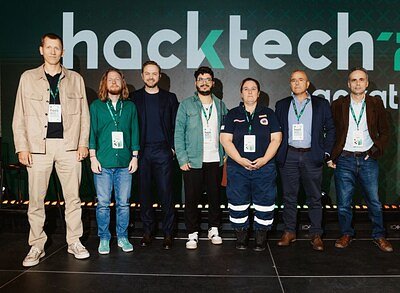
This focus on feasibility was a key criterion for the jury, a diverse panel that included IT experts, government officials, and, crucially, firefighters and emergency response personnel. After rigorous evaluation based on innovation, execution, and real-world potential, a €30,000 prize fund was awarded to the top three teams: Nexxians, Cold Reload, and DasoPhylax.
A Crisis Igniting a National Strategy
The urgency fueling HackTech 2025 cannot be overstated. Cyprus has long identified wildfires as the highest-level risk in its National Risk Assessment. The 2025 fire season was particularly brutal, with a massive blaze in July, exacerbated by a 44°C heatwave, destroying multiple villages and vital ecosystems. This incident followed the 2021 Limassol fires, then considered the worst in the country's history. With statistics showing that 85% of fires are caused by human activity, the challenge is as much about managing human behavior as it is about fighting flames.
In response, the Cypriot government has been aggressively modernizing its capabilities. In June 2025, a government spokesman declared that Cyprus was entering the fire season with the "strongest firefighting force in its history." This reinforcement includes the acquisition of 25 new fire engines, expanded aerial support, and long-term plans for a more robust fleet of firefighting aircraft. Critically, the strategy also includes a significant technological component. Electro-optical fire detection systems with heat sensors are already operational in key forest areas, aiming to slash response times to under ten minutes.
The government’s support for HackTech 2025, highlighted by the attendance of Deputy Minister of Research, Innovation, and Digital Policy, Dr. Nicodemos Damianou, signals a profound recognition that hardware alone is not enough. By integrating the agile, problem-solving power of the tech community, Cyprus is diversifying its risk management portfolio, treating innovation as a critical piece of national infrastructure.
The Ecosystem as an Engine for Resilience
Beyond the immediate goal of developing wildfire solutions, HackTech 2025 serves as a powerful case study in ecosystem development. AdTech Holding, a company recognized for its rapid growth, has strategically evolved its internal hackathons into a premier national event that acts as a catalyst for the entire Cypriot tech scene. Now in its fourth year, the event has become a nexus where talent, capital, and policy converge.
The involvement of sponsors like FunTech company Mayflower and digital solutions provider Nexxie, alongside ecosystem partners such as TechIsland, illustrates a broader trend. Companies are no longer just writing checks for corporate social responsibility; they are making strategic investments in the community that provides their talent and their license to operate. For them, supporting HackTech is a multi-faceted win: it enhances their brand, provides a direct pipeline to top developers, and demonstrates a tangible commitment to solving local problems.
This collaborative model is precisely what organizations like TechIsland, a non-profit association dedicated to making Cyprus a global tech hub, aim to foster. By uniting the tech community, government bodies, and established companies around a shared, urgent cause, events like HackTech build the connective tissue necessary for a durable and innovative economy. It proves that the tech sector can be a primary engine for national resilience, capable of tackling challenges far beyond the digital realm.
From Local Code to a Global Blueprint
As climate change intensifies environmental threats worldwide, the model on display in Cyprus offers a valuable blueprint for other nations. The hackathon's success hinges on a potent formula: targeted, high-level funding from programs like the EU's Recovery and Resilience Facility; clear government backing and integration into national strategy; private sector leadership providing the organizational backbone; and an engaged community of innovators ready to contribute their skills.
This open innovation approach effectively de-risks the early stages of research and development for disaster-related technologies. In 48 hours, the government and its emergency services were presented with a portfolio of novel, pre-vetted ideas that might otherwise have taken years and significant investment to surface through traditional procurement channels.
The prototypes developed by teams like Nexxians, Cold Reload, and DasoPhylax represent more than just clever coding. They embody a new, agile, and collaborative approach to public safety and environmental stewardship. As Cyprus continues to build its defenses against wildfires, the island is demonstrating that in the 21st century, a nation's resilience is measured not only by its physical resources but also by the strength and ingenuity of its digital ecosystem.