
- 95% of cybersecurity funding is directed at corporate IT networks, leaving operational technology (OT) environments dangerously exposed.
- 87% of American nuclear reactors and utilities powering 80% of U.S. households are clients of ArmorText, highlighting the critical infrastructure at stake.
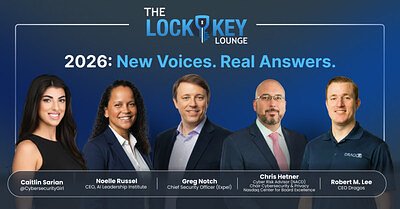
- The podcast features Robert M. Lee, CEO of Dragos, and Christopher Hetner, former top cybersecurity advisor at the SEC, among other high-profile experts.
Experts agree that podcasts like 'Lock & Key Lounge' are becoming essential platforms for fostering multidisciplinary dialogue and collective resilience in cybersecurity, bridging gaps between technical, regulatory, and corporate strategies to address urgent threats to critical infrastructure.
Cybersecurity's New Stage: How Podcasts Shape Industry Defense
MCLEAN, Va. – February 10, 2026 – In an increasingly complex digital world, the battle for cybersecurity is being fought not only in server rooms and boardrooms but also in the open forum of expert dialogue. A prime example of this evolving landscape is ArmorText's 'Lock & Key Lounge Podcast', which has announced a high-profile guest lineup for 2026, signaling a broader trend where specialized media is becoming a crucial tool for dissecting and addressing threats to critical national infrastructure.
The podcast, hosted by ArmorText CEO Navroop Mitter and Director Matthew Calligan, is positioning itself as more than just a series of interviews. By assembling leading voices from industrial security, artificial intelligence, corporate governance, and online influence, the initiative underscores a strategic shift in how the cybersecurity industry shares knowledge and builds collective resilience.
The New Agora for Cybersecurity Dialogue
Long gone are the days when critical cybersecurity discussions were confined to classified briefings or exclusive industry conferences. Today, podcasts like 'Lock & Key Lounge' have emerged as the new digital agoras—public squares where complex ideas are debated, and expertise is shared across disciplines. The 2026 guest list is a testament to this multidisciplinary approach.
The lineup features figures like Robert M. Lee, the CEO of Dragos and a world-renowned authority on industrial control systems (ICS) security. Lee's work has been central to understanding major attacks on infrastructure, including the 2015 cyberattack on Ukraine's power grid. His presence brings a front-line perspective on the tangible, physical consequences of digital threats. Joining him are Christopher Hetner, a former top cybersecurity advisor at the U.S. Securities and Exchange Commission (SEC), who now champions cyber risk governance at the board level with the National Association of Corporate Directors (NACD), and Greg Notch, CISO of managed detection firm Expel and former CISO of the National Hockey League.
This blend of operational, regulatory, and enterprise security expertise is further broadened by the inclusion of Caitlin Sarian, the influential "Cybersecuritygirl" with over a million social media followers, and Noelle Russell, CEO of the AI Leadership Institute. Sarian represents a new generation of communicators dedicated to demystifying cybersecurity for a wider audience, while Russell’s focus on AI points to the next frontier of both cyber threats and defenses. This diverse roster reflects a sophisticated understanding that modern cybersecurity challenges cannot be solved in a silo. They require a holistic conversation that bridges the gap between deep technical knowledge, high-level policy, corporate strategy, and public awareness.
The podcast's history reinforces this commitment to broad-spectrum analysis. Previous episodes have featured discussions on the industrialization of cybercrime with Lowenstein Sandler partner Amy Mushahwar, the unique threats facing non-profits with Frank McGothigan of the Ford Foundation and NGO-ISAC, and the surprising intersection of extreme weather and cyber risk with former DHS official Sunny Wescott.
Guardians of the Grid: Unpacking Urgent Threats
The topics explored by the 'Lock & Key Lounge' are not academic exercises; they are direct responses to the urgent threats facing the world’s most vital systems. The security of operational technology (OT)—the systems that control physical processes in power plants, water treatment facilities, and manufacturing lines—is a central theme. Experts have long warned of a dangerous imbalance where an estimated 95% of cybersecurity funding is directed at corporate IT networks, leaving the revenue-generating and life-sustaining OT environments dangerously exposed.
Guests like Robert M. Lee are uniquely positioned to illuminate this risk. His firm, Dragos, was instrumental in analyzing the Pipedream malware, a sophisticated, reusable toolkit designed to disrupt or destroy industrial equipment. Unlike common software vulnerabilities, threats like Pipedream target the fundamental logic of industrial controllers, making them exceptionally difficult to patch and defend against. The podcast provides a platform to translate these highly technical threats into understandable business and national security risks.
Similarly, Christopher Hetner’s involvement speaks to the immense pressure now being placed on corporate boards to oversee cybersecurity. Following high-profile breaches and new SEC regulations, cyber risk is no longer just an IT problem but a core component of corporate governance. Hetner’s insights help bridge the communication gap between CISOs and directors, ensuring that security investments are aligned with business objectives and that organizations are prepared for incident response. This focus on boardroom decisions is critical for the operators of the 87% of American nuclear reactors and the utilities powering 80% of U.S. households that ArmorText claims as clients, where a cyber incident could have catastrophic consequences.
A Blueprint for Strategic Influence
Beyond its educational value, the 'Lock & Key Lounge Podcast' serves as a masterclass in modern B2B thought leadership and strategic influence. For ArmorText, a company recognized by Forrester as a leader in secure communications, the podcast is a powerful tool that reinforces its brand authority in the critical infrastructure sector. Instead of relying solely on traditional marketing, the company has created a valuable industry resource.
By hosting the conversation, ArmorText places itself at the hub of the cybersecurity ecosystem. It fosters relationships with the industry's most influential figures, gains invaluable insights into emerging threats and customer pain points, and subtly associates its brand with expertise, collaboration, and problem-solving. This is not direct product promotion; it is a more sophisticated strategy of building a community and establishing trust. The podcast’s tagline, "New Voices. Real Answers," encapsulates this mission to cut through marketing buzzwords and tackle substantive challenges.
This strategy is particularly effective in the high-stakes world of critical infrastructure, where trust and reputation are paramount. When a company’s clients include the majority of a nation’s power grid and nuclear facilities, demonstrating a deep, ongoing commitment to securing that ecosystem is as important as the technology it sells. The podcast becomes a public-facing manifestation of that commitment.
As threat actors become more industrialized and collaborative, the defense community must respond in kind. Platforms that bring together diverse experts to share intelligence, debate strategy, and educate a wider audience are no longer a novelty but a necessity. By curating these vital conversations, initiatives like the 'Lock & Key Lounge' are helping to shape the future of collective defense, one episode at a time.