
- 34 seconds: Time saved per beverage order with ACSD
- 12 additional cars: Potential extra vehicles served per day during peak hours
- 12-18 months: Projected payback period for investment
Experts view the ACSD as a valuable tool for augmenting human labor in QSRs, improving efficiency and addressing labor shortages without replacing staff.
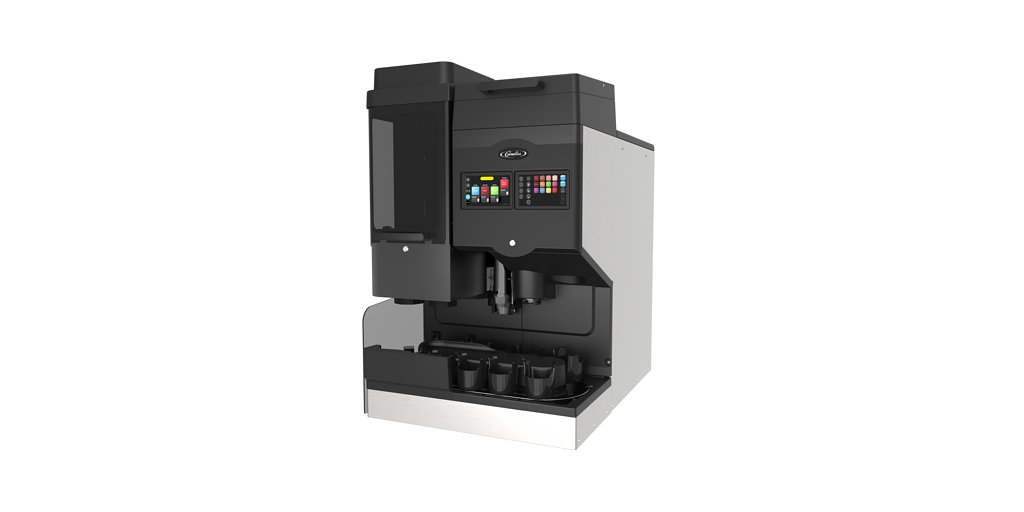
Cornelius Debuts Robot to Revolutionize QSR Drive-Thru Speeds
CAROL STREAM, Ill. – April 02, 2026 – In an industry where every second counts, beverage dispensing leader Cornelius has thrown down the gauntlet with the launch of its Automatic Crew-Serve Dispenser (ACSD). The new system is a fully automated beverage station designed to orchestrate the entire drink-making process, from order receipt to a staged and ready-to-go cup, aiming to solve one of the biggest bottlenecks in quick service restaurant (QSR) operations.
The announcement comes as the fast-food sector grapples with a perfect storm of operational pressures: persistent labor shortages, rising wages, and ever-increasing customer expectations for speed and accuracy, particularly in the lucrative drive-thru lane.
Redefining Drive-Thru Efficiency
Cornelius claims its ACSD can shave up to 34 seconds off a single beverage order. While this may seem incremental, for a high-volume QSR, the impact is substantial. The company projects that this time savings could translate to serving more than 12 additional cars per day during peak hours, offering operators a potential payback on their investment in as little as 12 to 18 months, depending on volume.
The system integrates directly with a restaurant's Point of Sale (POS) system, creating a seamless, hands-off workflow. When an order is placed, the ACSD automatically selects and drops the correct cup size, dispenses a precise amount of ice, pours the selected beverage—including complex orders with up to 16 different syrups and flavor shots from a single nozzle—and automatically tops off carbonated drinks to ensure quality. The finished beverage is then transported to a staging area with clear visual identifiers, minimizing confusion and the risk of handing out the wrong order.
This level of automation directly targets a critical pain point. While kitchens have seen significant technological evolution with advanced grills and fryers, the beverage station has often remained a manual, chaotic, and error-prone part of the operation, frequently requiring multiple employees during busy periods.
A New Human-Robot Partnership
While the introduction of automation often stokes fears of job replacement, Cornelius and early adopters frame the ACSD as a tool for crew support, not displacement. The QSR industry is currently facing a severe labor crisis, with some reports placing average employee turnover rates as high as 144%. Operators consistently cite difficulty in hiring and retaining staff as a primary business challenge.
By automating the repetitive and often messy task of drink preparation, the ACSD is designed to create a more efficient and less stressful work environment. This allows staff to be redeployed to more value-added, guest-facing roles, such as order confirmation, payment processing, and ensuring overall customer satisfaction.
Erick Von Merveldt, VP of Training and Innovation at Freddy’s Frozen Custard and Steakburgers, which piloted the system, validated this approach. “ACSD didn’t replace our workflow—it supported it,” he said in a statement. “What once required two crew members now takes one, with less effort. That extra capacity goes right back into supporting the kitchen and giving our guests the kind of service they expect.”
This aligns with a growing industry consensus that technology's primary role will be to augment human labor. With training costs for new employees running into hundreds or even thousands of dollars, systems that simplify tasks and reduce employee churn present a compelling value proposition beyond raw speed.
Navigating a Crowded Automation Landscape
Cornelius enters a market buzzing with technological innovation. The ACSD joins a growing ecosystem of automation solutions aimed at optimizing every facet of the QSR experience. Competitors like Lancer Worldwide, in partnership with Miso Robotics, are developing similar automated beverage platforms. Meanwhile, companies like Presto and Hi Auto are deploying sophisticated AI voice assistants to automate the drive-thru ordering process itself, promising higher accuracy and consistent upselling.
Inside the kitchen, firms like QSR Automations are streamlining workflows with advanced kitchen display systems that eliminate paper tickets and optimize food prep timing. The ACSD is positioned to be a key component in this larger, interconnected system, bridging the gap between the digital order and the physical product.
“ACSD represents a shift to fully orchestrated beverage automation,” said Zach Dresser, Director of Product Management for Cornelius. “It integrates with existing POS systems and delivers speed and consistency without requiring store redesign.”
The Practicalities of Integration
For any new technology to succeed in the franchise-heavy QSR world, it must overcome significant hurdles related to integration and scalability. Many multi-unit operators struggle with fragmented data from disconnected POS, inventory, and labor management systems. A key selling point for the ACSD is its ability to integrate directly with existing POS infrastructures, minimizing the need for costly and complex overhauls.
Cornelius, a subsidiary of Marmon Foodservice Technologies and part of the Berkshire Hathaway-owned Marmon Holdings, has also designed the system with maintenance in mind. The ACSD shares approximately 60% of its parts with existing Cornelius equipment already found in many restaurants, simplifying the supply chain for repairs and reducing technician training time. The unit is further backed by a two-year parts and labor warranty, providing a degree of security for operators making the significant capital investment.
With pilot programs underway across multiple QSR brands, the ACSD is now commercially available, with broader deployment scheduled to begin in the second quarter of 2026. This launch marks another definitive step toward the fast-food restaurant of the future—one where human crews are empowered by intelligent automation to deliver a faster, more accurate, and more consistent customer experience.