
- £520 million: The UK government's Life Sciences Innovative Manufacturing Fund (LSIMF) supporting the project.
- 30,000 kg/year: Potential annual output of the new GEA PSD-4 spray dryer.
- 2027: Expected operational date of the new facility.
Experts view this investment as a strategic move to strengthen the UK's pharmaceutical manufacturing resilience, enhance drug bioavailability, and position the country as a competitive player in global pharma production.
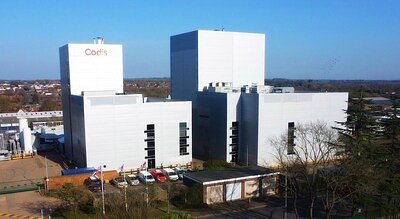
Codis Unlocks UK Pharma Future with Landmark Manufacturing Investment
HAVERHILL, UK – March 04, 2026 – In a move set to significantly bolster the UK's pharmaceutical manufacturing capabilities, global contract development and manufacturing organization (CDMO) Codis has announced a major investment at its Haverhill facility. The company will install a GEA Pharma-SD® type PSD-4 solvent-capable spray dryer, making it the only CDMO in the United Kingdom with the capacity for commercial-scale, solvent-based spray drying for amorphous solid dispersions (ASDs).
This strategic expansion, supported by the UK government's Life Sciences Innovative Manufacturing Fund (LSIMF), is poised to address a critical bottleneck in modern drug development. The new system, slated to be fully operational by 2027 within Codis's 400,000-square-foot site, will provide pharmaceutical companies with a seamless, large-scale domestic solution for bringing more effective medicines to market.
A Strategic Boost for UK Life Sciences
The investment is a significant win for the UK's post-pandemic push to strengthen its domestic life sciences sector and build resilience against future health crises. The project is backed by the government's LSIMF, a £520 million fund designed to anchor high-value manufacturing and economic growth within the country. While final terms are still under agreement, the support signals a powerful public-private partnership aimed at securing the nation's pharmaceutical supply chain.
This government backing is crucial for accelerating such capital-intensive projects. Nicolas Fortin, Chief Executive Officer of Codis, highlighted this synergy, stating, "We are grateful for the support of the UK government through the LSIMF, which enables us to accelerate this project and continue investing at our Haverhill site." He added, "This milestone marks the next phase in Codis' evolution as a global leader in spray drying and ASD."
The expansion not only enhances Codis's capabilities but also positions the UK as a more competitive player in the global pharmaceutical manufacturing landscape. By establishing a unique, high-demand capability on British soil, the project helps to prevent the outsourcing of critical drug production stages and fosters a self-reliant industrial ecosystem.
Unlocking the Science of Bioavailability
At the heart of this investment is a powerful technology designed to solve one of the most persistent challenges in drug development: poor solubility. A significant percentage of new drug candidates discovered in laboratories are poorly soluble in water, which severely limits their bioavailability—the ability of the body to absorb the drug and for it to have a therapeutic effect. Many promising compounds are abandoned not because they are ineffective, but because they cannot be formulated into a medicine that the body can use.
This is where Amorphous Solid Dispersions (ASDs) and spray drying technology become critical. The process involves dissolving the drug with a polymer in a solvent and then rapidly drying the mixture into a fine powder. This traps the drug in an 'amorphous' or non-crystalline state, dramatically increasing its solubility and, consequently, its bioavailability. This technique has been instrumental in the success of critical drugs for oncology, viral infections, and other complex diseases.
The new GEA PSD-4 unit is a workhorse for this process, designed to produce commercial-scale batches of up to 500 kilograms, with a potential annual output of 30,000 kilograms. Its solvent-based capability is particularly important, as many complex molecules require organic solvents for processing. This expansion allows Codis to meet the rapidly growing demand for this specialized manufacturing, enabling its clients to rescue and advance drug candidates that might otherwise have failed.
For patients, the implications are profound. This technology can accelerate the journey of life-changing medicines from the lab to the clinic, potentially leading to new treatments for diseases with currently limited options. Better bioavailability can also mean more effective treatments with lower doses, potentially reducing side effects.
A Calculated Move in a Competitive Market
Codis, formed in 2025 from the integration of US-based Particle Dynamics and the former EUROAPI site in Haverhill, is making a decisive move to solidify its position in the highly competitive CDMO market. While many large CDMOs offer a broad range of services, Codis's strategy appears to be one of deep specialization and market dominance in a high-value niche.
By becoming the sole UK provider of commercial-scale, solvent-based ASD spray drying with a PSD-4 unit, the company creates a powerful competitive advantage. This move is not just about adding a piece of equipment; it's about offering an end-to-end solution. The new PSD-4 perfectly complements Codis's existing infrastructure, which includes a smaller PSD-2 unit for pilot-scale and smaller commercial batches. This provides clients with a seamless and de-risked pathway to scale their products from early-phase clinical trials all the way to large-scale market supply, all within the same manufacturing ecosystem.
This integrated platform is highly attractive to pharmaceutical companies, as it minimizes the risks and delays associated with transferring technology between different suppliers or scaling up production at a late stage. The investment demonstrates Codis's foresight in anticipating market needs and its commitment to providing the specialized infrastructure required for next-generation pharmaceuticals.
Cultivating Local Growth and Expertise
The impact of Codis's expansion extends beyond the pharmaceutical industry and into the local economy of Haverhill and the surrounding region. The project is set to generate a wave of economic activity, beginning with short-term employment opportunities during the construction, installation, and commissioning phases over the next few years.
Once the facility is operational in 2027, it will create additional long-term, high-skilled jobs in areas such as manufacturing, engineering, quality control, and logistics. These are precisely the types of roles that help build a sustainable and innovative local economy. Furthermore, the project will rely on a network of local suppliers, contractors, and service providers, creating a positive ripple effect that supports businesses throughout the region.
This investment reinforces Haverhill's role as a key hub within the UK's thriving life sciences cluster. By concentrating advanced technology and specialized expertise in the area, the project helps attract and retain talent, encourages further investment, and solidifies the region's reputation as a center of excellence for pharmaceutical manufacturing.