
- $4.8 million contract awarded to AeroVironment's VideoRay for underwater robots
- Part of an $11 million rapid fleet upgrade for 2025
- Defender ROVs to enhance maritime safety and operational readiness
Experts agree that the Coast Guard's investment in autonomous underwater robots is a strategic move to improve mission safety, operational efficiency, and future readiness in maritime security.
Coast Guard's Robotic Fleet: AeroVironment Wins Key Modernization Deal
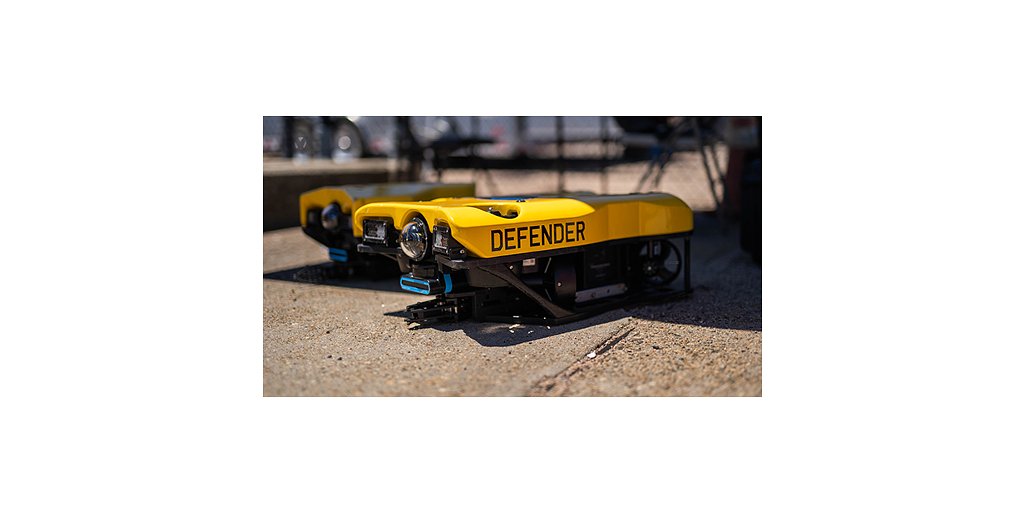
POTTSTOWN, PA – December 11, 2025 – The U.S. Coast Guard is diving deeper into autonomous technology, awarding a significant $4.8 million contract to AeroVironment's subsidiary, VideoRay, for a fleet of advanced underwater robots. The deal, which provides Mission Specialist Defender remotely operated vehicles (ROVs), marks a critical step in the service's ambitious 'Force Design 2028' modernization plan, signaling a strategic shift toward leveraging uncrewed systems to enhance maritime safety and operational readiness.
This award represents the largest portion of an $11 million rapid fleet upgrade initiative for fiscal year 2025, underscoring the urgency with which the Coast Guard is integrating robotics. The Defender ROVs are set to become a vital tool, tasked with performing dangerous and difficult underwater missions, ultimately safeguarding personnel while boosting the effectiveness of the nation's primary maritime security force.
A New Era of Maritime Operations
The integration of these ROVs is a cornerstone of the Coast Guard's Robotics and Autonomous Systems (RAS) Program Executive Office, an entity established to fast-track the adoption of unmanned technologies. The core objective is clear: build a more agile, technologically superior force capable of responding to the complex and evolving challenges of the maritime domain. For the Coast Guard, this means moving beyond traditional methods that often put human divers in harm's way.
The Defender ROVs will be deployed across a wide spectrum of missions. These include rapid inspections of piers and critical subsurface infrastructure, detailed hull assessments of vessels, disaster response surveys in hazardous environments, and complex search and rescue operations. By delegating these "dull, dirty, and dangerous" tasks to machines, the Coast Guard not only mitigates significant risk to its personnel but also increases mission safety, operational tempo, and overall fleet readiness.
"These unmanned systems provide increased domain awareness, mitigating risk and enhancing mission success as the Coast Guard continues to operate in hazardous environments," said Anthony Antognoli, the Coast Guard’s first RAS program executive officer, in a statement released earlier this year. "The Coast Guard’s mission demands agility, awareness and adaptability. Robotics and autonomous systems deliver all three." His comments reflect a service-wide recognition that the future of maritime security hinges on the smart deployment of advanced technology. "We are not waiting for the future to arrive. We are delivering it to the fleet today," he added.
The Technology Driving the Change
At the heart of this contract is the VideoRay Mission Specialist Defender, an ROV engineered specifically for demanding, high-stakes environments. What sets the Defender apart in a competitive market is its modular, open-architecture design. This allows operators to easily swap components in the field and integrate a wide array of advanced sensors, specialized tools, and manipulators. This "plug-and-play" flexibility ensures the platform can be adapted to evolving mission requirements, preventing technological obsolescence and maximizing the value of the investment.
This modularity means a single ROV can be configured for a high-resolution sonar survey one day and equipped with a manipulator arm for object recovery the next. This versatility is critical for a multi-mission service like the Coast Guard. While competitors like Saab Seaeye and Teledyne Marine offer powerful systems, the Defender’s emphasis on field-swappable modules and open architecture provides a distinct advantage in maintaining operational tempo and minimizing downtime.
"The selection of the Mission Specialist Defender reinforces our ability to deliver proven technology to address the most demanding defense and security missions," said Chris Gibson, Chief Executive Officer at VideoRay. This contract builds on an expanding track record for the company, which already supplies systems for programs like the U.S. Navy’s Maritime Expeditionary Standoff Response (MESR), demonstrating the technology's proven value within U.S. defense circles.
AeroVironment's All-Domain Strategy Pays Off
For parent company AeroVironment (NASDAQ: AVAV), this Coast Guard contract is more than just a line item in its quarterly earnings; it's a powerful validation of its long-term corporate strategy. Known for decades as a leader in uncrewed aerial systems (UAS) like the Puma and Raven drones, AeroVironment has been methodically expanding its portfolio to achieve dominance across all operational domains: air, land, and sea.
The acquisition of VideoRay in 2021 was a deliberate move to establish a strong foothold in the underwater robotics market. This $4.8 million award serves as concrete proof that the integration is bearing fruit, positioning VideoRay as AV's maritime pillar and enabling the company to offer integrated, multi-domain solutions to its defense customers. An independent defense analyst commented on the trend, stating, "This is precisely the kind of synergy investors and military planners look for. A single trusted partner that can provide interoperable unmanned systems for eyes in the sky and eyes in the water is a powerful force multiplier."
While the contract value itself is modest for a company of AeroVironment's size, its strategic importance is significant. It strengthens the company’s relationship with a key branch of the U.S. armed forces and solidifies its reputation as a go-to provider for cutting-edge uncrewed systems. This win helps build a critical backlog for its maritime segment and enhances its competitive positioning for future, potentially larger, contracts under the Coast Guard's broader modernization budget, which is projected to involve hundreds of millions in robotics investment over the coming years.
The Global Tide Turns Toward Autonomy
The U.S. Coast Guard’s investment is not happening in a vacuum. It reflects a much broader, global trend among navies, coast guards, and port authorities who are increasingly turning to autonomous systems to address modern security challenges. From the Royal Navy's deployment of autonomous mine-hunting vessels to the use of ROVs for port security in major international hubs, uncrewed maritime technology is becoming a standard component of national security infrastructure.
The drivers behind this global shift are universal: the need to enhance force protection, the demand for more persistent surveillance and data collection, and the economic pressure to perform missions more cost-effectively. Advanced robotics offer a solution to all three. AUVs can patrol vast swaths of ocean for weeks at a time, and ROVs can conduct detailed inspections of critical infrastructure without exposing personnel to the dangers of deep or contaminated waters.
This contract places the U.S. Coast Guard firmly at the forefront of this technological wave. By investing in proven, adaptable systems like the Mission Specialist Defender, the service is not just buying equipment; it is building a foundation for a more resilient and capable force. As maritime threats become more complex, from sub-surface smuggling to threats against undersea cables, the ability to rapidly deploy autonomous systems for detection, inspection, and response will be indispensable. This move by the Coast Guard demonstrates a clear-eyed vision for the future of maritime security, one where human operators are augmented by intelligent, tireless robotic partners.