
- 2 Major Drugs: Chidamide and Chiglitazar Sodium, both included in China's National Reimbursement Drug List (NRDL).
- RMB 700 Million: Value of Chipscreen's corporate donation program.
- 2001: Year Dr. Lu returned to China to found Chipscreen Biosciences.
Experts would likely conclude that Dr. Lu Xianping's work exemplifies how visionary leadership and technological innovation can transform a nation's biopharmaceutical industry, setting a global benchmark for original drug development.
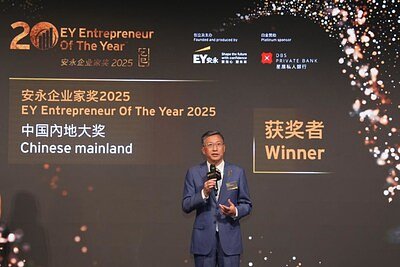
China's Pharma Maverick: Dr. Lu Xianping's Revolution Earns Top Award
SHENZHEN, China – December 30, 2025
By Mark Peterson
Dr. Lu Xianping, the scientist-entrepreneur who founded Chipscreen Biosciences, has been named the Chinese mainland winner of the EY Entrepreneur Of The Year™ 2025, a globally prestigious business award. The recognition on December 5th honors a man whose career has been defined by a singular, audacious goal: to transform China from a manufacturer of generic drugs into a powerhouse of original pharmaceutical innovation.
While the award celebrates Dr. Lu's individual success, it also casts a spotlight on a much larger story—the tectonic shift occurring within China's biopharmaceutical landscape. His journey from a U.S.-based researcher to a pioneering founder in his home country mirrors the nation's own evolution, moving from imitation to first-in-class invention. Dr. Lu didn't just build a company; he helped forge an ecosystem, challenging the status quo and proving that homegrown, world-class medicines were not only possible but essential.
A Contrarian Bet on Originality
When Dr. Lu returned to China in 2001 to establish Chipscreen Biosciences, the environment was far from welcoming for his ambitions. Armed with a Ph.D. from Peking Union Medical College and valuable postdoctoral experience in the U.S., he chose to leave behind a budding career to pursue what many considered a folly. At the time, China's pharmaceutical industry was overwhelmingly dominated by the production of generics and active pharmaceutical ingredients. The concept of pouring vast resources into the high-risk, long-term gamble of discovering first-in-class drugs with novel mechanisms was almost unheard of.
His mission was clear and, in the context of the era, revolutionary: "develop affordable innovative drugs for ordinary people." To achieve this, Chipscreen eschewed the well-trodden path. Instead, it built a sophisticated drug discovery platform based on chemical genomics and AI-assisted design. This integrated system was engineered to de-risk the notoriously difficult process of drug development, improving success rates and shortening timelines from lab to clinic. It was a contrarian bet that original innovation, driven by cutting-edge technology, could be done efficiently and effectively in China.
This approach was a precursor to the national strategy that would later be termed "new-quality productive forces," which prioritizes high-tech, high-efficiency, and high-quality growth. Dr. Lu was, in effect, implementing this philosophy years before it became a government mandate, positioning his company at the vanguard of a new era for Chinese biotech.
From Breakthroughs to Bedside Impact
The fruits of this long-term vision are now undeniable, with two major drugs that have reshaped treatment paradigms and improved patient access. The first, Chidamide, became a landmark achievement as China's first original small-molecule anti-tumor drug. Approved in 2014 for peripheral T-cell lymphoma (PTCL), it filled a critical treatment gap in the country. Its success didn't stop at the border; Chidamide also became China's first pharmaceutical product to be globally licensed out and has since gained approval in Japan for Adult T-cell Leukemia.
Subsequent approvals have broadened its impact. In April 2024, it was cleared for use in combination with standard chemotherapy for a high-risk subtype of diffuse large B-cell lymphoma (DLBCL), based on a globally pioneering Phase III study. Real-world data has confirmed its efficacy, with studies showing significant survival benefits in PTCL patients and high response rates in DLBCL. For patients, the most crucial development was the inclusion of its indications in China's National Reimbursement Drug List (NRDL), which dramatically lowers the financial burden of treatment.
Chipscreen's second major success, Chiglitazar Sodium, represents a story of sheer persistence. Developed over 19 grueling years, it was approved in 2021 as the world's first PPAR pan-agonist for Type 2 diabetes. By targeting insulin resistance, a core driver of the disease, it offers a novel mechanism to control blood glucose and regulate lipid metabolism. Like Chidamide, it too was added to the NRDL, reinforcing Dr. Lu's founding mission of affordability. The drug is now also showing promise in Phase II trials for non-alcoholic steatohepatitis (NASH), potentially offering a dual benefit for patients with metabolic disorders. These tangible successes, backed by a corporate donation program valued at over RMB 700 million, have cemented Chipscreen's reputation for delivering not just innovation, but also societal value.
Architect of a New Biotech Ecosystem
Dr. Lu's influence extends far beyond the walls of his own company. He has been a vocal and active advocate for systemic reforms आवश्यक for a thriving innovation ecosystem. His work has touched upon three critical pillars: drug review pathways, reimbursement mechanisms, and capital markets.
Having navigated the lengthy and complex process of getting Chidamide approved, Dr. Lu has been a proponent for the evolution of China's regulatory apparatus. His company's success story coincided with and likely informed the sweeping reforms initiated by China's National Medical Products Administration (NMPA) around 2015, which introduced accelerated review channels and priority reviews for innovative drugs, aligning the country more closely with international standards.
Furthermore, his focus on creating "affordable" innovations positioned Chipscreen perfectly for China's evolving NRDL mechanism, which increasingly favors novel drugs that can demonstrate significant clinical value at a reasonable price. The successful negotiation and inclusion of both Chidamide and Chiglitazar Sodium serve as a case study for how to align corporate strategy with national healthcare policy.
Perhaps his most visible impact on the ecosystem was in capital markets. In a move that opened the floodgates for jego peers, Chipscreen Biosciences became one of the very first biotech companies to list on Shanghai's STAR Market. This Nasdaq-style board, launched in 2018, was a game-changing reform that allowed pre-profit, R&D-intensive tech companies to access public capital. Dr. Lu's early embrace of this new platform signaled its viability and helped pave the way for hundreds of other biotech firms to secure the funding needed to pursue their own innovations.
Navigating China's 'Innovation 2.0'
With the EY award secured and two blockbuster drugs on the market, Dr. Lu and Chipscreen are now leading players in what industry analysts call China's "Innovation 2.0" era. This new phase is less about rapid expansion and more about sustainable, high-quality, and globally competitive development. The company's pipeline reflects this ambition, with multiple first-in-class candidates targeting oncology, autoimmune disorders, and chronic illnesses, including neurodegenerative conditions like Alzheimer's disease. Advanced candidates like Chiauranib, a kinase inhibitor in late-stage trials for several cancers, and CS231295, a brain-penetrant inhibitor with recent FDA clearance for U.S. trials, underscore its continued focus on cutting-edge science.
However, challenges remain. The company's high price-to-sales ratio reflects immense investor expectations that must now be met with consistent growth and profitability. Moreover, the entire Chinese biotech sector faces the difficult task of translating domestic success into global commercial wins, a journey complicated by geopolitical tensions and the high bar for data acceptance by Western regulators.
As Dr. Lu Xianping steps forward to represent Chinese entrepreneurship on the global stage, his career serves as a powerful testament to the power of a long-term vision. His work has not only delivered new hope to patients but has also provided a blueprint for how China can build a truly innovative biopharmaceutical industry from the ground up.