
- 10,000 inbound medical tourists in 2025, growing exponentially.
- 560 innovative drugs and 280 advanced medical devices available through 'first-trial' policy.
- 865,300 total medical tourism visits in 2025, a 109% year-over-year increase.
Experts would likely conclude that China's Lecheng International Medical Tourism Service Center represents a strategic, innovation-driven push to dominate the global medical tourism market, leveraging regulatory advantages and patient-centric services to challenge established competitors.
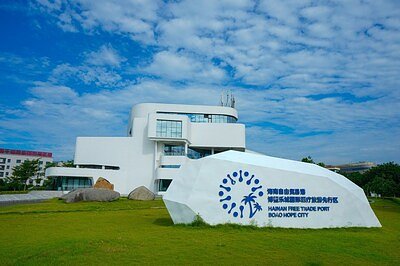
China's High-Stakes Play for the Global Medical Tourism Crown
HAIKOU, China – June 11, 2026 – On the surface, the recent launch of the Lecheng International Medical Tourism Service Center in China’s Hainan province looks like a standard infrastructure upgrade. But beneath the polished exterior lies a calculated, high-stakes move in the multi-billion-dollar global medical tourism market. This is not just about building a new facility; it's about executing a national strategy to position China as the preeminent destination for patients seeking the world's most advanced medical treatments.
The Boao Lecheng International Medical Tourism Pilot Zone, where the center is located, is no stranger to ambition. In 2025 alone, it attracted nearly 10,000 inbound medical tourists, a number that has been growing exponentially. The new service center, officially launched on May 29, is designed to be the engine for that growth—a central nervous system coordinating a vast and complex ecosystem of healthcare, hospitality, and cutting-edge technology.
A New Blueprint for Patient Care
For years, medical tourism hubs like Thailand and Singapore have built their success on a combination of quality care and competitive pricing. Lecheng is aiming to disrupt that model by adding two powerful new dimensions: unprecedented access to innovation and a meticulously crafted, high-touch patient experience.
The new service center is the linchpin of this strategy. It functions as a central command, integrating the resources of more than 40 medical institutions within the pilot zone. The goal is to eliminate the typical friction points of international medical travel. The center offers a comprehensive suite of services, from visa consultations—streamlined by Hainan's 30-day visa-free policy for 59 countries—to multilingual hotlines and a unified digital platform for managing patient information.
However, the most telling innovation is the introduction of a dedicated "Service Officer" system. Each international patient is assigned a personal officer, a single point of contact responsible for navigating their entire journey. This individual handles everything from coordinating cross-institutional referrals to addressing daily life needs, a concierge model borrowed from Singapore's highly successful medical corridors. The objective is clear: to provide a seamless, 'warm-hearted' experience that makes patients feel supported, not processed. This focus on personalized service is a direct attempt to outmaneuver competitors by creating an unparalleled standard of care coordination.
The 'First-Trial' Advantage: A Regulatory Moat
The true ace up Lecheng's sleeve, however, is not its service model but its unique regulatory status. Designated as a pilot zone by China’s State Council in 2013, Lecheng operates under a special framework that creates a powerful competitive advantage—a 'regulatory moat' that other global destinations cannot easily replicate.
The zone's "first-trial" policy allows for the clinical use of innovative drugs and medical devices that have been approved by international regulators like the US FDA or EU EMA but have not yet completed the lengthy approval process for the rest of mainland China. As of May 2026, this has unlocked access to over 560 innovative drugs and 280 advanced medical devices, including cutting-edge cancer therapies and rare disease treatments.
For a patient, this means access to potentially life-saving treatments years before they are available elsewhere in the region. A recent case saw a 34-year-old Russian professor travel to Lecheng for Boron Neutron Capture Therapy, a highly advanced cancer treatment unavailable in his home country. For pharmaceutical and med-tech companies, the zone is a strategic godsend. A "real-world data" policy allows clinical data generated in Lecheng to be used to support national registration applications, drastically accelerating market access to the wider Chinese population. This symbiotic relationship fuels a constant influx of the latest global medical innovations into the zone, creating a powerful draw for patients and a lucrative testing ground for industry.
The Economic Engine of the Hainan Free Trade Port
The Lecheng pilot zone is not an isolated project. It is a cornerstone of the much larger Hainan Free Trade Port (FTP), Beijing's ambitious plan to create a globally influential economic hub by the middle of the century. Within this context, medical tourism is being cultivated as a high-value, high-growth industry.
The numbers underscore the momentum. While international tourists are the focus, the zone recorded a staggering 865,300 total medical tourism visits in 2025, a 109% year-over-year increase. The cumulative number of international patients treated has already surpassed 20,000. This growth is amplified by a strategy that blends healthcare with Hainan's natural appeal as a tropical destination. The zone has launched 35 distinct "healthcare plus tourism" routes, offering everything from post-operative recuperation on the beach to wellness therapies incorporating Traditional Chinese Medicine.
This integrated approach, backed by preferential policies like zero tariffs on imported medical equipment, is attracting significant investment. More than 180 pharmaceutical and medical device companies from 20 countries have already established collaborations, signaling strong market confidence in Lecheng's long-term vision.
Navigating the Hurdles in a Crowded Market
Despite the impressive strategy and rapid growth, Lecheng's path to global dominance is not without significant challenges. The operational complexity of integrating dozens of independent medical institutions while maintaining a uniform, high standard of service is a monumental task. One misstep in quality control or patient safety could do irreparable damage to the brand's credibility.
Furthermore, the global medical tourism market is fiercely competitive. Established players have built decades of trust and brand recognition. While Lecheng's access to novel treatments is a powerful differentiator, it must still build global awareness and convince patients to travel to a relatively new destination. The key to unlocking the next phase of growth may lie in finance. A pilot program, expected to launch in the third quarter of 2026, will allow some international health insurance plans to cover treatments in the zone. If successful, this could dramatically lower the barrier to entry for thousands of potential patients and solidify Lecheng's position on the world stage.
Ultimately, the Lecheng experiment is a bold test of whether a state-driven, innovation-focused strategy can reshape a global industry. Its success will depend not only on its unique regulatory advantages but on its ability to flawlessly execute a complex vision of integrated, patient-centric care on a massive scale.