
- 30-minute documentary released globally on January 15, 2026
- West-to-East Power Transmission Program: A multi-trillion-yuan initiative with ultra-high voltage (UHV) lines spanning China
- 'Bluey' robot: Autonomous ice-clearing device deployed to reduce risks for human workers
Experts would likely conclude that the documentary highlights the critical role of both human expertise and technological innovation in maintaining China's vast energy infrastructure, emphasizing the nation's commitment to energy security and climate resilience.
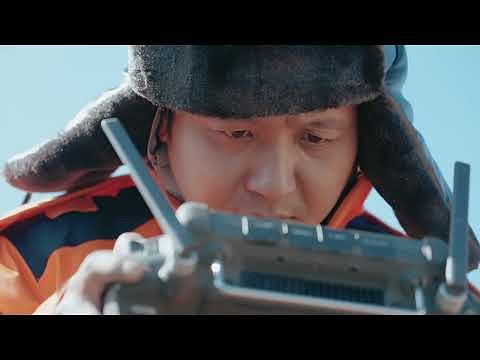
China's Grid Guardians: Man and Machine Battle Ice in New Film
BEIJING – January 15, 2026 – A new documentary, "Through Ice and Snow," released globally today, offers a rare and dramatic glimpse into the lives of frontline workers safeguarding one of the world's most ambitious energy projects. The 30-minute film, co-produced by China Review Studio and Yingda Media, follows a team of power grid maintenance workers as they combat extreme weather in the remote Daliang Mountains, aided by a new robotic partner.
The documentary focuses on the perilous work of ensuring the stability of China's West-to-East Power Transmission Program, a colossal network of ultra-high voltage (UHV) lines that functions as the nation's energy artery. By chronicling the efforts of a maintenance team and its ice-clearing robot, "Bluey," the film delves into a narrative of human resilience, technological innovation, and the immense challenges of securing energy in an era of climate uncertainty.
The Human-Tech Frontier in the Daliang Mountains
At the heart of "Through Ice and Snow" is the story of Wei Kailin and his team of grassroots power grid workers. Their mission takes them deep into the treacherous Daliang Mountains of Sichuan province, a region known for its rugged, high-altitude terrain and brutal winters. Research confirms that the area is frequently battered by a combination of freezing temperatures, thick fog, high winds, and severe ice storms, creating a formidable adversary for any infrastructure.
The film documents the team's deployment of "Bluey," a new ice-clearing robot, to assist in their dangerous tasks. Ice accretion on power lines is a critical threat, capable of adding immense weight that can snap cables and topple transmission towers, potentially causing widespread blackouts. While the specific "Bluey" model is a cinematic focus, it represents real-world advancements. State Grid Corporation of China, whose media arm Yingda Media co-produced the film, has been actively developing and deploying similar robotic solutions. These devices, often delivered by drones, can autonomously crawl along power lines, using mechanical hammers or vibrations to shatter and remove hazardous ice, significantly reducing the risk to human workers who would otherwise perform the task manually in perilous conditions.
However, the documentary makes it clear that technology is not a panacea. The press release notes that in the "unique geographical and climatic conditions of Daliang Mountains, some areas remain beyond the reach of technology." This is where the film pivots back to the human element, showcasing the team's irreplaceable expertise and physical courage. As the film's narrative unfolds, Wei Kailin and his team are shown traversing mountains and crossing ridges, relying on decades of experience to reach inaccessible points and ensure the grid's integrity. It is this synergy—the evolving partnership between human grit and robotic precision—that forms the documentary's central theme, illustrating a modern approach to managing critical infrastructure in extreme environments.
Powering a Nation: The West-to-East Lifeline
The daily struggles of the maintenance crew are set against the backdrop of a project of monumental scale: the West-to-East Power Transmission Program. Initiated in the late 1990s, this multi-trillion-yuan initiative was designed to solve a fundamental national dilemma. China's energy resources, particularly abundant hydropower and coal, are concentrated in its western provinces, while its economic powerhouses and population centers are located thousands of kilometers away on the eastern seaboard.
The program involved constructing a sprawling network of UHV transmission lines, some of the longest and most powerful in the world, to move massive amounts of electricity across the country. This engineering marvel is critical to China's economic stability, feeding the industries of Guangdong and Jiangsu with power generated in provinces like Sichuan and Yunnan. By transmitting cleaner energy, especially hydropower from the mountainous west, the project also plays a role in China's strategy to reduce its reliance on coal-fired plants in densely populated eastern cities, contributing to national carbon reduction goals.
The power lines that Wei Kailin's team protects are not just local infrastructure; they are a vital lifeline for the entire nation. A failure in this section of the grid due to icing could have cascading effects, disrupting power for millions and impacting the country's manufacturing output. The documentary, therefore, frames the workers' dangerous, localized battle against the elements as a crucial contribution to China's broader energy security and economic development.
A Portrait of Resilience and National Narrative
Beyond its technical and human-interest focus, "Through Ice and Snow" also functions as a carefully crafted piece of cultural diplomacy. The involvement of China Review Studio, a media entity known for producing content that aligns with China's public diplomacy goals, and Yingda Media, an affiliate of the state-owned State Grid Corporation, points to a strategic intent. The film aims to project a specific image of contemporary China to a global audience.
The documentary presents a narrative that emphasizes several key themes: technological prowess, the unwavering dedication of its people, and a proactive stance on energy and climate challenges. The portrayal of "Bluey" the robot highlights China's status as a leader in innovation, capable of developing advanced solutions for complex problems. Simultaneously, the focus on the "wisdom, resilience, and dedication" of grassroots workers reinforces a national story of collective effort and sacrifice for the greater good.
At a time when global discourse often centers on China's geopolitical ambitions and economic policies, this documentary offers a different perspective. It humanizes the country's development by focusing on the individuals on the front lines, painting what the producers call a "vivid portrait of the spirit and determination of contemporary grassroots workers in China." By presenting its infrastructure projects and climate efforts through a compelling, character-driven story, the film serves as a soft power tool, designed to shape global perceptions and showcase a modern, resilient, and forward-looking nation. The story of man and machine working together against the forces of nature in the Daliang Mountains becomes a microcosm of a larger national narrative of progress against all odds.