
- USD 12.12 billion: Southeast Asia's collectibles sector is projected to grow to this value by 2033, up from USD 6.47 billion in 2024.
- 71% market share: Kayou captured this percentage of China's collectible card market by 2022.
- Thousands of retail touchpoints: Kayou has established this many physical retail locations across Indonesia, Malaysia, Singapore, and Vietnam.
Experts would likely conclude that Kayou's success hinges on its ability to integrate digital engagement with physical retail, leveraging hyper-localization and community-building to dominate Southeast Asia's rapidly growing collectibles market.
China's Collectibles Unicorn Tests a New Model on SEA's Digital Rails
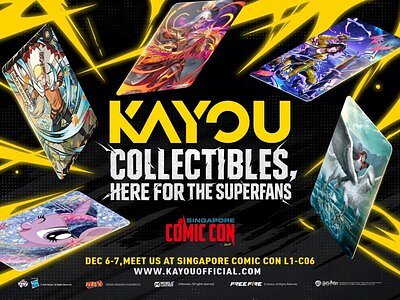
SINGAPORE – December 05, 2025 – Amid the vibrant chaos of Singapore Comic Con (SGCC) 2025, the brightest booth was not necessarily from a legacy Hollywood studio, but from Kayou, a Chinese collectibles powerhouse making its commanding public debut in the region. Featuring a slick blend of global brands like Naruto and Harry Potter alongside regional esports celebrities and local artists, the activation was more than a product showcase. It was a statement of intent, revealing a sophisticated strategy that leverages Southeast Asia’s burgeoning digital infrastructure to build a new kind of retail empire.
While the company deals in tangible trading cards and figurines, its true foundation is built on the intangible—the data streams, social networks, and e-commerce platforms that define modern consumerism in one of the world's fastest-growing economic blocs. Kayou's expansion isn't just another story of a foreign brand entering a new market; it's a case study in how the infrastructure of connectivity is creating entirely new commercial ecosystems, turning pop culture into a high-stakes, data-driven business.
The Digital Gold Rush: Tapping SEA's Connected Consumers
Kayou's calculated entry into Southeast Asia is timed to perfection, targeting a market ripe with opportunity. The region’s collectibles sector is in the midst of an unprecedented boom, projected to surge from USD 6.47 billion in 2024 to over USD 12.12 billion by 2033. This explosion is not accidental; it is a direct consequence of the region's rapid urbanization, rising disposable incomes, and, most critically, its deep digital penetration.
The modern collector in Jakarta, Kuala Lumpur, or Ho Chi Minh City is a "kidult"—typically a Millennial or Gen Z consumer with a digital-native mindset. Their journey of discovery and purchase is rarely confined to a physical store aisle. It begins on platforms like TikTok and Instagram, where "unboxing" videos go viral, creating cascades of demand. It continues in online fan forums and on e-commerce giants like Lazada and Shopee, where limited-edition drops can sell out in minutes. This entire ecosystem runs on the rails of robust mobile broadband and expanding fiber networks, the very infrastructure this column tracks.
Kayou, a certified "unicorn" company valued for its explosive growth, understands this implicitly. Its success in mainland China, where it captured a staggering 71% of the collectible card market by 2022, was built on mastering this digital-first approach. Now, it's deploying that same playbook in Southeast Asia, facing off against established Western giants like Hasbro and Mattel, as well as fellow Chinese challengers like Pop Mart, who have also seen revenues in the region skyrocket by leveraging similar tactics.
The Phygital Playbook: Bricks, Clicks, and Community
The core of Kayou’s strategy is a masterful "phygital" integration—a seamless blend of physical retail and digital engagement. The press release boasts of establishing "over thousands of retail touchpoints" and partnering with "more than 20 local distributors" across Indonesia, Malaysia, Singapore, and Vietnam. This vast physical network ensures product accessibility, placing collectibles in convenience stores, specialty shops, and malls where impulse buys happen.
However, this physical footprint is activated and amplified by a relentless digital campaign. The SGCC booth was a microcosm of this strategy. By featuring esports stars like RRQ Banana and Letda Hyper from Mobile Legends: Bang Bang, Kayou tapped directly into a massive, digitally-native gaming community. The live signings and interactive showcases were designed not just for the attendees, but to be shared, streamed, and replayed across social media, extending their reach exponentially.
"We're here to grow together with our channel partners and build lasting fan communities rooted in local culture," stated the Kayou Oversea Commercial Head. This focus on "fan-discussion circles" is key. The goal is to transform passive consumers into active community members who drive conversations, create user-generated content, and build organic hype. This digital word-of-mouth is far more powerful than traditional advertising and relies entirely on the underlying connectivity that allows these communities to form and thrive. It’s a model of distributed marketing powered by the network itself.
Hyper-Localization as a Service
Perhaps the most forward-thinking element of Kayou's approach is its deep commitment to localization, moving beyond simple translation to active cultural co-creation. While leveraging the power of global IPs like My Little Pony is crucial for initial market entry, the company’s long-term vision is anchored in developing locally resonant content.
The prime example is the launch of "SKEEN," a new IP created in collaboration with celebrated Malaysian artist Zeen Chin. Known for his unique "oriental fantasy" style that blends mystical worlds with modern aesthetics, Chin brings a distinct regional voice to Kayou's portfolio. By launching an IP developed by a beloved local creator, Kayou is not just selling a product; it is investing in the region's creative economy and forging a much deeper connection with its audience. This move signals a respect for local culture that can build brand loyalty far more effectively than simply dropping another container of foreign goods onto the market.
This strategy of hyper-localization transforms the company from a mere distributor into a platform. It uses its global infrastructure and capital to identify, elevate, and monetize local talent, creating a symbiotic relationship. For artists like Zeen Chin, it offers a global stage; for Kayou, it provides authentic, differentiated content that competitors cannot easily replicate.
The New Infrastructure of Pop Culture
Kayou's ambitious Southeast Asian campaign offers a powerful glimpse into the future of connected commerce. It demonstrates that the critical infrastructure of the 21st century isn't limited to fiber optic cables and 5G towers, but also includes the digital platforms, social networks, and logistics systems that ride on top of them. The company's success or failure will be a bellwether for a new business model where physical products are inextricably linked to the digital worlds their consumers inhabit.
This model treats connectivity not as a utility, but as the fundamental medium for market creation, community building, and cultural exchange. As companies like Kayou refine this playbook, they are effectively building a new layer of infrastructure—a commercial and cultural network that is as vital to the modern urban experience as the physical roads and power grids beneath it. The battle for Southeast Asia's pop culture market is not just about who has the best toys, but who can most effectively master this complex, interconnected ecosystem. This is a clear signal that the future of mobility and urban life will be shaped not only by how we move, but by how we connect, consume, and create culture within our increasingly networked cities.