
- 3,000 petaFLOPS: Computing power provided by Hong Kong's Artificial Intelligence Supercomputing Centre (AISC), a key competitor to the new GIC.
- 100+ submarine and terrestrial cables: The Global Intelligence Center integrates with this extensive network for global connectivity.
- 440 overseas Points of Presence (PoPs): China Mobile's international network extensions supporting the GIC's global reach.
Experts view the launch of China Mobile's Global Intelligence Center as a strategic reinforcement of Hong Kong's role in China's AI-driven digital economy, leveraging the city's unique geopolitical advantages to bridge national and global tech ambitions.
China Mobile's AI Hub Cements Hong Kong's Role in Global Tech Strategy
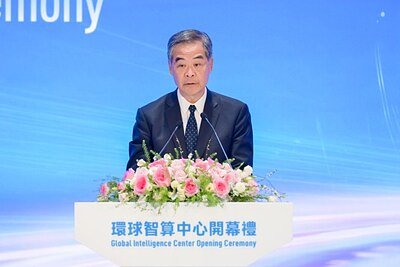
HONG KONG – March 26, 2026 – State-owned telecommunications giant China Mobile officially launched its Global Intelligence Center (GIC) in Hong Kong today, a move that firmly positions the city as a critical nexus for artificial intelligence and a strategic bridgehead for China's global technology ambitions. The opening ceremony, held under the theme "Intelligence Connects All, Computing Ignites a New Chapter," was attended by top officials from both the Hong Kong government and Beijing, underscoring the project's national significance.
Located in the Fo Tan industrial area, the facility is being touted as Hong Kong's largest standalone intelligent computing hub. It represents a massive upgrade in the city's capacity for high-performance computing, essential for developing and training the large-scale AI models that are reshaping global industries.
In his address at the ceremony, Mr. Leung Chun-ying, Vice Chairman of the National Committee of the Chinese People's Political Consultative Conference, noted the launch marks an important achievement in the nation's digital infrastructure. He stated that Hong Kong must "better integrate into and serve national development by leveraging its unique advantages, including its international research environment and top-tier talent."
A New Digital Landmark in a Competitive Market
The Global Intelligence Center is designed to be more than just a data storage facility. It is a high-density hub engineered specifically to support the immense computational demands of AI, from training models with hundreds of billions of parameters to running complex inference tasks. The center utilizes AI-driven intelligent scheduling, autonomous inspection robots, and digital-twin technology for optimized energy-saving and operations.
While China Mobile calls the GIC the "largest standalone intelligent computing hub," it enters a highly competitive and mature data center market. Hong Kong already boasts a robust digital infrastructure, with major players like SUNeVision and PCCW Solutions operating significant facilities. Furthermore, the government-backed Cyberport launched its own Artificial Intelligence Supercomputing Centre (AISC) in late 2024, which aims to provide up to 3,000 petaFLOPS of computing power to local enterprises and research institutions. The distinction, however, may lie in the GIC's focus on integrating with a national and global network under a single operator, offering end-to-end services.
Mr. Michael Wong Wai-lun, Deputy Financial Secretary of the HKSAR Government, highlighted the center's importance, stating its opening holds "profound and positive significance for the development of Hong Kong's digital economy and artificial intelligence industries." He noted the GIC would become one of the data centers with the highest safety and operational standards in the city, complementing China Mobile's existing large-scale facilities in Tseung Kwan O and Fo Tan.
The Engine of a National Strategy
The launch of the GIC is strategically timed with the onset of China's "15th Five-Year Plan" (2026-2030), a national blueprint that heavily emphasizes technological self-sufficiency and the widespread adoption of artificial intelligence. The plan reportedly includes an "AI+ action plan" aimed at deeply integrating AI into every facet of the economy and society. The GIC is a concrete manifestation of this national directive.
By interconnecting with multiple computing hubs on the mainland, the center is designed to create a strategic pattern of "Northern Computing and Southern Connectivity, East-West Integration." This makes Hong Kong a crucial southern node in a unified national computing power network, channeling data and services between China and the rest of the world. It effectively positions the city as the primary "bridgehead for China's AI ecosystem to go global," as described in the company's official statements.
This role leverages Hong Kong's unique position under the "One Country, Two Systems" framework, which gives it a distinct advantage in navigating the complex geopolitical landscape of global technology. The center is expected to not only serve international clients but also facilitate the overseas expansion of Chinese enterprises, a key objective of state-owned enterprises like China Mobile.
Catalyzing Local Innovation
Beyond its role in national strategy, the GIC is poised to be a significant catalyst for Hong Kong's local technology ecosystem. The massive injection of high-performance computing power directly addresses a critical bottleneck for local universities, research institutions, and AI startups, which often lack access to the infrastructure needed for cutting-edge development.
This aligns perfectly with the Hong Kong government's own ambitious AI strategy. The government is preparing to establish the Hong Kong Artificial Intelligence Research and Development Institute (AIRDI) and has formed a high-level "Committee on AI+ and Industry Development Strategy" to guide the integration of AI across sectors. The GIC provides the industrial-grade hardware backbone necessary to support these policy initiatives and turn them into tangible economic outcomes.
Mr. Chen Zhongyue, Chairman of China Mobile, emphasized this commitment to local development, stating the company is "deeply rooted in, integrated with, and dedicated to serving Hong Kong." He outlined plans to strengthen an "AI+ Overseas Ecosystem Alliance" and deepen benchmark projects in the city, fostering intelligent and green development across various industries. This synergy between public policy and private infrastructure investment is intended to accelerate Hong Kong's transformation into an international innovation and technology hub.
A Global Network with Hong Kong at its Core
The true power of the Global Intelligence Center lies in its vast connectivity. The facility is not an isolated island of computing power but the core of a sprawling global network. It integrates five major terrestrial backbone routes connecting it to Guangdong, and plugs into a web of over 100 submarine and terrestrial cables. This network is further extended by China Mobile's more than 440 overseas Points of Presence (PoPs), creating an international intelligent computing hub that is rooted in Hong Kong but radiates across the Asia-Pacific and connects the world.
This infrastructure will support a suite of advanced services, including the company's "mSmartONE" one-stop integrated packages and AI-powered solutions for eight major industries. By leveraging this end-to-end capability, China Mobile aims to provide low-latency, highly reliable, and green computing services to a global customer base.
As the digital economy continues to evolve, the GIC stands as a testament to the strategic fusion of infrastructure, national policy, and local innovation. It represents a significant bet by China Mobile on Hong Kong's enduring value as a global connector, positioning the city not just as a financial center, but as a critical hub in the world's rapidly expanding digital and intelligent future.