
- 200,000 vehicles daily: The I-290 corridor serves over 200,000 vehicles daily.
- 34% structurally deficient: 34% of the 44 bridges along the 13-mile stretch are classified as "structurally deficient".
- $5.6 billion: The projected cost of the comprehensive I-290 Blue Line Reconstruction Project.
Experts agree that the modernization of the I-290 corridor is urgently needed to address severe congestion, safety concerns, and structural deficiencies, while also enhancing economic and environmental resilience for the Greater Chicago area.
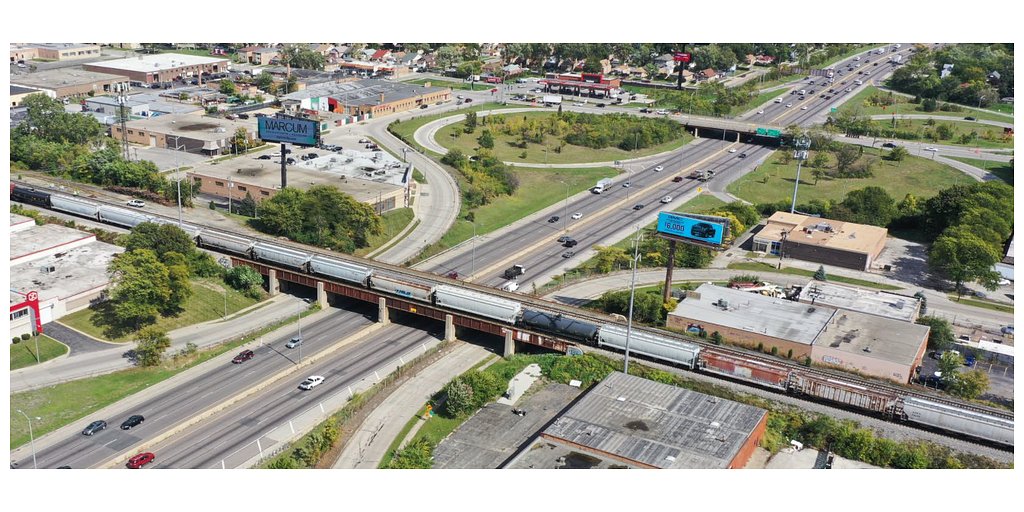
Chicago's I-290 Gets Lifeline With Major Modernization Contracts
CHICAGO, IL – April 09, 2026 – The Illinois Department of Transportation (IDOT) has taken a significant step forward in the monumental task of revitalizing one of the region's most critical and congested arteries. Global professional services firm Jacobs has been awarded two key contracts to advance the modernization of the I-290 corridor, known as the Eisenhower Expressway, a project aimed at improving travel for over 200,000 vehicles daily and reinforcing the infrastructure against environmental challenges.
The contracts focus on two pivotal elements: the replacement of a crucial railroad bridge and the installation of a massive new storm sewer system. These initiatives are part of a broader, multi-billion-dollar vision to overhaul the aging expressway, promising to ease gridlock, enhance safety, and create a more resilient transportation network for the Greater Chicago area.
An Artery Under Strain: The Decades-Long Need for Renewal
Originally opened in the late 1950s, the Eisenhower Expressway was a marvel of its time, pioneering the concept of a multimodal corridor by integrating an expressway with a central rail line. However, after more than six decades of relentless service, the infrastructure is showing its age. According to transportation analyses, approximately 90% of the expressway's pavement and subbase are over 50 years old, far exceeding their intended design life.
The structural health of the corridor is a primary concern. Of the 44 bridges along the 13-mile stretch from downtown Chicago to the western suburbs, a staggering 34% are classified as "structurally deficient," and 86% are considered "functionally obsolete." This deterioration contributes to severe operational issues, with the expressway experiencing crippling congestion for up to 17 hours each weekday as traffic volumes surge up to 34% beyond its original design capacity.
The consequences extend beyond frustrating delays. Crash rates on I-290 are between 34% and 61% higher than on comparable freeways in the Chicago region, with an average of 2,000 crashes recorded annually. The interchange where I-290 merges with I-294 and I-88 has earned the unenviable distinction of being the most congested freight bottleneck in the entire United States, impeding the flow of goods critical to the regional and national economy.
These challenges underscore the urgency of the comprehensive I-290 Blue Line Reconstruction Project, a multi-phase, multi-agency initiative with a projected cost exceeding $5.6 billion. IDOT, in partnership with the Chicago Transit Authority (CTA) and the Chicago Metropolitan Agency for Planning (CMAP), is driving this effort, funded in part by Illinois' historic Multi-Year Improvement Program.
Engineering a Path Through Complexity
Jacobs' newly secured contracts address some of the most complex technical hurdles within the broader modernization plan. The firm, ranked No. 2 in Transportation by Engineering News-Record, will bring its integrated expertise in transportation, water, and tunneling to the forefront.
The first project involves providing design services and project management for the replacement of the Indiana Harbor Belt railroad bridge. This structure is a critical linchpin; its replacement is a key enabler for the future widening of the I-290 corridor. Recognizing the bridge's importance to a highly active freight corridor, the project will employ accelerated construction staging methods designed to minimize service disruptions while safeguarding essential underground utilities.
The second contract tasks Jacobs with providing comprehensive construction oversight and inspection for the installation of a supplemental storm sewer beneath the expressway. This essential upgrade will be completed using specialized tunneling methods, a complex process that demands deep experience in underground construction and rigorous quality assurance. The new sewer is designed to dramatically increase the corridor's capacity to manage stormwater, strengthening its long-term resilience against flooding.
“By integrating our expertise in transportation, water and tunneling, we will deliver comprehensive infrastructure solutions that ease congestion, enhance safety for commuters and freight operators, while strengthening stormwater management to reduce flooding risks — creating a more resilient, connected corridor for the communities of Greater Chicago,” said Jacobs Executive Vice President Tom Meinhart in the company's announcement.
From Gridlock to Growth: The Economic and Commuter Impact
The anticipated benefits of the I-290 overhaul are transformative for daily commuters and the regional economy. Projections indicate the modernization could reduce traffic congestion by 25% to 56%, translating into an estimated $2.7 billion in travel time savings for drivers. Furthermore, the safety improvements are expected to lead to a 6% reduction in vehicle crashes.
Beyond the daily commute, the project is a powerful economic engine. The construction phases are projected to create between 14,000 and 22,000 jobs and stimulate over $2.6 billion in increased economic activity. For a region where nearly all goods travel by truck, alleviating the nation's worst freight bottleneck will have a significant positive impact on supply chain efficiency and business operations.
The project also aims to improve accessibility to employment centers, particularly for residents in historically marginalized communities who rely on the corridor's transit and roadway systems.
Reconnecting Communities and Building for the Future
The vision for the new I-290 extends beyond concrete and steel. Planners are focused on rectifying historical issues, as the original construction of the expressway severed neighborhood connections. The modernization project includes plans to improve community cohesion across the corridor with enhanced pedestrian and bicycle amenities, creating safer and more accessible local routes. Critically, the current project scope has been designed to avoid the displacement of any residences or businesses, a key concern for local communities.
The environmental considerations are equally significant. The new storm sewer system represents a direct investment in climate adaptation, providing a robust defense against the increased flooding risks facing the region. By improving the existing transit experience along the Blue Line and creating opportunities for express bus service, the project also encourages a shift away from single-occupancy vehicles, contributing to broader environmental goals. To ensure the final design reflects public needs, regional partners are actively seeking community input through initiatives like CMAP's "My Daily Travel" survey, signaling a commitment to building a corridor that serves not just vehicles, but the people and communities that depend on it.
Topics & Related
Financial Services
AI & Software Platforms
Revenue
Economic Indicators
Sustainability & Climate
Restructuring
Related Company Pulse