
- Global Market Value: The electric van market is valued at over $19 billion in 2025, with rapid growth projected.
- Vehicle Specifications: PAIDI's compact EV measures 3330mm long, 1080mm wide, and 1700mm tall, designed for urban logistics.
- Battery Range: The vehicle offers a cruising range of 100 kilometers (62 miles) on a lithium iron phosphate (LFP) battery.
Experts view PAIDI's compact EV as a strategic move to capture the growing last-mile delivery sector, leveraging Chery's global network and innovation to compete in a rapidly electrifying commercial vehicle market.
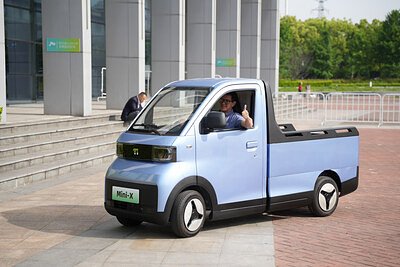
Chery's PAIDI Aims to Conquer Urban Logistics with New Compact EV
WUHU, China – April 29, 2026 – PAIDI Technology, an electric vehicle brand backed by automotive heavyweight Chery Holding Group, has officially stepped onto the global stage, signaling a new front in China's push to dominate the commercial vehicle market. The company showcased its compact electric logistics vehicles at two major international summits hosted by Chery, capturing the attention of merchants from nearly 100 countries and setting the stage for a global rollout.
The debut is more than just a product launch; it represents a calculated move by one of China's top auto exporters to leverage its global network and manufacturing prowess to capture a significant share of the burgeoning last-mile delivery sector. With a vehicle designed specifically for the narrow, congested streets of modern megacities, PAIDI is betting that small is the next big thing in commercial transport.
A Strategic Debut on the World Stage
PAIDI Technology's introduction was a centerpiece at Chery's global dealer and partner conferences in April, events that drew potential distributors and fleet customers from core markets in Europe, the Americas, Southeast Asia, the Middle East, and Africa. By launching under the Chery umbrella, PAIDI gains immediate access to an established international network, a critical advantage for any brand seeking global reach.
According to the company's official statement, the reception was overwhelmingly positive. International guests reportedly spoke highly of the vehicle's "reliable quality and innovative business models," recognizing its potential to deliver economic value and efficiency for urban logistics. This praise highlights a key aspect of China's evolving manufacturing identity: a shift from being the world's factory to a hub of genuine innovation and brand-building.
The strategic timing and high-profile nature of the launch underscore Chery's confidence in PAIDI's product and its potential to meet a universal need. For the international merchants in attendance, it was a first-hand look at a solution tailored for the booming e-commerce and on-demand service economies that are straining traditional delivery infrastructure worldwide.
Redefining the Last Mile
At the heart of PAIDI's strategy is a vehicle purpose-built for its environment. The core model is a compact electric van measuring just 3330mm long, 1080mm wide, and 1700mm tall. These diminutive dimensions allow it to navigate tight alleyways, crowded market streets, and dense urban cores where larger vans struggle. The vehicle is offered in several configurations, including a pickup, a fenced flatbed, and a fully enclosed cargo box, demonstrating its modularity for different business needs.
Beneath the passenger-grade bodywork lies a safe and stable lithium iron phosphate (LFP) battery, a chemistry favored in the commercial sector for its longevity, thermal stability, and lower cost compared to nickel-based alternatives. PAIDI claims a cruising range of 100 kilometers (about 62 miles), a figure deemed more than sufficient for the daily routes of most urban couriers, freight workers, and micro-business operators it targets.
This focus on a specific use case—short-range, high-frequency urban delivery—allows the vehicle to be optimized for efficiency rather than raw power or long-distance travel. It is a direct answer to the challenges of last-mile delivery, which is often the most expensive and least efficient leg of the supply chain. By electrifying this segment with a right-sized vehicle, PAIDI aims to offer a compelling total cost of ownership (TCO) through savings on fuel, maintenance, and taxes in many jurisdictions.
Chery's Broader Commercial Vehicle Ambitions
PAIDI Technology is not an isolated venture but a crucial piece of Chery Holding Group's larger strategic puzzle. Following the spin-off of its passenger car division via a Hong Kong IPO in late 2025, Chery Holding Group has sharpened its focus on the commercial vehicle sector. This restructuring positions PAIDI directly within the parent company's core strategy, ensuring it receives significant investment and support.
This strategy, dubbed "Future Super Commercial Vehicle (FSCV)," re-envisions commercial vehicles as connected, modular, and data-driven assets within a larger logistics ecosystem. PAIDI's debut comes alongside other strategic moves by Chery, such as the launch of its DELIVAN brand in Europe, which targets the larger electric van market. Together, these brands show Chery is pursuing a multi-pronged approach, using specialized nameplates to target different segments of the commercial EV market.
By leveraging Chery's mature industrial supply chain, global quality assurance systems, and extensive R&D capabilities, PAIDI can accelerate its development and scale production far more quickly than a typical startup. This synergy is a powerful competitive advantage that allows the brand to focus on innovation in business models and user experience.
Navigating a Diverse and Competitive Global Market
PAIDI enters a global electric van market that is both rapidly growing and fiercely competitive. Valued at over $19 billion in 2025, the market is projected to surge as businesses electrify their fleets to meet stringent emissions regulations and capitalize on lower operating costs. PAIDI will face off against established players like Stellantis, Renault, and Ford, as well as fellow Chinese giants like BYD and Geely.
The company's success will depend on its ability to navigate the varied regulatory and infrastructural landscapes of its target regions. In Europe, strict emissions rules and generous subsidies create a ripe market, but competition is intense and charging infrastructure, while expanding, remains a concern. In Southeast Asia, the demand for last-mile solutions is immense, but the market is dominated by two- and three-wheelers, requiring PAIDI to prove the value of its four-wheeled solution.
Meanwhile, markets in the Middle East are prioritizing fleet electrification with strong government support, and emerging economies in Africa are developing unique, localized business models for e-mobility. PAIDI's press release hints at its strategy for tackling this complexity through "innovative business models." While not fully detailed, this likely refers to a comprehensive ecosystem approach that could include Battery-as-a-Service (BaaS) to lower upfront costs, integrated fleet management software, and flexible leasing or subscription plans. By offering a complete service package rather than just a vehicle, PAIDI could differentiate itself and address key customer pain points like range anxiety and asset management, giving this new contender a fighting chance in the global arena.