
- $40M Valuation: Chainers' $CHU token launch at a $40 million fully diluted valuation (FDV).
- 600K Players: Over 600,000 players already engaged in the ecosystem.
- 1M Daily Transactions: The platform registers over 1 million daily on-chain transactions.
Experts view Chainers as a critical test case for sustainable Web3 gaming, emphasizing a 'play-and-own' model that prioritizes gameplay engagement over speculative tokenomics.
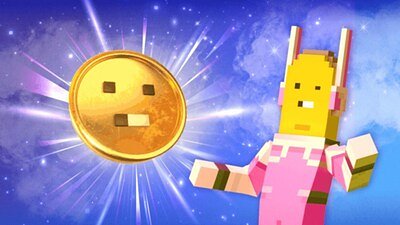
Chainers' $40M Bet: Can 600K Players Redefine Web3 Gaming's Playbook?
LUGANO, Switzerland – November 24, 2025 – In a move that deliberately inverts the typical Web3 launch sequence, gaming universe Chainers has announced the upcoming listing of its $CHU token. The announcement comes not as a speculative promise of a future product, but as a capstone on a period of intense growth that has already attracted over 600,000 players. With a recent $7.5 million fundraise and a strategy centered on proven engagement, Chainers is positioning itself as a critical test case for a more sustainable, gameplay-focused future in the volatile blockchain gaming sector.
Developed by 51.games, the project has quietly built a formidable user base by prioritizing playability over profit. This 'product-first, token-later' approach stands in stark contrast to the hype-driven cycles of 2021-2022, where many projects launched tokens based on little more than a whitepaper and ambitious promises, only to see their economies collapse when the gameplay failed to retain users. Chainers is betting that a dedicated community, already invested in the experience itself, provides a far stronger foundation for a digital economy.
From 'Play-to-Earn' to 'Play-and-Own'
The core philosophy driving Chainers is a direct response to the lessons learned from the first wave of 'play-to-earn' (P2E) games. As founder Matvii Diadkov stated, "Our goal is to make blockchain gaming enjoyable for everyone, not just profitable." This 'play-and-own' model reframes the value proposition: entertainment is the primary product, and digital ownership, powered by the blockchain, is a feature that enhances it rather than defines it.
The project's traction suggests this approach is resonating. Before the introduction of its main economic token, the ecosystem is already registering impressive metrics: over 1 million daily on-chain transactions, 30,000 daily active users (DAU), and more than 550,000 active wallets. These figures point to a level of genuine, repeatable engagement that has been largely elusive in the Web3 space. Players are not just logging in to claim rewards; they are actively participating in the universe of farming, crafting, battling, and building because they find the experience compelling.
This foundation was built using a soft in-game currency, $CFB (Chainers Fidelity Bonds), which powers daily activities without the immediate speculative pressure of a publicly traded asset. By allowing players to earn and spend $CFB on upgrades and crafting, 51.games created a functioning internal economy and a loyal user base, who will now be rewarded through a dedicated $CHU airdrop via an Early Supporters Recognition Program. This strategy effectively turns early players into foundational stakeholders, aligning their interests with the long-term health of the ecosystem.
Engineering a Sustainable Digital Economy
With a proven product, Chainers is now introducing the financial layer designed to support its future growth. The project's $7.5 million raise and an approximate $40 million fully diluted valuation (FDV) at launch signal significant investor confidence. The architecture of this new economy, centered on the $CHU token, reveals a sophisticated attempt to balance growth incentives with long-term stability.
The dual-currency system is central to this design. While the soft currency $CFB continues to lubricate day-to-day gameplay loops, the $CHU token will serve as the ecosystem's on-chain hard currency. With a total supply of 3.33 billion, $CHU's utility extends across governance, staking rewards, marketplace transactions for NFTs, and access to premium content. This separation of concerns is a critical implementation detail, designed to insulate the core game experience from the price volatility of a traded token while still providing players a tangible stake in the platform's success.
Further, the tokenomics include several mechanisms aimed at preventing the hyperinflation that plagued earlier P2E games. The token emission is scheduled over 60 months, with dynamic inflation explicitly linked to player growth. The vesting schedules for private and team tokens include significant cliff and linear unlocking periods, mitigating immediate sell pressure. For instance, the team's allocation is locked for 12 months before beginning a 36-month linear vest, a standard practice for projects signaling long-term commitment. Deflationary pressures, such as market fees funding token buy-backs and burns, are also built in, creating a model that aims for equilibrium rather than explosive, unsustainable growth.
A Hybrid Tech Stack for Mass Adoption
Supporting an ecosystem with over a million daily transactions requires a robust and scalable technical infrastructure, a notorious weak point for many blockchain applications. Chainers has addressed this by implementing a hybrid, multi-chain architecture leveraging both Polygon and Immutable. This strategic combination is key to how the project has overcome blockchain's historical limitations in gaming.
The game's core economy runs on a custom Polygon Edge sidechain, which allows for high-throughput, low-cost transactions for frequent in-game actions like crafting and farming. For asset ownership and trading—specifically NFTs—Chainers integrates with Immutable, a leading Layer-2 solution on Ethereum designed for gaming. This integration provides players with gas-free NFT minting and trading, a seamless login experience via the Immutable Passport, and access to Immutable's broader ecosystem rewards. This dual-chain approach allows the platform to use the right tool for the right job: Polygon for high-volume internal activity and Immutable for secure, user-friendly asset ownership and trading.
This technical foundation is bolstered by a network of strategic partnerships with key Web3 organizations. Collaborations with the Blockchain Gaming Alliance, major guilds like Yield Guild Games (YGG), and platforms like Gam3s.gg embed Chainers deeply within the existing Web3 gaming community, providing access to players, liquidity, and industry expertise. The close partnership with Immutable, in particular, validates the technical approach and provides a clear pathway for scaling.
Beyond the Launch: A Roadmap to a Player-Driven Universe
The $CHU token listing is not an end goal but a pivotal milestone in a much longer journey. The company's public roadmap for 2025 and 2026 outlines a clear evolution from a developer-led game to a decentralized, player-driven universe. Upcoming features include expanded PvP modes, the launch of a full NFT marketplace, and the introduction of user-generated content (UGC) tools that will allow players to create and monetize their own experiences within the Chainers world.
Perhaps most significant is the planned implementation of a Decentralized Autonomous Organization (DAO). This will transition governance of the ecosystem's treasury and key economic parameters to $CHU token holders, fulfilling the core Web3 promise of true community ownership. By empowering its most dedicated users to shape the future of the platform, Chainers aims to create a self-sustaining ecosystem that can adapt and grow organically over time. Every phase is designed to deepen player investment—not just financially, but creatively and socially. With its token now entering the open market, the entire Web3 gaming industry will be watching to see if a product built on engagement can build an economy that lasts.