
- $80 million: Series A funding round in late 2022 led by 8VC and Leaps by Bayer.
- May 2025: FDA's Advanced Manufacturing Technology (AMT) designation for Cellino's AI-driven platform, a first for iPSC-based technology.
- Automation: Cellino's system processes patient-specific iPSCs with precision, removing human subjectivity from cell manufacturing.
Experts view Cellino's AI-driven biomanufacturing platform as a transformative leap in regenerative medicine, with Dr. Madrid's leadership bridging technology and regulation to ensure responsible global deployment.
Cellino's AI Architect: Building the Future of Cell Therapy and Its Rules
By George Flores
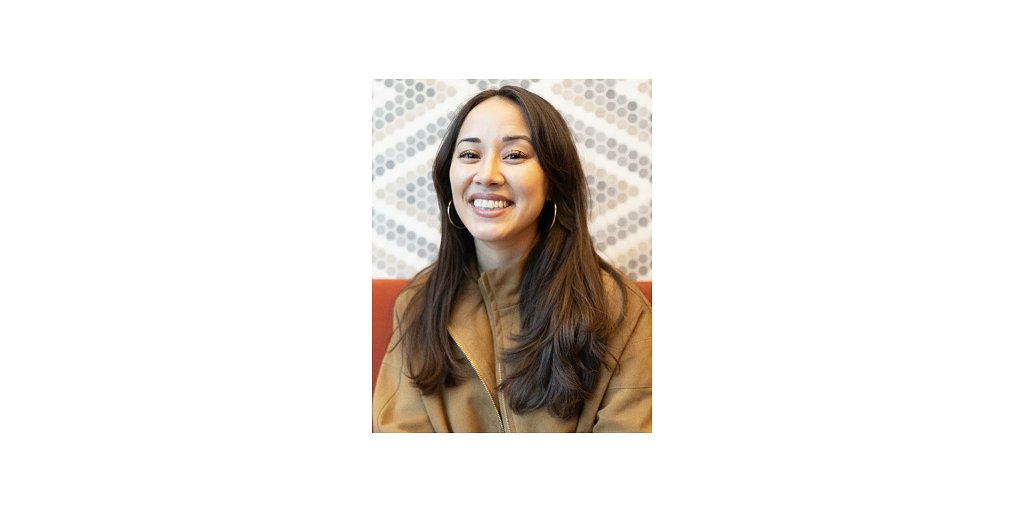
CAMBRIDGE, Mass. – January 28, 2026 – In a move that signals a deepening convergence of technology and regulation in regenerative medicine, Cellino co-founder Dr. Marinna Madrid has been promoted to the newly created role of Chief Product and Regulatory Officer and appointed to the company's Board of Directors. The appointment places one of the industry's key architects of AI-driven biomanufacturing in a dual position to not only advance the technology but also write the rules for its global implementation.
Cellino, a Cambridge-based regenerative medicine firm, was founded on a premise that once seemed futuristic: that artificial intelligence and biology could merge to create autonomous systems for manufacturing personalized cells, far outperforming error-prone manual methods. Dr. Madrid’s expanded role is a powerful validation of that founding thesis and a strategic move to address the next great challenge: scaling these revolutionary therapies for millions of patients within a trusted regulatory framework.
A Visionary's Thesis Vindicated
When Dr. Madrid co-founded Cellino, the idea that AI would become the bedrock of cell therapy production was considered premature by many observers. She built the company’s core platform on this conviction, weaving together her interdisciplinary expertise in applied physics, machine learning, laser optics, and stem cell biology. The result is a system designed to manufacture patient-derived induced pluripotent stem cells (iPSCs) with a level of precision and consistency previously unattainable.
Her unique trajectory has not gone unnoticed. Dr. Madrid's early work earned her a spot on the Forbes 30 Under 30 list in 2019, and her foundational inventions, stemming from her Ph.D. at Harvard University, are protected by multiple patents. This deep technical background is now complemented by a growing influence in global policy.
“One of the things I look for is whether a founder's scope expands with the opportunity in front of them,” said Chris Gibson, Ph.D., a Cellino Board Member and Co-Founder of Recursion. “Marinna built Cellino's manufacturing platform on a thesis that proved exactly right, that AI and biology would converge to outperform manual processes. Now she's shaping how regulators worldwide will govern AI in cell therapy. That trajectory is rare, and the board will benefit enormously from her perspective.”
This sentiment is bolstered by strong investor confidence, evidenced by an $80 million Series A funding round in late 2022 led by 8VC and Leaps by Bayer, which has fueled the platform's development and the company's strategic expansion.
The FDA's Stamp of Approval
A pivotal moment for Cellino—and a testament to Dr. Madrid's leadership—came in May 2025. The company secured the U.S. Food and Drug Administration's (FDA) Advanced Manufacturing Technology (AMT) designation for its AI-driven optical biomanufacturing platform. This made Cellino the first company to receive such a designation for an iPSC-based technology, a landmark achievement in the field of regenerative medicine.
The AMT program, for which the FDA issued final guidance in December 2024, is designed to fast-track the adoption of innovative manufacturing methods that improve product quality and supply chain resilience. The designation provides regulatory confidence and an accelerated pathway for therapies manufactured using the validated technology. It allows for earlier and more frequent engagement with the FDA, potentially shortening the notoriously long and expensive timelines for bringing new cell therapies to market.
Cellino's milestone follows a similar designation granted to Cellares in April 2025 for its automated Cell Shuttle platform, signaling a clear trend of regulatory acceptance for advanced, automated systems designed to solve the cell therapy industry's significant manufacturing bottlenecks. For Cellino, the designation specifically validates its approach to producing patient-specific iPSCs, a critical starting material for a new generation of personalized treatments.
Automating Biology Beyond Human Scale
At the heart of Cellino's innovation is a closed-loop platform that removes human subjectivity from the delicate process of cell manufacturing. Traditional methods rely on highly trained technicians manually inspecting and selecting cells, a process that is slow, expensive, and prone to variability. This has been a primary barrier to scaling personalized therapies.
Cellino’s system automates this entire workflow. It uses high-resolution imaging to monitor cell cultures in real time. AI algorithms analyze these images, identifying the highest quality cells and directing a high-precision laser to gently eliminate unwanted or suboptimal cells without harming the desired ones. This continuous loop of monitoring, analysis, and intervention allows the system to learn and optimize with every patient batch it processes.
The platform makes decisions at a speed and scale that human operators simply cannot match, all while maintaining the stringent precision required for personalized medicine. By automating the production of iPSCs—which can be differentiated into any cell type in the body—Cellino is building the foundational infrastructure for a future where patient-specific tissues and even organs can be manufactured on an industrial scale.
Forging the Regulatory Frontier
With the technology's potential validated, the next frontier is regulation. Building a revolutionary platform is one challenge; ensuring it can be deployed responsibly and globally is another. Dr. Madrid's new role as Chief Product and Regulatory Officer squarely addresses this dual mandate.
“When we started Cellino, the idea that AI would be foundational to cell therapy manufacturing felt like a reach,” stated Dr. Madrid. “Now it's obvious. The question has shifted from whether AI belongs in biomanufacturing to how we deploy it responsibly at scale. That's the challenge I'm most excited to take on: building both the technology and the regulatory infrastructure to bring these therapies to millions of patients.”
This work involves actively engaging with the FDA, the European Medicines Agency (EMA), and other global bodies to establish clear frameworks for AI in biomanufacturing. Key challenges include addressing the 'black box' nature of some AI models, ensuring data integrity, and developing standardized methods for validating these complex systems. Dr. Madrid’s active participation in influential groups like the Alliance for Regenerative Medicine and the International Society for Stem Cell Research (ISSCR) places her at the center of these critical conversations, helping to shape a regulatory environment that fosters innovation while ensuring patient safety.
By integrating product development with regulatory strategy under a single, visionary leader, Cellino is not just preparing for the future of medicine—it is actively building its technological and regulatory foundations from the ground up.
Topics & Related
Corporate Finance
Artificial Intelligence
Machine Learning
Sustainability & Climate
Healthcare & Life Sciences
AI & Machine Learning
Related Company Pulse