
- Deal Value: SEK 1.5 million (~$145,000 USD) for a specialized forming tool
- Market Growth: Global metal bipolar plates market projected to grow from $1.7 billion in 2024 to $5.5 billion by 2035
- Patent Validity: Cell Impact Forming™ technology patented until 2035
Experts would likely conclude that this deal represents a critical validation of Cell Impact's technology by a major Asian automaker, signaling its potential as a key supplier in the rapidly expanding hydrogen fuel cell industry.
Cell Impact's Small Deal: A Big Bet on the Hydrogen Economy
KARLSKOGA, Sweden – December 09, 2025 – In the high-stakes world of automotive supply chains, not all groundbreaking news arrives with blockbuster financials. Sometimes, the most significant moves are whispered in the quiet language of strategic partnerships and technological validation. Such is the case with Cell Impact AB, a Swedish specialist in fuel cell components, which just announced a seemingly modest SEK 1.5 million (approx. $145,000 USD) agreement with a leading, albeit unnamed, Asian automotive manufacturer. While the sum itself is minor, the implications for Cell Impact and the broader hydrogen fuel cell industry are anything but.
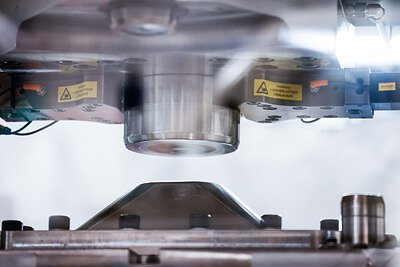
The deal is for a specialized forming tool used to manufacture flow plates—a critical component at the heart of hydrogen fuel cells. This order represents the culmination of a multi-year collaboration, moving the partnership from testing and development into a pre-production validation phase, a crucial step on the path to mass commercialization.
A Small Order with Giant Implications
On its surface, a $145,000 order with delivery slated for early 2026 might seem like a footnote. However, for a niche technology provider like Cell Impact, this agreement is a monumental vote of confidence from a major industry player. The tool will be used by the automaker to produce complete flow plates for rigorous testing, validating not just the plate design but the very manufacturing process that Cell Impact has pioneered.
"Each successful project has brought us one step closer to continuous production," noted Daniel Vallin, CEO of Cell Impact, in the company's official announcement. This sentiment underscores the strategic nature of the deal. In the automotive world, bringing a new technology to the production line is a marathon, not a sprint. This order is a critical milestone, signaling that Cell Impact’s technology has cleared significant hurdles and is now being integrated into a major OEM's manufacturing evaluation process.
The strategic importance is magnified by the partner's identity. While undisclosed, the description "leading Asian automotive manufacturer" points towards a powerhouse in Japan, South Korea, or China—regions at the absolute forefront of fuel cell electric vehicle (FCEV) development. Giants like Toyota, Hyundai, and Honda, along with a rapidly growing commercial vehicle sector in China, are pouring billions into hydrogen technology. Securing a foothold with one of these leaders is the key to unlocking potentially vast, long-term production contracts.
The Technology Driving the Deal
At the core of this partnership is Cell Impact's patented manufacturing process: Cell Impact Forming™. This isn't just another way to stamp metal; it is a high-velocity forming method that offers a distinct competitive edge in producing the intricate, ultra-thin flow plates essential for efficient fuel cells and electrolyzers.
Conventional methods like progressive stamping can be slow, costly, and struggle to maintain material integrity. In contrast, Cell Impact Forming™ uses a single, high-energy impact at a precisely controlled velocity. This changes the metal's physical properties for a split second, allowing it to be shaped with minimal stretching or thinning. The result is a higher quality flow plate with near-uniform thickness, which is paramount for maximizing the power density and lifespan of a fuel cell stack.
The advantages are compelling. The company claims tool costs can be up to 50% lower than conventional methods, and the equipment itself is compact and requires little maintenance. Furthermore, the process is environmentally friendly—it consumes very little electricity, requires no water, and uses no lubricants, eliminating the need for chemical-intensive cleaning. In an industry increasingly focused on sustainable manufacturing, these attributes provide a powerful selling proposition. This patented technology, valid until 2035, is the bedrock of Cell Impact’s strategy to become an indispensable supplier in the green energy transition.
Asia's Hydrogen Highway: A Market in Overdrive
Cell Impact's focus on the Asian market is no accident. The Asia-Pacific region is the undisputed global leader in the fuel cell sector, accounting for over 60% of the market share for fuel cell bipolar plates in 2024. The growth trajectory is staggering. According to market analysts, the global metal bipolar plates market, valued at $1.7 billion in 2024, is projected to surge to $5.5 billion by 2035. The specific market for fuel cell bipolar plates is expected to grow even faster, with some projections showing a compound annual growth rate (CAGR) of over 22% through the next decade.
This explosive growth is fueled by aggressive government policies and massive corporate investment. Nations like Japan, South Korea, and China have established ambitious targets for FCEV adoption and hydrogen infrastructure development to combat air pollution and achieve carbon neutrality. The Asia-Pacific FCEV market alone is forecast to grow from around $2.2 billion in 2025 to over $15 billion by 2032. While passenger cars like the Toyota Mirai and Hyundai NEXO grab headlines, a significant part of this expansion is occurring in the commercial vehicle space, where the benefits of hydrogen's long range and fast refueling times are most apparent for buses and long-haul trucks.
For a component supplier like Cell Impact, this regional concentration represents a massive opportunity. By embedding its technology with a key player in this ecosystem, the company is positioning itself directly in the path of this market expansion.
From Partnership to Production Line
This latest agreement is a textbook example of how innovation moves from the lab to the factory floor in the automotive sector. The multi-year collaboration highlights the deep R&D and trust-building required to become a supplier for critical powertrain components. Cell Impact is not just selling a product; it's selling a process, and this order for a forming tool brings that process one step closer to being integrated into the customer's own production environment.
This strategic patience is backed by deliberate financial planning. The company recently completed a rights issue of approximately SEK 62.7 million to finance its business plan, which is centered on commercialization and industrial scaling. This capital injection is intended to bridge the gap as customer projects, like the current one, transition into recurring revenue streams.
The company has also pursued a multi-pronged approach to market entry, including a key agreement with F.C.C., a major Japanese automotive supplier, to expand its reach in Japan, India, and China. This, combined with direct engagement with OEMs, demonstrates a sophisticated strategy to navigate the complex automotive supply web. By proving its technology's value through these iterative validation projects, Cell Impact is methodically de-risking its proposition for potential large-scale customers, making the eventual leap to full production a more calculated and confident step for all parties involved. This small order is a down payment on that future.