
- 24 currencies available on-demand via self-service kiosk.
- CAD $100–$900 transaction range per purchase.
- 24/7 availability with complimentary 15-minute parking access.
Experts would likely conclude that this FinTech innovation bridges the gap between digital convenience and the enduring need for physical cash in travel, offering a strategic advantage for airports and travelers alike.
Cash on Command: How FinTech Is Reshaping Airport Currency Exchange
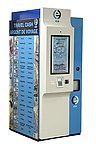
SASKATOON, SK – June 11, 2026 – International travel from Saskatchewan just entered a new era of convenience, but the story isn't about faster planes or biometric screening. It's about a vending machine. Tucked near the entrance of Saskatoon’s John G. Diefenbaker International Airport, a new self-service kiosk by ICE Currency Exchange now dispenses 24 foreign currencies, promising to deliver pesos, euros, or yen in less than a minute. While seemingly a simple upgrade, this machine represents a critical juncture where the digital economy finally solves one of physical travel’s oldest friction points: getting local cash before you fly.
For decades, obtaining foreign currency involved a trade-off: plan ahead and visit a bank, or wait until the airport and accept less favorable rates at a staffed counter. ICE's automated solution aims to dismantle that choice. "This is more than a currency machine—it's a travel convenience tool designed to give travelers confidence and peace of mind before they even board their flight," said Shamir Desai, President of ICE Currency Exchange, in a statement. The machine’s arrival in Saskatoon signals a broader strategic push, one that pits on-demand automation against both traditional financial institutions and a new wave of digital-only currency platforms.
A New Standard for Airport Services
The core appeal of the Saskatoon machine is its radical simplicity. Operating 24/7, it allows a traveler heading to Mexico to use their debit card or Apple Pay to purchase a pre-packaged bundle of pesos, ranging from CAD $100 to $900, and receive the cash moments later. The process eliminates the need to align travel plans with banking hours or risk facing long queues at exchange bureaus upon arrival in a foreign country. With complimentary 15-minute parking just outside the terminal, even non-travelers can use the service for future trips.
This on-demand model directly addresses the persistent anxieties of international travel. Having local currency upon landing simplifies immediate needs like paying for a taxi, tipping a bellhop, or buying a bottle of water, especially in regions where card acceptance is not universal. It serves as a crucial fallback in case a traveler's credit or debit cards are unexpectedly blocked or lost. As Desai noted, "Travel should begin with confidence, not uncertainty." By front-loading the currency exchange process, the service aims to smooth out the first, often bumpy, hours in a new country.
The features are tailored for the modern traveler: a choice of 24 currencies, popular denomination mixes to ensure a supply of small bills, and electronic receipts for easy expense tracking. This level of granular control and accessibility stands in stark contrast to the often-opaque world of airport currency exchange, where travelers are a captive audience subject to high markups and service fees.
The Automation Arms Race in Currency Exchange
While new to Saskatoon, this technology is not an isolated experiment. It represents the latest move in ICE Currency Exchange's strategy to automate and innovate within the travel sector. The company launched what it called North America's first multi-currency travel cash vending machine at Toronto Pearson International Airport in July 2025. According to company representatives at the time, the response from travelers was "overwhelmingly positive," with the machine becoming a point of interest for its speed and intuitive design. The expansion to a key regional hub like Saskatoon confirms this is a calculated national rollout, not a pilot program.
This push into automation is happening within a fiercely competitive landscape. For years, the foreign exchange market has been a battleground. On one side are the legacy players: major banks and traditional airport exchange counters. Their business model often relies on significant markups over the mid-market exchange rate, with cash transactions typically incurring the least favorable rates due to handling costs. On the other side are the FinTech disruptors—online platforms like Wise and Remitbee—that promise exchange rates much closer to the mid-market rate and transparent, low fees. These digital-first services have won over a large segment of the market, particularly for large transfers.
The ICE vending machine carves out a unique and powerful niche between these two poles. It cannot compete with the rock-bottom rates of a purely online service that transfers funds digitally. However, it offers something those platforms cannot: immediate, physical cash. It combines the digital convenience of paying with a smartphone with the tangible security of holding foreign banknotes. Financial analysts note that this hybrid model, which commands a "convenience premium," is a savvy response to the market. It acknowledges that for many travelers, the absolute best exchange rate is secondary to the certainty and speed of having cash in hand at the airport.
Saskatoon's Bid for a Modern Global Gateway
The installation of this technology is more than just a win for local travelers; it's a strategic enhancement for the Saskatoon airport itself. As regional airports compete to attract airlines and passengers, the quality of their services and infrastructure becomes a key differentiator. By being one of the first airports in Canada to host this type of advanced FinTech solution, Saskatoon John G. Diefenbaker International Airport positions itself as a modern, forward-thinking gateway.
Such innovations contribute to a seamless "curb-to-gate" experience that modern travelers increasingly expect. They signal that the airport is attuned to the pain points of international travel and is actively investing in solutions. For a region looking to bolster its international business ties and tourism appeal, these details matter. They collectively build an impression of efficiency and global connectivity, suggesting that Saskatoon is not just a point of departure, but a hub equipped for the demands of the 21st-century economy.
The Enduring Role of Cash in a Digital World
Perhaps the most fascinating aspect of this innovation is what it says about the nature of money itself. In an era dominated by contactless payments and digital wallets, the introduction of a sophisticated machine designed to dispense physical cash might seem counterintuitive. Yet, it highlights a truth that frequent travelers know well: cash remains indispensable. It is the universal language of small commerce, the fail-safe when technology fails, and the grease that keeps the wheels of the service economy turning in many parts of the world.
The ICE machine is not a step backward from the digital revolution. Instead, it is a bridge. It uses the most advanced payment technologies—tap-to-pay, real-time rate updates, secure digital processing—to solve one of the oldest problems associated with physical currency. It recognizes that until the entire world operates on a single, frictionless payment system, the need for local cash will persist. By automating access to it, ICE is betting that the future of travel isn't about choosing between digital and physical, but about using technology to seamlessly integrate both.