
- $90 million investment: Cargill's total strategy includes $40 million for employee housing and $50 million for AI and automation.
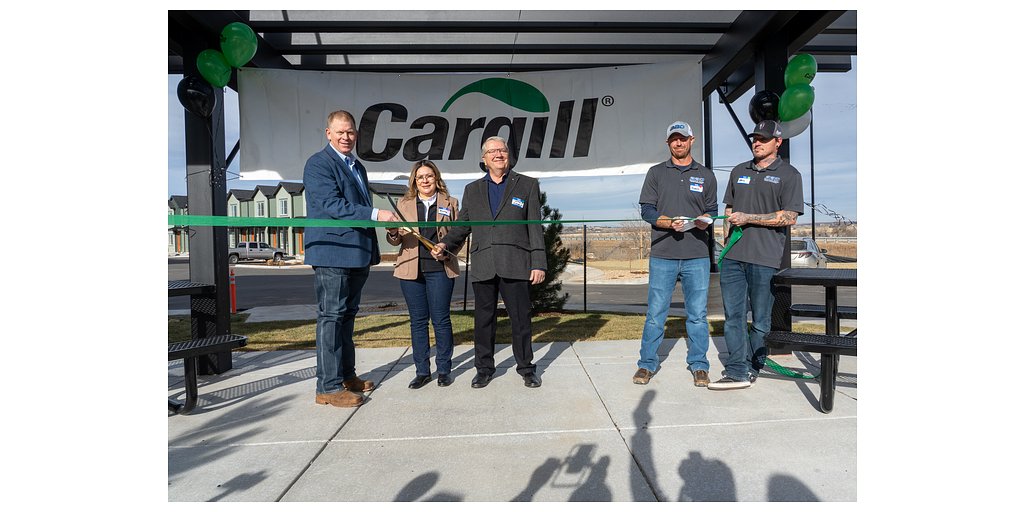
- 81-unit apartment complex and 27 townhomes: Providing housing for over 100 employees and their families.
- 60% of employees commute: Nearly 60% of Cargill's Fort Morgan workforce commutes from outside the city, often traveling 45-60 minutes each way.
Experts would likely conclude that Cargill's integrated approach of investing in both workforce stability through housing and operational efficiency via AI sets a new standard for securing critical supply chains in the food industry.
Cargill's Blueprint: Securing the U.S. Beef Supply with AI and Housing
FORT MORGAN, CO – December 04, 2025
In the quiet plains of eastern Colorado, a new model for securing a critical American supply chain is taking shape. Global food corporation Cargill is executing a multifaceted, $90 million strategy in Fort Morgan that extends far beyond the fences of its massive beef processing facility. By coupling significant investments in employee housing with the deployment of advanced artificial intelligence on its production floor, the company is tackling two of the most pressing challenges facing modern industry: workforce stability and operational efficiency. This dual-pronged approach offers a compelling case study in how to build resilience into the very foundation of the nation's food supply.
While corporate investments in technology are commonplace, Cargill’s decision to pour $40 million into building apartments and townhomes for its employees is a move that demands closer inspection. It’s a tacit acknowledgment that in the 21st century, the most sophisticated technology is only as effective as the supported, stable workforce that operates it. This initiative is not merely corporate philanthropy; it is a calculated strategic investment in the human capital essential to national food security.
Solving the Workforce Equation in Rural America
The decision to build housing was born from a stark reality. Fort Morgan, like many rural American towns anchored by a major industrial employer, has been grappling with a severe and persistent housing shortage. A 2021 study commissioned by the United Way of Morgan County identified housing as the most urgent need for local workers. For Cargill, which employs around 2,000 people at its local plant, this abstract crisis had tangible consequences.
“Nearly 60 percent of our employees commute from outside Fort Morgan, many traveling 45 minutes to an hour each way,” said Johanna Hernandez, general manager of the Fort Morgan facility. This daily reality not only places a financial and personal strain on employees but also fuels higher turnover rates, a chronic headache for employers in labor-intensive sectors. The lack of available, affordable housing created a bottleneck for recruitment and retention, directly impacting the plant's operational stability.
In response, Cargill initiated the Riverside Housing project. In collaboration with real estate developer Portmanteau Partners, housing consultant Project Moxie, and local community groups, the company has now opened an 81-unit apartment complex and 27 townhomes. Together, these provide quality, affordable housing for over 100 employees and their families, located less than ten minutes from the plant. To qualify, a tenant simply needs to be a Cargill employee, with units available on a first-come, first-served basis, notably without the income restrictions that often disqualify many industrial workers from other affordable housing programs.
“Providing homes in Fort Morgan gives our employees more time with their families, reduces daily stress, and strengthens the fabric of this community,” Hernandez added. The city government, recognizing the project’s value in addressing its long-standing housing problem, embraced the collaboration, offering a 75% discount on permit fees. This public-private synergy has been crucial, creating a solution that benefits the company, its employees, and the broader community.
The Digital Butcher: AI on the Production Line
Parallel to fortifying its workforce, Cargill is revolutionizing its production process through its “Factory of the Future” initiative. This involves a significant capital injection into automation and technology, including the recent deployment of a proprietary, patent-pending system called CarVe.
CarVe is a computer vision system that uses AI to provide real-time analysis of meat yield as carcasses are processed. In an industry where fractions of a percent can translate into millions of pounds of product, this technology represents a quantum leap from traditional methods, which often relied on day-old data. With CarVe, frontline managers can see yield data instantly, allowing them to provide immediate feedback to employees on the processing line to improve cutting precision and minimize waste.
This innovation could not be more timely. The U.S. cattle supply is currently at its tightest level in years, making it strategically imperative to maximize the value extracted from every single animal. “Every ounce matters,” explained Leon Fletcher, vice president of operations for Cargill Beef. “Even a single ounce of improved yield can mean more than a million additional meals in the food supply.”
The system is more than just a tool for efficiency; it’s a performance-enhancing technology that empowers the workforce. Steve Rodriguez, a fabrication floor manager at the Fort Morgan plant who started his career on the processing floor, called the system a “game changer,” adding, “I wish we’d had it 20 years ago.” By providing real-time, data-driven feedback, CarVe helps employees hone their skills, directly connecting their precision to a measurable reduction in waste and an increase in available food.
A Blueprint for Industrial Resilience
Cargill's strategy in Fort Morgan demonstrates a sophisticated understanding that people and technology are not separate pillars of a business but an integrated system. A stressed, fatigued workforce commuting long hours cannot be expected to consistently perform at the peak levels required to maximize the potential of a system like CarVe. Conversely, providing cutting-edge tools can increase job satisfaction and a sense of mastery, which, when combined with a better quality of life, creates a powerful engine for retention and productivity.
This holistic approach extends beyond housing and on-site tech. The company has also invested over $500,000 in local grants to support expanded childcare services and first-time homebuyer education programs. These initiatives address other significant barriers facing working families, further solidifying the stability of its workforce and the local community.
The overwhelmingly positive reaction from local leadership underscores the project's success. Fort Morgan Mayor Kevin Lindell praised the initiative, stating that it “epitomizes Cargill's community commitment and helps solve the critical housing problem in small towns.”
By directly addressing the foundational needs of its employees while simultaneously pushing the technological envelope, Cargill is not just improving its own bottom line. It is creating a resilient operational hub capable of weathering market fluctuations and labor challenges. This integrated investment in community, people, and technology serves as a powerful blueprint for other critical industries, proving that long-term strategic strength is built by reinforcing the entire supply chain, starting with the person on the line.