
- 4-hour detection window: The Marijuana Breath Test (MBT) detects delta-9 THC in breath within approximately four hours post-consumption, aligning with peak impairment.
- Peer-reviewed validation: A March 2026 study in the Journal of Analytical Toxicology confirms the MBT's ability to detect delta-9 THC in breath aerosols.
- Strategic partnership: Cannabix collaborates with Omega Laboratories Inc., a global leader in forensic drug testing, for laboratory analysis and reporting.
Experts acknowledge the MBT's potential to provide a more relevant method for detecting recent cannabis use, but caution that its adoption will depend on overcoming scientific and legal challenges, particularly in establishing a clear link between THC levels and impairment.
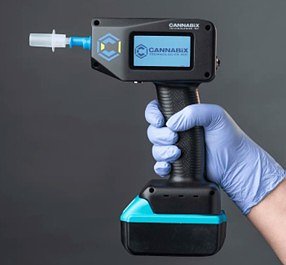
Cannabix Launches Marijuana Breath Test, Sparking a New Era of Debate
VANCOUVER, BC – March 16, 2026 – By Patrick Walker
Cannabix Technologies Inc. today announced the commercial launch of its Marijuana Breath Test (MBT), a system designed to solve a problem that has plagued employers and law enforcement for years: how to tell if someone has used cannabis recently. The company has begun delivering its first units to commercial clients, marking a pivotal step in the long and complex quest for a cannabis equivalent to the alcohol breathalyzer.
The launch positions Cannabix at the forefront of a technological race to provide a more relevant method for cannabis detection. As legalization continues to expand globally, the limitations of traditional drug tests—which can detect cannabis use from days or even weeks prior—have become increasingly problematic, creating fairness and liability issues in workplaces and on the roads.
A New Standard for Recent Use
The core promise of the Cannabix MBT system is its focus on recency. The technology is engineered to detect delta-9 THC, the primary psychoactive component of cannabis, in a person's breath within a narrow window of approximately four hours post-consumption. This period is what scientific research suggests most closely aligns with peak impairment, a stark contrast to urine, hair, or even blood tests that often identify inactive metabolites long after any psychoactive effects have subsided.
"The Marijuana Breath Test fills a critical gap and delivers new technology and methods that provide a complete, non-invasive solution for detecting recent cannabis use," the company stated in its announcement, highlighting the system's ability to provide more actionable data for informed decision-making.
To bolster its claims, the company pointed to a recent peer-reviewed study published in the prestigious Journal of Analytical Toxicology. The March 2026 paper, titled “Simultaneous Analysis of Δ9-THC, Δ8-THC, CBD, and CBN in Breath Aerosols Collected Using Cannabix Technologies Breath Collection Unit,” serves as a cornerstone of the system's scientific validation. It confirms the ability of the MBT system to detect delta-9 THC, lending crucial third-party credibility to the technology.
The Technology and Business Model
The MBT platform is a two-part system. It begins with a handheld Breath Collection Unit (BCU), which an individual breathes into. The breath sample is captured in a single-use, disposable Breath Cartridge. This cartridge is then sent for analysis to a certified laboratory partner.
This is where Cannabix's strategic partnership with Omega Laboratories Inc., a global leader in forensic drug testing, becomes critical. Omega has integrated the Cannabix cartridges into its workflow, providing the laboratory-developed test method, chain-of-custody processing, and secure electronic reporting. This partnership allows Cannabix to focus on the hardware while leveraging Omega's decades of experience and certifications in forensic analysis.
The business model is built on a recurring revenue stream, a strategy common in the medical and diagnostics industries. While customers make an initial investment in the BCU hardware, the ongoing need for disposable cartridges for every test performed is expected to generate continuous revenue.
"Cannabix and its partners have completed many initiatives to enable the commercial rollout of the MBT system," said CEO Rav Mlait in the press release, referencing enhancements to the hardware, the establishment of manufacturing procedures, and the successful completion of FCC electronic emissions testing for the collection unit.
Navigating a Complex Scientific and Legal Landscape
Despite the milestone launch and peer-reviewed validation, the Cannabix MBT enters a market fraught with scientific debate and legal uncertainty. The central challenge is the complex relationship between THC levels and actual impairment. Unlike alcohol, where a direct correlation between Breath Alcohol Concentration (BrAC) and impairment is well-established in science and law, the link for cannabis is far murkier.
Research from independent bodies, including a 2023 study by the National Institute of Standards and Technology (NIST), has highlighted the immense difficulty in creating a reliable cannabis breathalyzer. That study cautioned that THC concentrations in breath can be highly variable and may not always distinguish recent use from baseline levels in regular users. Experts have repeatedly warned that detecting THC presence is not the same as proving impairment.
This distinction is the crux of the legal challenge. For the MBT to become a widely adopted tool in law enforcement, its results would need to be admissible in court as evidence of impaired driving. Currently, no U.S. state has a 'per se' breath THC limit for driving, and establishing one would require a scientific consensus that does not yet exist. Legal experts and civil rights advocates express concern that without a clear link to impairment, such technology could lead to wrongful convictions.
In the workplace, the path may be clearer but is still complicated. For safety-sensitive jobs, a test indicating use within the last four hours could be sufficient grounds for action under a company's policy, regardless of a definitive measure of impairment. This is the market where the MBT may find its most immediate and impactful application, offering a fairer alternative to penalizing an employee for off-duty use days earlier.
Cannabix is not alone in this pursuit. Companies like Hound Labs are also developing similar technologies, indicating a competitive and rapidly advancing field. The ultimate success of any cannabis breathalyzer will depend not only on its technological accuracy but also on its ability to withstand rigorous scientific scrutiny and navigate the slow-moving wheels of legislative and judicial acceptance. With its first units now in the field, Cannabix is no longer just developing a product; it is testing the very future of how society measures cannabis influence.
Topics & Related
Healthcare & Life Sciences
Software & SaaS
AI & Machine Learning
ESG
Artificial Intelligence
Machine Learning
Cloud Migration
IPO
Revenue
Related Company Pulse