
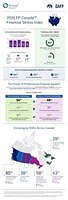
- 43% of Canadians cite money as their top source of stress, up slightly from previous years.
- 85% of Canadians are taking proactive steps to manage their finances.
- 33% of Canadians are actively paying down debt, while 29% have created a formal budget.
Experts conclude that while financial stress remains high among Canadians, proactive measures such as budgeting, saving, and seeking professional financial advice are significantly improving financial well-being and reducing anxiety.
Canadians Fight Back Against Financial Stress with Proactive Measures
TORONTO, ON – March 10, 2026 – While the weight of financial anxiety continues to press down on households across the country, a new report reveals a powerful undercurrent of resilience. According to the ninth annual Financial Stress Index from FP Canada, money remains the number one source of stress for 43 per cent of Canadians, a slight increase from previous years. Yet, the overwhelming majority—a growing 85 per cent—are not succumbing to the pressure. Instead, they are actively taking concrete steps to manage their finances and secure their futures.
The national survey of over 2,000 Canadians, conducted by Leger, paints a complex picture of a nation grappling with economic headwinds but simultaneously becoming more financially proactive. The findings suggest a significant shift in mindset, moving from passive worry to deliberate action, as more people embrace budgeting, saving, and debt reduction to regain a sense of control.
The Anatomy of Modern Financial Anxiety
The sources of this persistent stress are rooted in the daily experience of Canadian households. The cost of groceries remains the most significant pressure point, cited by 64 per cent of respondents as a major contributor to their financial strain. While broad concerns about inflation have slightly eased since their peak, anxiety is shifting to other high-cost essentials. Worry over rising housing prices, for instance, has climbed to 25 per cent in 2026, up from 20 per cent in 2023, highlighting the ongoing and intensifying affordability crisis.
These findings are consistent with other recent economic snapshots. A CIBC poll from late 2025 noted that keeping up with bill payments and paying down debt were top priorities for Canadians, while a BMO survey revealed that nearly three-quarters of the population were concerned about the impact of inflation on their retirement savings. Together, these reports confirm that the high cost of living is not a fleeting issue but a sustained challenge that is reshaping household budgets and long-term goals.
From Worry to Action: A National Shift in Mindset
Despite these pressures, the standout story from the 2026 Financial Stress Index is one of empowerment. The increase in Canadians taking action, up from 82 per cent last year, signals a growing refusal to be passive victims of economic circumstance. The most common strategy, employed by 42 per cent of respondents, is diligently tracking expenses—a foundational step toward financial literacy.
Beyond just tracking, Canadians are making decisive moves. A third of the population (33%) is actively paying down debt, while 29 per cent have created a formal budget. Perhaps most encouragingly, saving is becoming a greater priority. This year, 33 per cent of Canadians reported saving more to combat financial stress, an increase from 29 per cent in 2025. This focus on building a financial cushion suggests a move towards longer-term thinking and a desire for greater security.
"Canadians are taking matters into their own hands, while juggling everyday expenses like groceries and huge purchases like a home," said Zena Amundsen, CFP, owner of Astra Financial Services. "It's encouraging to see more Canadians choosing to save their hard-earned dollars. That tells us they're taking thoughtful steps to improve their financial well-being."
Financial Pressures Through the Ages
Financial stress is not a monolithic experience; it manifests differently across various life stages. The FP Canada survey illuminates how these worries and the responses to them evolve with age.
For younger Canadians aged 18 to 34, the stress is largely aspirational. Nearly half (47%) are worried about saving for major purchases like a home or car, while job and income stability (38%) and the complexities of investing (27%) are also top of mind. In response, this cohort is focused on building a strong foundation: 42 per cent have increased their savings, and 35 per cent have created a budget.
Meanwhile, middle-aged Canadians between 35 and 54 are feeling the squeeze from multiple directions. Their primary stressors are immediate and pressing: almost half (48%) are stressed by bill payments and day-to-day expenses. This is compounded by worries about saving enough for retirement (46%) and managing existing debt (39%). Consequently, their primary strategy for relief is tackling liabilities, with 40 per cent of this group focused on paying down debt.
The Measurable Impact of Professional Guidance
While individual actions are making a difference, the survey reveals a powerful tool that significantly reduces financial stress: professional advice. The data shows a stark contrast in the financial well-being of Canadians who work with a Certified Financial Planner® (CFP) professional or a Qualified Associate Financial Planner™ (QAFP) professional compared to those who do not.
Only 34 per cent of those with a financial planner cite money as their top source of stress, compared to 48 per cent of those navigating their finances alone. The benefits extend to mental and emotional health, with those who have professional support being far less likely to lose sleep over financial worries (41% vs. 55%).
This guidance also fosters a greater sense of optimism. A majority (57%) of respondents with a financial planner feel more hopeful about their financial future than they did a year ago, a sentiment shared by only 47 per cent of those without one. This demonstrates that a well-crafted financial plan does more than organize numbers; it provides a clear path forward that inspires confidence.
"Canadians are feeling financial pressures that continue to cause them stress," noted Tashia Batstone, President and CEO of FP Canada. "However, what the Financial Stress Index demonstrates, year after year, is that working with a professional financial planner can help all Canadians manage their financial stress, however it may affect them. Whatever unique circumstances someone is facing, CFP professionals and QAFP professionals offer the expertise and guidance to help them move forward with clarity."
As economic uncertainty persists, the findings underscore that proactive strategies, from disciplined budgeting to seeking expert advice, are Canadians' most effective tools in the ongoing fight for financial peace of mind.
Topics & Related
Inflation
Related Company Pulse