
- 100% of schools assessed required safety improvements
- 35% of issues were classified as high or extreme severity
- $3.2 million in funding requests submitted by 57 schools in 2025
Experts agree that the deteriorating state of welding labs in Canadian secondary schools poses a significant safety risk and threatens the future of skilled trades, requiring urgent investment and systemic improvements.
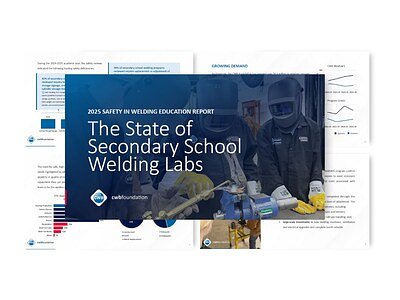
Canada's Welding Labs: A Safety Crisis Threatens Future Trades
MILTON, ON – February 10, 2026 – A startling new report from the CWB Foundation has pulled back the curtain on the state of welding education in Canadian secondary schools, revealing a widespread and critical failure to provide safe learning environments. The 2025 State of Safety in Secondary School Welding Labs report paints a grim picture of outdated equipment, insufficient safety gear, and crumbling infrastructure, creating preventable risks for students and threatening the pipeline of future talent for one of the nation's most in-demand skilled trades.
Based on data gathered from schools across the country, the report confirms that the environments where many young Canadians are expected to forge their futures are themselves in urgent need of modernization and investment. The findings suggest a systemic problem that extends far beyond individual classrooms, posing a significant challenge to Canada's educational standards and its economic ambitions.
A Crisis of Safety in the Classroom
The report's statistics reveal the alarming extent of the safety gaps. A staggering 100 percent of schools assessed through the CWB WeldSAFE™ program—a national safety initiative—required some form of safety improvement. These weren't minor infractions; 35 percent of the identified issues were classified as having high or extreme severity. The problems ranged from low-cost fixes to major infrastructure overhauls, with 14 percent of schools requiring investments of more than $5,000 per issue just to meet basic safety standards.
Personal Protective Equipment (PPE), the most fundamental line of defense for any welder, is in critically short supply. According to the report, 54 percent of schools applying for equipment grants reported having inadequate quantities of PPE for their students. This means that in over half of these programs, students may be sharing, using worn-out gear, or going without essential protection like CSA-approved helmets, jackets, and respirators. This situation stands in stark contrast to provincial health and safety regulations, which, under bodies like the Canadian Centre for Occupational Health and Safety (CCOHS), mandate comprehensive safety protocols and the use of appropriate PPE in all workplace and educational settings.
In 2025 alone, 57 schools submitted funding requests totaling nearly $3.2 million to address their most urgent needs. The shopping list included new welding machines to replace outdated units, fresh supplies of worn safety gear, and critical ventilation system upgrades to protect students from hazardous fumes—a fundamental requirement for any welding environment.
Fueling a National Skilled Trades Shortage
The deteriorating state of high school welding labs is not just a safety issue; it's an economic one. These labs are the first point of contact for the next generation of skilled trades professionals, and the conditions within them have a direct impact on Canada's ability to address a deepening skilled trades shortage. With over 700,000 skilled trades workers expected to retire by 2028, the country is facing a massive talent deficit that could cripple key sectors of the economy.
Recent economic analysis underscores the severity of the problem. Projections indicate a shortfall of at least 10,000 workers in high-demand Red Seal trades like welding within the next five years. The economic cost is already mounting, with Canadian firms losing an estimated $38 billion in business opportunities in a single year due to labor shortages. When students enter welding labs that are poorly equipped, underfunded, and potentially unsafe, it sends a powerful message that this career path is not valued. Such negative first impressions can deter promising students from pursuing the trade, directly shrinking the talent pipeline at its source and exacerbating the national shortage.
The Funding Gap and a Call for Investment
Despite the clear and urgent need, the resources available are falling desperately short. The CWB Foundation, a key charitable organization supporting these programs, has invested over $6.1 million since 2018, which was supplemented by another $11.7 million from education and industry partners. Yet, this has been a drop in the bucket compared to the overwhelming demand. In 2025, the Foundation was only able to fund 35 percent of applications for its Equipment and Technology Advancement Program and could only accommodate 29 percent of schools requesting a CWB WeldSAFE review.
While federal and provincial governments have established programs like the Canadian Apprenticeship Strategy and the Ontario Youth Apprenticeship Program (OYAP) to bolster the trades, the report's findings suggest these initiatives are not sufficiently trickling down to address the foundational infrastructure crisis in secondary schools.
"The time to act is now. Ensuring that young people can learn essential skilled trades in safe, modern environments is vital for Canada's economic future," says Susan Crowley, Executive Director of the CWB Foundation. "We invite partners across the country to join us in creating safe, modern, and industry-relevant welding classrooms for every student."
Forging Partnerships for a Safer Future
In the face of these challenges, the CWB Foundation is championing a model of collaborative action, urging industry and community stakeholders to co-invest in the next generation. This approach moves beyond simply writing checks, creating dynamic partnerships that bring industry expertise and resources directly into the classroom. Through its CWB WeldSAFE program, the Foundation has partnered with industry leaders like 3M Canada and Lincoln Electric to distribute over 2,000 comprehensive PPE kits to students, ensuring they have the professional-grade gear needed for a safe start.
These partnerships demonstrate a powerful formula for success. Corporations like Bird Construction have supported multiple initiatives, including welding camps for Indigenous youth that have successfully guided students into formal apprenticeship programs. By connecting schools with local businesses and industry experts, these programs provide not only equipment and funding but also mentorship, donated materials through networks, and clear pathways to employment. This model proves that targeted, collaborative investment can transform a simple high school shop class into a state-of-the-art training ground and a direct on-ramp to a prosperous career, securing both the safety of students and the future of Canada's skilled workforce.