
- $171 million: Expected GDP injection from Spaceport Nova Scotia's construction phase
- 1,600 jobs annually: Projected employment during construction
- $300 million/year: Forecasted GDP contribution once operational (2027)
Experts view this partnership as a strategic move to strengthen Canada's commercial space capabilities and position Nova Scotia as a competitive player in the global small satellite launch market.
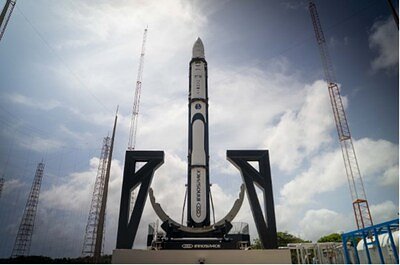
Canada's Space Ambition: Nova Scotia to Host South Korean Rockets
HALIFAX, NS – March 03, 2026 – By Sandra Patterson
Canada’s aspirations to become a key player in the global space industry took a significant leap forward today, as Maritime Launch Services Ltd. (MLS) announced a landmark agreement with South Korean rocket manufacturer INNOSPACE. The two companies have signed a non-binding Letter of Intent (LOI) to explore launching INNOSPACE’s HANBIT rockets from Spaceport Nova Scotia, the nation's first commercial orbital launch complex currently under construction near Canso.
This strategic partnership, though preliminary, signals a powerful convergence of interests. For Canada, it represents a major vote of confidence in its burgeoning space infrastructure and a crucial step toward achieving sovereign launch capability. For INNOSPACE, it provides a potential foothold in the lucrative North American market, the epicenter of the booming small satellite industry. The LOI initiates a period of evaluation to assess the technical, regulatory, and commercial viability of bringing South Korean launch operations to Canadian soil, with a deadline of December 31, 2026, to reach a definitive agreement.
Forging a National Launchpad
Spaceport Nova Scotia is the ambitious centerpiece of Canada's strategy to carve out a niche in the commercial space sector. Developed by Maritime Launch Services, the facility is being engineered as a "full-service, dual-use responsive spaceport," designed to accommodate both civilian and defense missions. Its strategic location on the Atlantic coast offers ideal trajectories for placing satellites into a wide range of popular orbits.
"This Letter of Intent reflects growing international demand and global interest in Nova Scotia as an emerging orbital launch location," said Stephen Matier, President and CEO of Maritime Launch Services, in a statement. He emphasized the goal of advancing "reliable, repeatable access to orbit" and strengthening Canada's commercial launch capabilities.
The project's economic promise is substantial. According to an impact assessment by the Conference Board of Canada, the construction phase alone is expected to inject $171 million into the national GDP and create over 1,600 jobs annually. Once fully operational, which is projected for 2027, the spaceport is forecast to contribute approximately $300 million to Canada's GDP each year and support nearly 1,000 jobs nationwide. This economic boost has been recognized at the federal level, with Export Development Canada (EDC) providing a $10 million senior credit facility in late 2025 to advance the spaceport's construction, signaling strong national backing for the venture.
INNOSPACE's Global Gambit
While MLS builds the launchpad, INNOSPACE is building a global network. Founded in 2017, the South Korean firm has aggressively pursued a strategy of geographic diversification to compete in the crowded small satellite launch market. With launch agreements already secured in Brazil, Australia, and Portugal, the move into North America is a calculated next step.
"North America represents a key market where global small satellite launch demand is concentrated," stated Soojong Kim, CEO of INNOSPACE. "Expanding our launch footprint into North America marks an important foundation for INNOSPACE's next phase of growth as a global commercial launch service provider."
At the heart of INNOSPACE’s offering is its HANBIT launch system, which utilizes innovative hybrid rocket technology—combining the stability of solid propellants with the control of liquid propellants. The company achieved a major milestone in March 2023 with the successful suborbital test launch of its HANBIT-TLV from Brazil's Alcântara Space Center. This was followed by the first successful orbital launch of its HANBIT-Nano rocket in December 2025, which is designed to carry a 90 kg payload to a 500 km Sun-Synchronous Orbit, a popular destination for Earth observation satellites. By establishing an operational base in North America, INNOSPACE aims to offer "stable and efficient launch services" and specifically hopes to prioritize missions for Canadian government and private-sector customers.
Navigating a Competitive Cosmos
The partnership emerges amidst a fiercely competitive and rapidly expanding market. The North American small satellite market, valued at over $162 billion in 2025, is projected to soar to $237 billion by 2030. This growth is fueled by the deployment of massive satellite constellations for telecommunications, an insatiable demand for Earth observation data, and increasing military investment in space assets.
This LOI positions MLS and INNOSPACE to tap into that demand, but they face established competitors. Giants like SpaceX with its cost-effective Transporter rideshare missions and dedicated small launch providers like Rocket Lab have already captured significant market share. The success of the MLS-INNOSPACE collaboration will depend on their ability to offer a compelling combination of price, reliability, and launch flexibility that can attract customers away from these incumbents.
The non-binding nature of the LOI reflects the cautious, high-stakes reality of the space industry. Such agreements allow companies to conduct extensive due diligence on complex, capital-intensive projects without incurring immediate financial risk. The coming months will be critical as both parties work through the intricate technical and regulatory hurdles required to turn this statement of intent into a concrete operational plan. The potential union highlights a broader industry trend: the necessity of international partnerships and diversified infrastructure to meet the relentless pace of the modern space race. For now, the global space community watches Nova Scotia, waiting to see if this letter of intent will successfully launch a new era of international space collaboration from Canadian soil.