
- $300-million StrongNorth Fund: BDC's inaugural investment in Landing Zones Canada marks the first deployment from this specialized defence-focused fund.
- $6-billion Defence Platform: BDC's expanded war chest aims to bolster Canada's industrial base in critical technologies.
- 22,000 weather balloons annually: Canada's current launches contribute to significant electronic waste, addressed by Landing Zones Canada's reusable Gitpo drone.
Experts view this investment as a strategic move to strengthen Canada's defence and deep-tech ecosystem, fostering sovereign capabilities in near-space technologies with dual environmental and security applications.
Canada's New Defence Frontier: BDC Backs Stratospheric Drone Firm
MEDICINE HAT, AB and TORONTO – April 20, 2026 – A new era in Canadian defence and environmental technology is taking flight, propelled by a landmark investment in stratospheric innovation. Landing Zones Canada Inc., a pioneer in high-altitude uncrewed aerial systems (UAS), has secured the inaugural investment from the Business Development Bank of Canada's (BDC) new $300-million StrongNorth Fund.
The investment marks a pivotal moment, not just for the pan-Canadian tech firm, but for the nation's entire defence and deep-tech ecosystem. It signals a deliberate government-backed push to cultivate sovereign capabilities in critical, dual-use technologies that operate at the edge of space.
A Strategic Lift for Sovereign Defence
This is not just another venture capital deal. The investment is the first deployment from BDC's StrongNorth Fund, a specialized vehicle designed to inject patient, mission-aligned capital into early-stage Canadian companies developing technologies with defence or dual-use applications. The fund is a core component of BDC's recently expanded Defence Platform, a war chest now totaling up to $6 billion, aimed squarely at bolstering Canada's industrial base.
"Landing Zones Canada represents exactly the kind of defence deep‑tech capability Canada needs to build at home," said Peter Suma, Managing Partner of BDC's StrongNorth Fund. "Their work in near‑space and stratospheric platforms sits at the intersection of innovation, resilience, and economic sovereignty."
Suma's statement underscores a major strategic shift. Amid evolving global security dynamics, the stratosphere—the layer of atmosphere between 10 and 50 kilometers up—has become a new high ground for military competition. Platforms operating in this "near-space" domain offer significant advantages over traditional satellites and aircraft. They can provide persistent intelligence, surveillance, and reconnaissance (ISR) for weeks or months, act as resilient communication nodes, and are less costly and more rapidly deployable than satellites.
The investment aligns directly with Canada's recently announced Defence Industrial Strategy, which prioritizes building sovereign capacity in areas like autonomous systems, space, and sensors. It also provides a crucial tool for major national projects, including the multi-billion-dollar modernization of NORAD's surveillance systems, which will require advanced platforms for testing and operation.
Beyond Balloons: A Reusable Drone to Clean the Skies
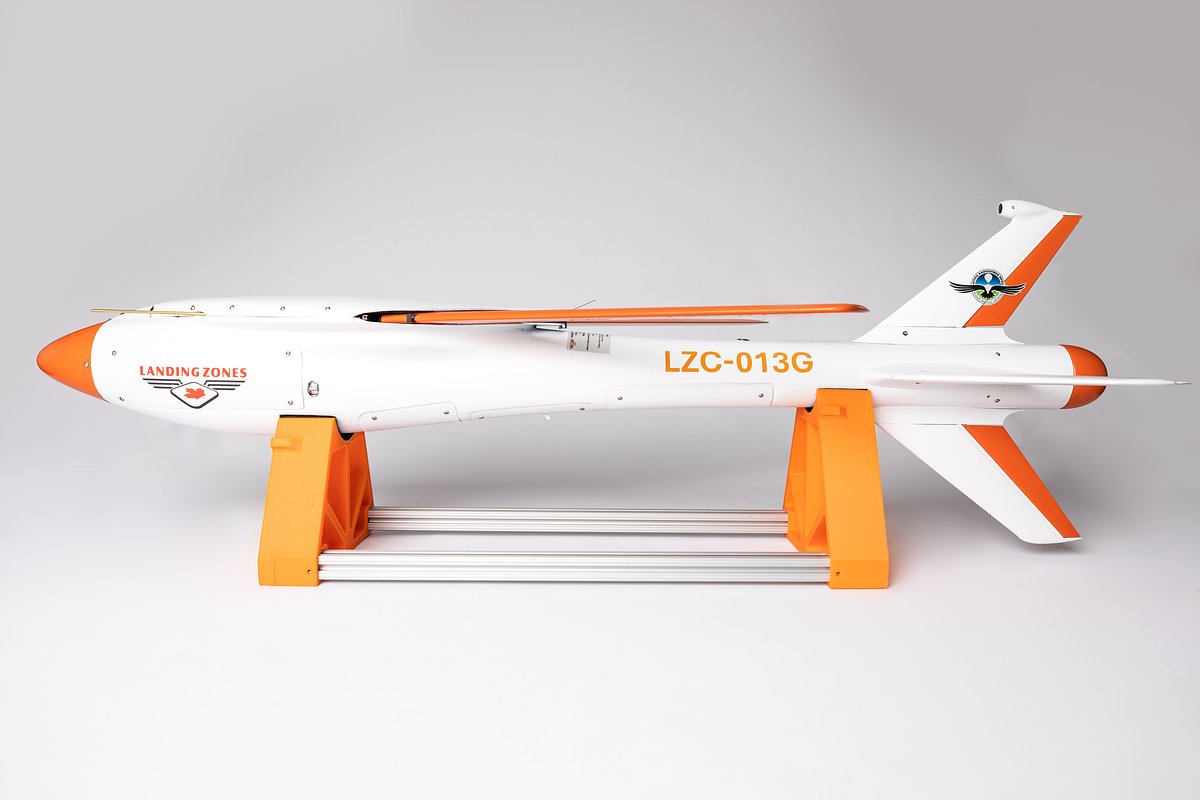
While the defence implications are profound, the technology at the heart of Landing Zones Canada has a distinctly green origin. The company is renowned for its Gitpo drone, a reusable stratospheric platform designed as a sustainable alternative to single-use weather sondes.
Every year, Canada launches approximately 22,000 weather balloons, part of a global total exceeding 600,000. When these balloons burst, their instrument packages—containing electronics, batteries, and plastics—fall back to Earth, creating what the company calls one of Canada's largest sources of electronic waste from meteorological monitoring. Much of this debris is never recovered, littering remote landscapes and marine ecosystems.
The Gitpo system disrupts this wasteful cycle. Launched by a balloon, the drone detaches in the stratosphere to conduct its atmospheric sampling mission. Afterwards, instead of becoming junk, its AI-enabled navigation system guides it autonomously back to a designated landing zone for reuse.
"This important recognition validates both our near-space technology and our vision for reusable dual-use stratospheric platforms," said Spencer Fraser, Founder and CEO of Landing Zones Canada. He noted the investment provides the resources needed "to accelerate development and deliver these technologies at scale."
This dual-use capability—serving both environmental science and national security—is a key strength. The same platform that provides clean meteorological data can be adapted for persistent surveillance, communications relay, or other defence-related missions, making it a highly efficient and versatile asset.
Catalyzing Canada's Deep Tech Ecosystem
The BDC investment serves as more than just fuel for Landing Zones Canada; it acts as a powerful catalyst for the entire Canadian deep-tech sector. The StrongNorth Fund is explicitly designed to tackle a long-standing challenge for defence-focused startups: the "valley of death" between technology development and securing large-scale procurement contracts.
Private venture capital is often hesitant to invest in companies facing long, uncertain government procurement cycles. By providing "patient, mission-aligned capital," BDC aims to de-risk these ventures and attract further private investment.
"This first investment reflects our conviction that Canadian founders can lead globally in defence‑relevant technologies when they have patient, mission‑aligned capital behind them," Suma explained.
Landing Zones Canada is a prime example of this model. The company has already demonstrated significant momentum, securing over $1.1 million in federal funding from PrairiesCan in March 2026 to enhance its AI capabilities. It has also forged strategic partnerships with global giants like Airbus Defence and Space, collaborating on advanced aerial training systems.
With the new capital injection from BDC, the company plans to accelerate its research and development, scale up its manufacturing capabilities at its facilities in Alberta and Ontario, and push forward with the commercialization of its next-generation technologies. While expansion plans are still being finalized, the firm's commitment to growing its footprint and creating high-value jobs within Canada is firm. This investment is a clear signal that Canada is serious about not only buying advanced technology but building it at home.