
- 600 tonnes of CO₂ annually: Initial capture capacity of the first DACMA unit in Canada.
- 1 million tonnes of CO₂ per year by 2027: Target for large-scale facilities.
- $130 million in funding: Secured by Deep Sky for DAC projects, including a $40 million commitment from Breakthrough Energy Catalyst.
Experts view this partnership as a critical step in advancing direct air capture technology, leveraging Canada's supportive regulatory framework and renewable energy resources to drive down costs and scale carbon removal solutions globally.
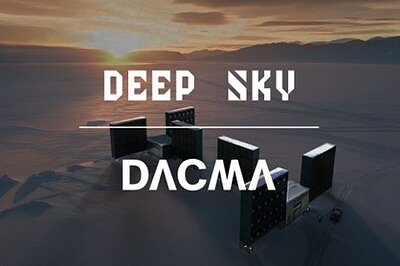
Canada's Clean Air Bet: A Global Alliance to Scale Carbon Removal
MONTRÉAL, QC – December 01, 2025
In the global race against climate change, where innovation is paramount, a new international alliance is taking root on Canadian soil. Montreal-based project developer Deep Sky has joined forces with German technology firm DACMA in a landmark partnership to deploy and advance direct air capture (DAC) technology across Canada. The collaboration signals a significant step towards building an industrial-scale carbon removal industry, aiming to pull vast quantities of historical CO₂ directly from the atmosphere.
This long-term agreement is more than a business transaction; it represents a fusion of German engineering prowess with Canadian strategic development, backed by a government framework designed to make Canada a global hub for climate solutions. For communities grappling with the escalating impacts of climate change, this initiative offers a tangible glimpse into a future where technology is harnessed not just to slow emissions, but to actively clean the air.
A Cross-Atlantic Push for Climate Tech
The partnership's immediate goal is the first-ever North American deployment of a DACMA unit, which will be installed at one of Deep Sky's facilities. This initial system is slated to capture 600 tonnes of CO₂ annually—a modest start, but a crucial proof point. The true ambition lies in the roadmap to scale: the partners plan to jointly develop next-generation technology for large-scale facilities capable of removing one million tonnes of CO₂ per year by 2027.
Deep Sky, which positions itself as the world's first "tech-agnostic" carbon removal developer, provides the platform, infrastructure, and strategic vision for deployment. DACMA, headquartered in Hamburg, brings a mature and proven technology to the table. Its modular DAC systems are already operational in diverse climates, from a 300-tonne-per-year facility in Brazil to various projects in Germany. The technology is designed to be robust and energy-efficient, a critical factor for sustainable scaling.
"Scaling carbon removal infrastructure demands robust, groundbreaking engineering and evermore ambitious deployments," said Alex Petre, CEO of Deep Sky, in a statement announcing the deal. "That's exactly what Deep Sky and DACMA are doing through this new partnership--working together to drive down the cost of DAC and scale the technology as quickly as possible."
The collaboration underscores a shared mission to create a high-integrity carbon market. "I look forward to this strong alliance with Deep Sky as we share the same vision and commitment to rapidly scaling CDR to permanently remove unavoidable and historical emissions," added Jörg Spitzner, CEO of DACMA GmbH. Their focus is on generating high-quality carbon credits that can be trusted by both voluntary buyers and future regulated markets.
Canada's Fertile Ground for Carbon Removal
The decision to anchor this ambitious project in Canada is no coincidence. In recent years, the Canadian government has meticulously constructed one of the world's most supportive regulatory and financial landscapes for carbon management technologies. This proactive policy-making is turning the nation into a magnet for cleantech investment and innovation.
A cornerstone of this strategy is a powerful financial incentive: a 60% refundable investment tax credit specifically for capital invested in DAC projects. Crucially, this credit is tied to permanent geological storage, explicitly excluding the use of captured carbon for enhanced oil recovery (EOR). This stipulation is designed to ensure that the carbon removed from the atmosphere stays out for good, bolstering the environmental integrity of the projects.
Complementing the tax credit is Canada's aggressive carbon pricing mechanism, which is set to reach $170 per tonne by 2030. This rising price makes emissions costly and, in turn, makes removing carbon an increasingly viable economic activity. Furthermore, Environment and Climate Change Canada has drafted a federal offset protocol for DAC, creating a standardized, high-integrity pathway for projects to generate valuable carbon credits by proving permanent sequestration for at least a century. This regulatory clarity reduces risk for developers and builds confidence among credit buyers.
This supportive ecosystem has enabled Deep Sky to secure an impressive $130 million in funding from a blend of public and private investors, including Investissement Québec, OMERS Ventures, and a significant $40 million commitment from Breakthrough Energy Catalyst, its first investment in a Canadian DAC project.
The Tech-Agnostic Blueprint for Scaling Up
Deep Sky's strategy is a key part of what makes this initiative so compelling. Rather than betting on a single technology, the company operates as a master developer, creating "carbon removal campuses" where multiple technologies can be tested, optimized, and scaled in parallel. Its flagship facility, Deep Sky Alpha in Alberta, is a living laboratory for the future of carbon removal.
At this innovation hub, DACMA's technology will operate alongside systems from a diverse portfolio of international partners, including Climeworks, Mission Zero, and GE Vernova, among others. This tech-agnostic approach fosters a competitive yet collaborative environment, allowing Deep Sky to identify the most efficient and cost-effective solutions for different Canadian environments. By bringing leading innovators under one roof, the company aims to accelerate the learning curve, drive down costs, and build a resilient, multi-faceted carbon removal industry.
This model extends beyond just air capture. Deep Sky is also exploring electrochemical ocean carbon capture with partners like Captura and Equatic, demonstrating a holistic approach to tackling atmospheric and oceanic CO₂. The goal is to build a comprehensive toolkit of solutions capable of removing carbon at the gigaton scale required to make a meaningful impact on climate change.
The Gigaton Challenge: Energy, Economics, and Integrity
While the promise of DAC is immense, the path to gigaton-scale removal is fraught with challenges, chief among them being energy consumption. DAC is an energy-intensive process, with some systems requiring over 2,000 kWh of energy to capture a single tonne of CO₂. For DAC to be a net-negative climate solution, this energy must come from zero or low-carbon sources. Powering DAC with a fossil-fuel-based grid would be counterproductive, potentially emitting more carbon than is captured.
Here again, Canada holds a strategic advantage. With its vast hydroelectric and wind power resources, the country is well-positioned to power a burgeoning DAC industry sustainably. Deep Sky is already putting this principle into practice; its Alpha facility runs entirely on renewable solar energy through a power purchase agreement. This commitment to clean energy is fundamental to the integrity of the entire operation.
The other major hurdle is economics. Current costs for DAC credits average around $470 per tonne, making it a premium solution. The partnership between Deep Sky and DACMA, focused on joint development, is explicitly aimed at driving these costs down. The goal is to reach prices below $100 per tonne, a threshold many experts believe will unlock mass adoption.
This is where the burgeoning voluntary carbon market becomes critical. Pioneering companies like Microsoft, Shopify, and Airbus are already purchasing high-quality DAC credits to meet their ambitious net-zero goals, creating the initial demand needed to fuel development. Aggregators like Frontier, a $1 billion advance market commitment from tech giants, are sending a powerful demand signal for permanent carbon removal. Deep Sky has already secured Microsoft and RBC as foundational credit buyers, validating its approach and providing crucial early revenue. By creating a supply of high-integrity, verifiable credits—backed by Canada's stringent new protocols—this partnership is not just building technology; it is building a trusted market essential for financing the climate transition. The journey from a 600-tonne pilot to million-tonne industrial plants is a marathon, not a sprint, but this German-Canadian alliance has fired a starting gun that will resonate across the global climate technology landscape.