
- 600,000 students enrolled in international schools across Southeast Asia in 2022, a 25% increase from five years prior.
- 165,000 entries for Cambridge qualifications in the June 2025 exam series in Southeast Asia and Pacific, a 4% increase over the previous year.
- Three Cambridge International AS Level subjects now equivalent to the Cambodian Grade 12 Senior High School Diploma.
Experts view this agreement as a significant step toward educational harmonization in ASEAN, enhancing student mobility and workforce competitiveness in the region.
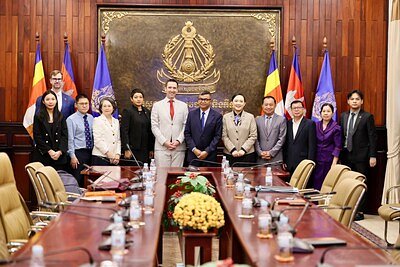
Cambodia Boosts Student Futures with Cambridge Qualification Pact
PHNOM PENH, Cambodia – January 02, 2026 – In a landmark decision poised to reshape educational pathways in Southeast Asia, the Cambodian government has formally recognized Cambridge International qualifications as equivalent to its national high school diploma. The move, a first of its kind for Cambridge in the region, creates a direct and formalized route for thousands of students into higher education both domestically and abroad.
The agreement, announced following a productive meeting between Cambridge representatives and His Excellency Dr. Hang Chuon Naron, Deputy Prime Minister and Minister of Education, Youth and Sport, establishes a new framework for academic progression. Under the policy, the completion of three Cambridge International AS Level subjects is now officially considered equivalent to the Cambodian Grade 12 Senior High School Diploma. Furthermore, each Cambridge International A Level subject is deemed comparable to completing the first year of a corresponding undergraduate course at Cambodian universities.
This national-level equivalency removes a significant barrier for a growing number of Cambodian students pursuing an international curriculum, providing them with clear, unambiguous recognition for their academic achievements within their home country.
A New Horizon for Cambodian Students
The immediate impact of the decision is a dramatic expansion of opportunity for Cambodian youth. Previously, students with international qualifications could face uncertainty when applying to local universities. This agreement codifies their standing, ensuring that Cambodian higher education institutions can now formally admit holders of Cambridge qualifications, provided they also meet institutional literacy and numeracy requirements.
"I am delighted that ever more Cambodian parents and students are choosing Cambridge AS and A levels to develop their potential and open up global opportunities," said H.E. Ambassador Dominic Williams of the British Embassy in Phnom Penh. He praised the move for making it "even easier for Cambridge students to access the best study opportunities in Cambodia, and to receive official recognition for their hard work and success."
The ambassador also expressed hope that the curriculum's expansion would create more opportunities for young people in provinces outside the capital.
This development comes as demand for international education surges across Southeast Asia. Regional data from 2022 showed approximately 600,000 students enrolled in over 1,900 international schools, a 25% increase from five years prior. Parents are increasingly investing in education that fosters critical thinking, adaptability, and a global perspective. By providing a clear return on that investment through guaranteed local recognition, Cambodia is aligning its system with the aspirations of its citizens.
Cambodia Sets a Regional Precedent
Beyond its domestic impact, Cambodia’s decision positions it as a pioneer in educational harmonization within the Association of Southeast Asian Nations (ASEAN). While many universities in the region individually recognize Cambridge qualifications, this is the first national equivalency agreement secured by the education group in Southeast Asia, setting a powerful example for neighboring countries.
The move aligns with broader regional initiatives like the ASEAN Qualifications Reference Framework (AQRF), which aims to support the mutual recognition of qualifications to facilitate learner and worker mobility. By formally integrating a globally benchmarked standard into its national framework, Cambodia is taking a proactive step toward enhancing the competitiveness of its workforce and the international standing of its education system.
Kanjna Paranthaman, Regional Director for Southeast Asia & Pacific at Cambridge International Education, called the recognition a "powerful milestone for students in Cambodia and a significant moment for the wider region." She added, "This agreement creates a more direct pathway from Cambridge classrooms into Cambodian universities. We are deeply grateful to the Ministry of Education, Youth and Sport for their leadership and partnership in expanding these opportunities."
This policy reflects a growing trend where governments are looking to credible international qualifications to support national goals of quality, mobility, and future-readiness.
A Strategic Milestone in a Growing Market
For Cambridge University Press & Assessment, the agreement represents a major strategic victory in a key emerging market. The organization, part of the University of Cambridge, has a presence in the Asia Pacific region spanning over 140 years and currently works with more than 2,000 schools there. Securing a national-level equivalency solidifies its competitive advantage and deepens its market penetration significantly.
This achievement builds on a consistent pattern of regional growth. In the June 2025 exam series alone, Cambridge saw over 165,000 entries for its qualifications across the Southeast Asia and Pacific region, a nearly 4% increase over the previous year. This demand underscores a regional shift toward education that prepares students for global work and study. By ensuring its qualifications have clear value within a student's home country, Cambridge makes its educational pathway a more secure and attractive option.
This national-level pact is strategically more potent than pursuing recognition on a university-by-university basis. It provides a systemic, top-down validation that streamlines the admissions process and removes ambiguity for students, parents, and university administrators alike.
Implementation and University Adoption
The framework laid out by the Ministry of Education, Youth and Sport empowers Cambodian universities to immediately begin integrating these qualifications into their admissions cycles. Early signs of adoption are already positive. The Cambodian International University (CAMIU), for instance, has confirmed that it welcomes students with Cambridge AS and A Level qualifications for admission into its undergraduate programs, acting on the recommendation of its Academic Board.
While it may take time for all higher education institutions across the country to fully update their admissions policies and internal processes, the government’s official decree provides the necessary authority and impetus. The additional stipulation that an A Level is comparable to first-year university studies offers further flexibility, potentially allowing advanced students to gain credit and accelerate their degree programs.
This alignment of international secondary qualifications with the national tertiary system underscores Cambodia's commitment to building a flexible, high-quality education ecosystem. This reform not only enhances the value of a Cambodian education but also firmly positions its students to compete and succeed on a global stage.