
- 60 MWAC of solar power paired with a 38 MWAC/152 MWh lithium-ion battery system
- Project can power 20,000 homes annually and offset 50,000 metric tons of CO2
- California's battery storage capacity surged from 700 MW in 2020 to over 13,000 MW by mid-2025
Experts view the Azalea Solar and Storage Project as a critical step in stabilizing California's grid, enhancing renewable energy integration, and reducing reliance on fossil fuel peaker plants during peak demand periods.
California's Grid Gets a Boost with New Azalea Solar and Storage Project
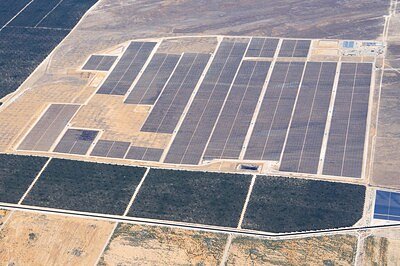
SAN FRANCISCO, CA – March 16, 2026 – As California continues its ambitious push toward a fully decarbonized energy grid, a significant new asset has come online in Kern County. Idemitsu Renewables announced that its Azalea Solar and Storage Project achieved Commercial Operation on December 31, 2025, marking a critical step in bolstering the state's power infrastructure with a combination of solar generation and battery storage.
The facility pairs 60 megawatts (MWAC) of solar power with a 38 MWAC/152 megawatt-hour (MWh) lithium-ion battery system. This integrated design is engineered to address one of California's most pressing energy challenges: maintaining grid stability as renewable sources, which fluctuate with weather and time of day, constitute an ever-larger share of the power supply. The project will deliver its clean energy to customers in Sonoma and Mendocino counties under a long-term power purchase agreement (PPA) with Sonoma Clean Power.
Powering Through the Evening Peak
The Azalea project is a direct response to the operational challenges of a solar-heavy grid, most famously illustrated by the state's "duck curve." This phenomenon sees a midday glut of solar power followed by a steep drop-off in generation as the sun sets, precisely when residential energy demand ramps up. The project's 152 MWh battery system is designed to absorb excess solar energy generated during the day and dispatch it during the evening peak, smoothing the curve and reducing reliance on fossil fuel peaker plants.
This type of facility is becoming increasingly vital for the California Independent System Operator (CAISO), which manages the state's grid. California has seen a meteoric rise in battery storage capacity, surging from just 700 MW in 2020 to over 13,000 MW by mid-2025. This rapid deployment is a cornerstone of the state's strategy to meet its goals of 60% renewable energy by 2030 and 100% clean retail energy by 2045. Despite this progress, grid operators remain vigilant, as assessments from the Western Electricity Coordinating Council (WECC) continue to flag potential risks during extreme heat events.
"The Azalea project coming online is an exciting milestone," said Geof Syphers, CEO of Sonoma Clean Power. "It helps Sonoma Clean Power continue delivering clean energy to our communities and supports the State's work to get the most value out of daytime solar and improve grid flexibility during peak hours."
The Collaborative Blueprint for Clean Energy
Bringing a project of Azalea's scale to fruition requires a complex interplay of development expertise, public-private partnership, and sophisticated financing. The project serves as a case study in the collaborative model driving the modern renewable energy sector. Idemitsu Renewables, the U.S. subsidiary of Japanese energy giant Idemitsu Kosan, led the development, while construction was managed by SOLV Energy, a leading renewables engineering and construction firm.
The financial architecture was supported by a bank consortium that included Mizuho Bank, LTD., Commerzbank AG, and U.S. Bank N.A., which provided construction financing. U.S. Bank further deepened its commitment by providing the tax equity investment, a critical component for financing renewables in the United States. This multi-layered financial backing underscores growing investor confidence in integrated solar and storage projects as stable, long-term assets.
The partnership with Sonoma Clean Power (SCP) is equally crucial. As a Community Choice Aggregation (CCA), SCP is a public entity that procures electricity on behalf of residents and businesses, giving communities more control over their energy sources. By signing a long-term PPA with Azalea, SCP secures a reliable source of clean power that helps it meet and even exceed state-mandated renewable portfolio standards, while also enhancing reliability for its customers.
"Achieving COD at Azalea underscores our team's ability to deliver complex renewable projects that provide both environmental and economic value," stated Cary Vandenberg, CEO of Idemitsu Renewables. "We are proud to partner with forward-thinking organizations like U.S. Bank, Mizuho Bank, Commerzbank, and Sonoma Clean Power to advance California's clean energy goals."
From Kern County to North Bay Homes
While the electrons are generated in the sun-drenched landscape of Kern County, the direct benefits will be felt hundreds of miles away in Northern California. The Azalea project is projected to generate enough clean electricity to power approximately 20,000 homes across Sonoma and Mendocino Counties annually. In doing so, it will offset an estimated 50,000 metric tons of carbon dioxide each year—the equivalent of taking more than 11,000 gasoline-powered cars off the road.
For Sonoma Clean Power, which serves about half a million people, the project is a key part of its strategy to provide cleaner, competitively priced electricity. The organization has set ambitious internal targets, including a plan to mitigate 100% of its hourly emissions by 2026. SCP also actively engages its customer base in grid solutions through programs like GridSavvy Rewards, where thousands of households help reduce strain on the statewide grid during critical periods.
A Piece of a Larger North American Strategy
The Azalea project is not an isolated venture but a key component of Idemitsu Renewables' expanding footprint in North America. The developer has an extensive pipeline of solar and storage projects across major U.S. energy markets, including CAISO, WECC, MISO, and PJM. This strategic diversification positions the company to capitalize on the nationwide energy transition.
Idemitsu's operational portfolio in the U.S. already includes several other utility-scale facilities, such as the 210 MW Mustang II project in Kings County, California, and the 73 MW Luciana project in Tulare County. This track record demonstrates a sustained commitment to developing, owning, and operating large-scale renewable infrastructure. As the U.S. subsidiary of one of Japan's largest energy corporations, Idemitsu Renewables leverages global resources and a long-term vision to contribute meaningfully to the evolving American energy landscape, with the Azalea project standing as the latest testament to that strategy.