
- 4th U.S. Patent: Cabbacis secures its fourth U.S. patent for hemp-tobacco vaporizer pods, with a total of 36 global patents. - $50 Billion Market: The global heated tobacco market was valued at nearly $50 billion in 2024 and is projected to grow exponentially. - $7.5 Million Funding: Cabbacis initiates a $7.5 million Regulation A offering to finance product development and FDA approval processes.
Experts view Cabbacis's patented hemp-tobacco blend as a strategic move to capitalize on the FDA's proposed nicotine reduction rules, though the long-term health implications of inhaling this combination remain uncertain and require further scientific validation.
Cabbacis Patents Hemp-Tobacco Pods, Bets on a Post-Nicotine Future
NIAGARA FALLS, N.Y. – January 21, 2026 – Cabbacis, a federally-licensed tobacco manufacturer, has secured a new U.S. patent for vaporizer pods containing a novel blend of tobacco and hemp, a move that strengthens its position in the burgeoning harm-reduction market. The patent arrives as the entire tobacco industry braces for a potential regulatory overhaul by the U.S. Food and Drug Administration (FDA) aimed at drastically reducing nicotine in conventional cigarettes.
A Strategic Patent in a Shifting Landscape
The United States Patent and Trademark Office issued U.S. Patent No. 12,527,346 to the Niagara Falls-based company, covering vaporizer pods designed for heated tobacco devices. The patent, which expires in 2039, specifically protects pods containing a blend of reconstituted tobacco and reconstituted hemp, where cannabigerolic acid (CBGA) is the most abundant cannabinoid.
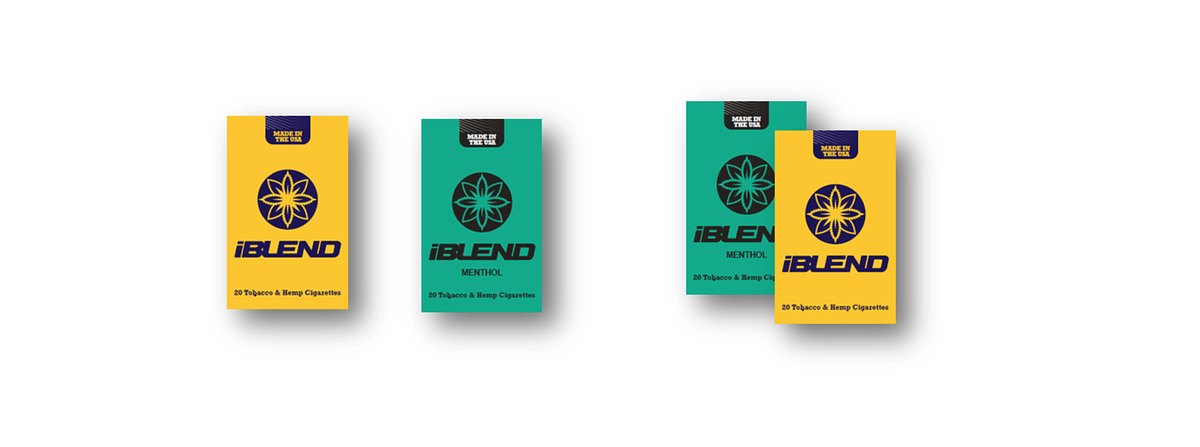
This is not the company's first foray into such intellectual property. It marks the fourth U.S. patent Cabbacis holds for tobacco-hemp vaporizer pods, contributing to a global portfolio of 36 issued patents. This strategy appears designed to create a protective moat around its iBlend™ brand in key markets, including the United States, China, and Europe.
In a statement, Joseph Pandolfino, Chief Executive Officer of Cabbacis, framed the new patent as a key step in solidifying the company's market position. "We are pleased to announce this new U.S. patent for vaporizer pods, further fortifying our already robust intellectual property position," he commented. "This patent, when taken in tandem with our existing patents, comprehensively cover, across more than 30 countries, vaporizer pods comprising blends of conventional-nicotine tobacco and hemp or very-low-nicotine tobacco and hemp."
For a smaller company listed on the OTCQB market (CABI), this aggressive intellectual property strategy is crucial. It positions Cabbacis as a specialized innovator in a field dominated by giants, potentially making it an attractive partner for licensing or a target for acquisition.
Targeting the Nicotine Endgame
The timing of Cabbacis's innovation is critical, as it aligns with a major public health initiative. The FDA has formally proposed a rule to mandate that all cigarettes and certain other combusted tobacco products contain only minimally or non-addictive levels of nicotine. The proposed cap, a reduction of approximately 95% from current levels, is intended to curb addiction and encourage smokers to quit.
Cabbacis's product pipeline appears tailored to this anticipated reality. Its flagship iBlend™ cigarettes, which combine very-low-nicotine (VLN) tobacco with non-intoxicating hemp, are a direct answer to the proposed combustible cigarette rule. The company has reported promising results from clinical trials, suggesting its VLN cigarettes are satisfying to smokers and reduce cravings for their usual brands.
While the FDA's proposed nicotine cap does not currently extend to heated tobacco products or e-cigarettes, the new patent for vaporizer pods places Cabbacis in another strategic position. As smokers potentially seek alternatives to both high-nicotine traditional cigarettes and the new VLN versions, the market for heated tobacco products—estimated at nearly $50 billion globally in 2024 and projected to grow exponentially—could see a massive influx of new users. Cabbacis is betting that a differentiated product in this category will give it a competitive edge.
However, bringing these products to market is a capital-intensive endeavor. As a development-stage company with no revenue reported for 2024, Cabbacis is reliant on outside funding. The company recently initiated a $7.5 million Regulation A offering to finance product development, manufacturing, and the costly Pre-Market Tobacco Application (PMTA) process required by the FDA.
A New Blend for a Crowded Market
Cabbacis is entering a heated tobacco arena with established titans. Philip Morris International's IQOS, British American Tobacco's glo, and Japan Tobacco International's Ploom already command significant market share. To compete, Cabbacis is banking on innovation.
The company claims its patented blend of tobacco and hemp will provide "pleasant and differentiated taste and sensory characteristics" compared to existing tobacco-only heated products. The inclusion of hemp, made federally legal by the 2018 Farm Bill, is the core of this differentiation. The hemp used contains less than 0.3% THC, making it non-intoxicating. The focus on CBGA, a precursor cannabinoid, further distinguishes the formulation.
This strategy merges two powerful market trends: the shift to harm-reduction tobacco alternatives and the soaring consumer interest in cannabis and hemp-derived products. The global cannabis vaporizer market is itself a multi-billion dollar industry projected to see double-digit annual growth.
Despite the market potential, the regulatory path remains complex. While hemp is legal, the FDA has not yet authorized any tobacco products containing hemp-derived cannabinoids for sale in the U.S. Cabbacis will need to navigate the rigorous and expensive PMTA process, demonstrating to the agency that its products are "appropriate for the protection of public health." The company plans to file its first PMTA around the beginning of 2026, marking a critical test for its commercial ambitions.
The Unanswered Questions of Harm Reduction
The term "harm reduction" is central to Cabbacis's mission, but the science behind its specific blend is still developing. There is a growing body of evidence supporting the use of very-low-nicotine content (VLNC) cigarettes, like those Cabbacis is developing, to reduce nicotine dependence and smoking frequency.
However, the health implications of inhaling a heated blend of tobacco and hemp are less understood. While vaping is generally considered less harmful than smoking because it avoids combustion, it is not risk-free. Some independent studies have raised concerns about vaping cannabinoids, including CBD, suggesting it could induce lung inflammation and other damage, in some cases more so than vaping nicotine.
The specific role of CBGA when inhaled as part of an aerosol is an area with even less independent research. As a non-intoxicating precursor to more well-known cannabinoids, its effects on the body through inhalation are not yet well-established in peer-reviewed literature. The ultimate success of Cabbacis's products will depend not only on patent protection and market acceptance but also on generating robust scientific data to convince regulators and consumers of its claimed benefits and safety profile.