
- 16% of lung cancer deaths in Canada are linked to radon, the leading cause of lung cancer for non-smokers.
- Nearly one in five Canadian homes have radon levels at or above the national guideline.
- Retrofitting a radon mitigation system can cost homeowners between $2,000 and $4,000.
Experts would likely conclude that Brookfield's 'Healthier Homes' initiative represents a significant step forward in addressing critical indoor environmental health risks, setting a new industry standard for proactive safety and wellness in residential construction.
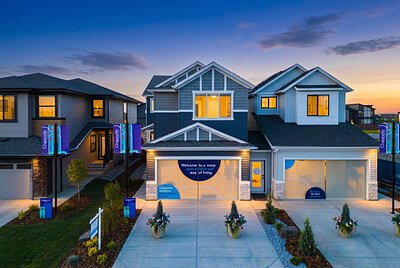
Brookfield's New Standard: Are Healthy Homes the Future of Building?
CALGARY, AB – May 12, 2026 – A fundamental shift is underway in Alberta’s new home market, moving beyond granite countertops and open-concept layouts to something far more intrinsic: the health of the home itself. Brookfield Residential Alberta, a developer with a 70-year history in the province, has launched its 'Healthier Homes' initiative, a program that makes a comprehensive suite of advanced health and safety features standard in every new home it builds. The move signals a potential turning point for the industry, where protections against unseen environmental threats are no longer a costly afterthought but an integrated part of the blueprint.
The initiative embeds advanced radon mitigation, whole-home air filtration with UV purification, reverse osmosis water filtration, and smart safety monitoring into the base price of its homes. It’s a proactive strategy designed to tackle growing concerns about indoor environmental quality.
"For Brookfield Residential, a home should be a place where people and their families feel confident in the safety of their environment, not concerned about what they can't see," said Chris Richer, Senior Vice President of Alberta Homes, in the company's announcement. "With Healthier Homes, we're removing that uncertainty for families by integrating proven health and safety features into every home from the outset."
The Invisible Risks in Modern Sanctuaries
The very advancements that make modern homes energy-efficient also create new challenges. Today's houses are built to be incredibly airtight, trapping conditioned air to save on heating and cooling costs. However, this airtight seal can also trap harmful indoor pollutants, leading to concentrations that can be several times higher than outdoor levels. Given that Canadians spend an estimated 90% of their time indoors, the quality of that indoor environment has become a critical public health issue.
Among the most serious of these invisible threats is radon, a naturally occurring radioactive gas that is the leading cause of lung cancer for non-smokers in Canada, linked to approximately 16% of lung cancer deaths. A 2024 national survey found that nearly one in five Canadian homes have radon levels at or above the national guideline where remediation is recommended. While awareness is growing, mitigation is often a reactive, and expensive, process for homeowners, costing between $2,000 and $4,000 to retrofit a system after a home is already built.
Beyond radon, indoor air can be a cocktail of allergens, dust, mold spores, and volatile organic compounds (VOCs) off-gassed from furniture, cleaning products, and even construction materials. These pollutants can trigger allergies, asthma, and other respiratory conditions, underscoring the need for more than just basic ventilation.
A Proactive Prescription for Home Health
Brookfield's 'Healthier Homes' program directly confronts these issues by building the solutions in from the ground up. Instead of the code-minimum 'radon-ready' pipe stub in the basement, the initiative includes a more comprehensive radon mitigation system designed for immediate and effective protection.
The air homeowners breathe is addressed by a multi-stage system integrated into the home's furnace and ductwork. A heat recovery ventilator (HRV) constantly circulates fresh outdoor air while retaining indoor heat, a critical feature for airtight homes. This is supplemented with carbon filtration to capture odors and chemical pollutants, and a UV light system designed to neutralize airborne contaminants like mold and bacteria before they can circulate.
Water quality is tackled at the most-used source: the kitchen sink. Each home will now come standard with a three-stage reverse osmosis system, capable of removing up to 99% of dissolved solids, including heavy metals, chemicals, and sediments. This feature, typically a costly aftermarket upgrade, provides a consistent source of purified drinking water.
The initiative is rounded out with smart safety features, including keyless deadbolts for remote access control and connected smoke and carbon monoxide alarms on every level, providing real-time alerts to potential dangers.
Redefining 'Standard' in a Competitive Market
By making these features standard, Brookfield is intentionally raising the bar above minimum legal requirements. The Alberta Building Code has mandated radon rough-ins since 2015, ensuring new homes are 'radon-ready' but not necessarily radon-safe without further investment from the homeowner. Brookfield’s approach aims to complete the system from day one.
This move places the company in a competitive landscape where health-focused features are gaining traction. Other builders, such as Jayman Built, have long championed green and healthy building practices, offering their own suite of 'Quantum Performance' features like UV air purification and high-efficiency HRVs as standard. However, the comprehensive bundling of active radon systems, advanced air purification, and reverse osmosis water filtration as a non-negotiable standard across an entire product line represents a significant and deliberate market position.
This strategy effectively reframes the conversation from optional upgrades to essential components of a modern dwelling, pressuring competitors to re-evaluate their own standard offerings. It shifts the builder's responsibility from simply meeting code to delivering a living environment that actively promotes well-being.
Investing in Wellness: The True Value of a Healthy Home
The question for many homebuyers will be about cost. While integrating these systems as standard will be factored into the home's final price, the value proposition lies in cost-avoidance and long-term wellness. Homebuyers are spared the hassle and significant expense of retrofitting these systems later. Market research indicates a growing segment of consumers are not only aware of indoor environmental issues but are willing to invest in solutions, with 'making my home healthier/safer' cited as a top motivator for home spending.
Furthering this value proposition is the company’s commitment to the BuiltGreen® standard, a third-party certification program that focuses on energy efficiency, sustainability, and occupant wellness. These homes use low-emission paints, sealants, and flooring to reduce indoor VOCs and are built to exceed current energy codes, which can translate into lower utility bills for the homeowner.
By bundling these features, Brookfield is making a calculated bet that homebuyers will see the inherent value in a home that is designed not just for shelter, but as a foundation for a healthier life. As these protections move from the à la carte upgrade list to the standard build sheet, the very definition of a modern home is being fundamentally reshaped to prioritize the long-term health of its inhabitants.