
- 5.3%: Santa Catarina's economic growth in 2024, outpacing Brazil's national average of 3.4%.
- 7.7%: Growth rate of Santa Catarina's manufacturing industry in 2024, the highest in Brazil's Central-South region.
- 100 meters: Length of the runway extension at Navegantes International Airport to accommodate wide-body freighters.
Experts agree that Bringer Air Cargo's new direct cargo route between Miami and Navegantes represents a strategic breakthrough in logistics efficiency, poised to significantly enhance trade flows and economic growth in southern Brazil.
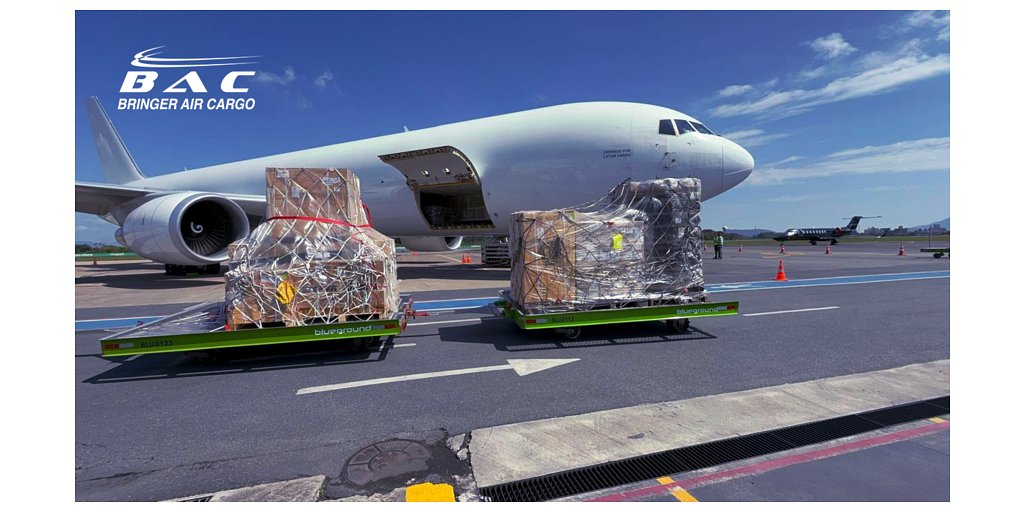
Brazil's New Cargo Gateway: How Direct Flights Fuel a Regional Powerhouse
DORAL, FL – December 15, 2025
In a move set to reshape trade flows between the Americas, the Brazilian Federal Aviation Authority (ANAC) has granted Bringer Air Cargo approval for additional flight frequencies between Miami and the southern Brazilian city of Navegantes. This regulatory green light is more than a procedural step; it represents the unlocking of a vital new artery for global commerce, directly connecting one of Brazil’s fastest-growing industrial regions with the world’s largest consumer market.
The approval follows Bringer’s historic inaugural flight in late November, when one of its Boeing 767-300F aircraft became the first international wide-body freighter to land directly at Navegantes International Airport (NVT). This landmark event, culminating a strategic initiative that began in 2019, signals a pivotal shift in logistics for southern Brazil, promising to slash transit times and inject new efficiency into complex supply chains. As President Eduardo De Castro stated, the approval is a “major milestone for Bringer Air Cargo and for the broader supply chains we serve,” validating a long-term vision to connect markets with greater efficiency.
The Santa Catarina Engine: A Region Primed for Growth
The strategic importance of this new direct air bridge becomes clear when examining the economic powerhouse it serves. Navegantes is located in Santa Catarina, a state that has quietly become one of Brazil's most formidable economic engines. In 2024, the state’s economy expanded by an impressive 5.3%, significantly outpacing the national average of 3.4%. This growth is not fueled by a single sector but by a diversified and robust industrial base.
The state's manufacturing industry, a key driver of its success, surged by 7.7%—the highest rate in Brazil's entire Central-South region. This industrial might encompasses critical sectors like machinery, electrical equipment, automotive components, textiles, and food products. With the sixth-largest GDP in Brazil and the fifth-highest GDP per capita, Santa Catarina is a hub of production and, critically, consumption.
This economic dynamism creates immense demand for efficient logistics. In 2024, Santa Catarina ranked as Brazil’s second-largest importing state. Its top imports include high-value and time-sensitive goods such as motor vehicle parts, rubber tires, refined copper, and ethylene polymers—all components vital to its humming factories. Before the introduction of direct wide-body service, these goods often faced a convoluted journey, arriving at larger, more congested airports like São Paulo’s Viracopos before being transported hundreds of kilometers overland. This added time, cost, and layers of complexity to supply chains, creating a significant bottleneck for regional growth. The new direct route from Miami offers a streamlined alternative, poised to become the preferred corridor for these critical industrial inputs.
From Blueprint to Runway: Unlocking a New Logistics Gateway
The arrival of wide-body freighters in Navegantes was not a simple matter of filing flight plans. It was the culmination of a multi-year effort involving strategic foresight, significant investment, and deep collaboration to transform the airport's fundamental infrastructure. Prior to Bringer's initiative, NVT was not equipped to handle long-haul cargo aircraft of this size.
Recognizing the latent demand, Bringer Air Cargo worked closely with airport operator Motiva Airports and cargo terminal manager PACLOG. Together, they conducted the exhaustive technical, safety, and infrastructure analyses required to prove the viability of wide-body operations. This collaborative effort was instrumental in securing the necessary regulatory approvals and driving the physical upgrades that made the vision a reality.
Key infrastructure enhancements included a crucial extension of the runway by at least 100 meters, a widening of the emergency lane to 45 meters, and significant improvements to aircraft maneuvering and parking areas. This transformation of Navegantes from a regional airport into a capable international cargo hub is a textbook example of how private sector initiative can catalyze public infrastructure development, creating a virtuous cycle of investment and growth. By proactively engaging in the groundwork, Bringer did not just seek to use existing infrastructure; it helped create the very conditions necessary for its strategic expansion.
Reshaping Trade Corridors and Supply Chain Dynamics
Bringer Air Cargo's entry into Navegantes establishes a first-mover advantage in a market previously underserved by direct international freight. While established players like LATAM Cargo and Atlas Air operate robust networks between Miami and Brazil, their services have traditionally focused on larger hubs like Florianópolis and Viracopos. Bringer’s direct-to-NVT service carves out a new niche, specifically targeting the heart of Santa Catarina’s industrial zone.
The impact on supply chain efficiency is immediate and profound. For industries reliant on just-in-time manufacturing, such as the automotive and electronics sectors, the reduction in transit times is a game-changer. Eliminating the need for transshipment through congested hubs not only speeds up delivery but also reduces the risk of delays, damage, and loss. This increased predictability allows businesses to optimize inventory levels, lower carrying costs, and build more resilient supply chains.
With initial weekly flights scaling to multiple weekly services as demand solidifies, the route provides the capacity and flexibility needed for a diverse range of cargo. From high-value automotive parts and electronics to pharmaceuticals and e-commerce goods, the direct connection strengthens the trade link between the United States and one of South America's most dynamic economic regions. This enhanced connectivity doesn't just serve existing demand; it is expected to act as a catalyst, attracting new investment and enabling local exporters of products like poultry, pork, and engine parts to reach North American markets more efficiently.
The Regulatory Green Light: Policy as an Economic Catalyst
The final, critical piece of this complex puzzle was the regulatory approval from ANAC. Often viewed as a bureaucratic hurdle, in this case, the agency’s decision serves as a powerful illustration of how forward-thinking governance can directly enable economic innovation and unlock trade potential. The granting of additional frequencies demonstrates a recognition by Brazilian authorities of the strategic value in diversifying the country's logistics gateways beyond traditional hubs.
This government-industry synergy—where a company identifies a market need, collaborates on infrastructure, and receives the necessary regulatory backing—is essential for building the resilient, efficient logistics networks that underpin modern global trade. The ANAC approval provides Bringer with the operational certainty to scale its investment, progressively increasing scheduled flights and expanding its tailored charter solutions to and from Navegantes.
As Bringer Air Cargo begins to ramp up its operations, the Navegantes route will serve as a powerful case study in market development. By connecting the dots between regional economic demand, infrastructure capability, and regulatory enablement, the company has not only opened a new chapter for its own growth but has also provided a vital boost to the economic aspirations of southern Brazil, solidifying the region’s integration into the global supply chain for years to come.