
- 100% increase in mechanical thrombectomy procedures with AI platform implementation (2025 study in Lancet Digital Health).
- 50% greater increase in life-saving treatments across five UK stroke networks.
- Tripled functional independence (from 16% to 48%) in stroke patients at a primary stroke center using the platform.
Experts agree that Brainomix's AI platform significantly enhances stroke diagnosis and treatment decisions, improving patient outcomes and healthcare efficiency through faster, data-driven insights.
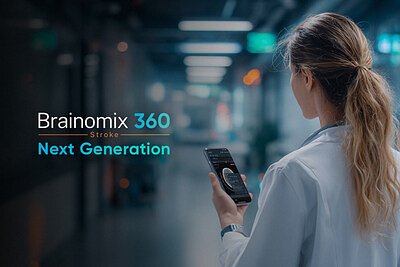
Brainomix Unveils AI Platform to Redefine Stroke Diagnosis
NEW ORLEANS, LA – February 02, 2026 – Brainomix, a pioneer in artificial intelligence for medical imaging, today announced the launch of its next-generation stroke assessment platform at the International Stroke Conference (ISC). The new Brainomix 360 Next Generation platform introduces an industry-first technology for analyzing stroke damage and has already been recognized with a prestigious international design award for its innovative, user-centric approach.
The launch represents a significant step forward in the fight against stroke, a leading cause of death and long-term disability worldwide. By integrating novel AI capabilities into a seamlessly designed interface, the Oxford-based company aims to empower clinicians to make faster, more confident treatment decisions, potentially improving outcomes for millions of patients.
A Deeper Look into Stroke Injury
At the heart of the new platform is a regulatory-cleared feature for measuring Net Water Uptake (NWU). This fully automated tool analyzes routine non-contrast CT (NCCT) scans—the most common type of brain scan used in emergency stroke assessment—to provide a quantitative measure of early ischemic edema, or swelling, in the brain. This is a critical biomarker that indicates the severity of tissue injury.
Until now, extracting such detailed information from simple NCCT scans has been challenging, often requiring more advanced imaging or expert interpretation. The new AI-driven NWU feature unlocks this data automatically, providing a percentage-based output that complements the platform's existing tools for assessing ischemic core volume and other stroke indicators. This allows physicians at any hospital, regardless of its size or resources, to gain a deeper understanding of a patient's condition.
"We are delighted to introduce this latest innovation in stroke AI imaging, building on our expertise in universally available CT imaging," said Dr George Harston, Chief Medical and Innovation Officer at Brainomix and Consultant Stroke Physician at Oxford University Hospitals. "Emerging evidence is increasingly highlighting NWU as a vital imaging biomarker to inform treatment decisions and improve prognostication in the most severe strokes. In a world where stroke patients are missing out on effective treatments due to clinical uncertainty, we hope this latest advance can improve the confidence of physicians, even when treating the most severe strokes."
Validated by Design and Data
The platform's impact is backed by both rigorous scientific evidence and recognition for its exceptional design. Brainomix 360 Next Generation was recently honored with the prestigious Red Dot Design Award, a globally recognized seal of quality. Selected from over 20,000 entries, the award places Brainomix in the company of past winners like Apple and Sony, highlighting the platform's excellence in usability, safety, and innovative design—critical factors for technology used in high-stakes medical environments.
Further bolstering its credibility, Brainomix is presenting five new research abstracts at ISC 2026. Underscoring the quality of this research, three of the abstracts have received the Paul Dudley White International Scholar Award from the American Heart Association, an honor reserved for the highest-ranked international studies at the conference. The research spans a range of critical topics, including the validation of AI models for detecting large vessel occlusions, analyzing collateral blood flow, and even a novel method for distinguishing true strokes from stroke mimics.
The Economic Case for Advanced AI
Beyond the clinical benefits for individual patients, Brainomix is also presenting compelling evidence for the platform's systemic and economic advantages. One of the award-winning studies being presented at ISC is a national cost-effectiveness analysis. The research demonstrates that widespread adoption of Brainomix 360 Stroke could significantly increase the rates of thrombolysis and thrombectomy—time-sensitive treatments that remove blood clots and restore blood flow to the brain.
This claim is supported by extensive real-world data. A 2025 study published in Lancet Digital Health found that implementation of the AI platform was associated with a 100% increase in mechanical thrombectomy procedures. Another large-scale study in England showed a 50% greater increase in these life-saving treatments across five stroke networks, with researchers estimating that national adoption could save the UK economy approximately £30 million in a single year. By enabling more patients to receive effective treatment faster, the technology not only improves long-term health quality but also delivers a substantial net monetary benefit to healthcare systems by reducing the long-term costs of disability care.
Empowering Clinicians, Improving Outcomes
Ultimately, the goal of this advanced AI is to translate complex data into clear, actionable insights that empower clinicians and save lives. In the chaotic environment of an emergency room, time is brain. Every minute a stroke goes untreated, millions of neurons die, increasing the risk of permanent disability or death.
The Brainomix 360 platform is designed to streamline the diagnostic workflow, providing physicians with a comprehensive assessment of the brain scan within minutes. This speed and clarity are crucial for making confident decisions about treatment and potential transfer to a specialized stroke center.
The impact is already being seen in hospitals where earlier versions of the technology are in use. One study reported that a primary stroke center using the platform tripled the number of patients who achieved functional independence three months after their stroke, from 16% to 48%. The same center also saw a 61-minute reduction in "door-in-door-out" times for patients being transferred for advanced procedures. By reducing clinical uncertainty and democratizing access to expert-level diagnostics, this AI-powered technology is setting a new standard of care and offering a second chance at life for stroke patients around the world.