
- Gaussian Splatting: Uses millions of tiny, translucent particles to create photorealistic 3D spaces, preserving depth and stability during user movement. - Industry Adoption: Major tech companies like Meta, Varjo, and Google are integrating Gaussian Splatting into their platforms. - Performance Challenge: High computational overhead and VRAM usage for real-time rendering, requiring optimization techniques like foveated rendering.
Experts agree that Gaussian Splatting represents a significant leap forward in VR immersion by solving the problem of spatial instability, making virtual environments feel more like inhabited places than watched content.
Braindance's New VR Redefines Immersion with Gaussian Splatting
LONDON, UK – December 29, 2025 – As the virtual reality industry grapples with the fundamental question of what makes a digital world feel truly real, London-based startup Braindance has launched a live VR experience that offers a compelling new answer. The company is leveraging a groundbreaking rendering technique known as Volumetric Gaussian Splatting, moving beyond the limitations of traditional graphics to create virtual environments that maintain their stability and depth, even as users move freely within them.
The launch arrives at a pivotal moment. For years, the VR conversation has been dominated by headset resolutions and processing power. Yet, a growing consensus within the industry suggests that the next leap forward won't come from sharper screens, but from solving a more subtle problem: the persistent artificiality that shatters the illusion of presence the moment a user leans, walks, or interacts with the world. Braindance's approach directly targets this challenge, promising to make virtual spaces feel less like "content being watched and more like places being occupied."
A New Reality Engine: How Gaussian Splatting Works
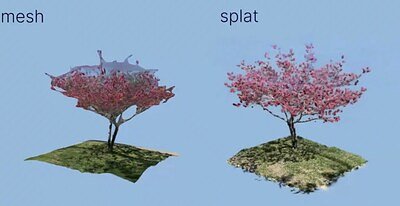
At the heart of this new experience is a departure from the decades-old standard of building worlds from polygons. Traditional VR environments are constructed from millions of flat, interconnected triangles, or meshes. While effective for creating detailed static scenes, this method can cause visual artifacts, distortions, or a sense of flatness when viewed from angles not specifically optimized by developers, breaking immersion for users with full six degrees of freedom (6DoF) movement.
Gaussian Splatting, in contrast, represents a scene as a cloud of millions of tiny, translucent, and colored particles, or "splats." Each splat holds volumetric information about its position, shape, color, and opacity. When rendered together, they blend seamlessly to reconstruct a 3D space with startling photorealism. The technique, which saw a resurgence in academic circles in 2023, allows for the creation of "radiance fields" from a handful of 2D images, essentially learning what a scene looks like from all angles and recreating it as a continuous volume.
The result in a live VR environment is profound. Instead of rigid surfaces, the world behaves as a coherent whole. Lighting, shadows, and delicate details like fog or soft fabrics retain their properties as a user moves around, leans in to inspect an object, or peers around a corner. This preservation of parallax and depth is crucial for tricking the brain into accepting the virtual space as real.
Solving VR's Achilles' Heel: The Problem of Presence
Braindance’s project taps into the VR industry's quiet reassessment of what "immersion" truly means. The ultimate goal of VR is to achieve a state of "presence"—the cognitive and psychological sensation of actually being in a different place. Experts argue that this state is fragile and is often broken by subtle inconsistencies that remind the user they are in a simulation.
Free movement has long been VR's Achilles' heel in this regard. When a user's physical motion doesn't perfectly match the visual feedback, or when the world visibly distorts, the sense of presence shatters. By ensuring that the virtual environment remains spatially stable from any viewpoint, Gaussian Splatting directly reinforces this feeling of being grounded in a persistent space. The experience adapts to the user's motion in real time, rather than forcing them along pre-rendered paths or into fixed viewing positions.
This shift in focus from static visual fidelity to dynamic, experiential consistency is a sign of the industry's maturation. What matters less is how a world looks at first glance, and more whether it holds together as a believable space that can be explored and inhabited.
More Than Meets the Eye: The Psychology of Volumetric Worlds
The impact of this volumetric approach extends beyond environmental realism to the inhabitants of these virtual worlds. Research into social presence suggests that when virtual characters or agents achieve a high degree of spatial and behavioral consistency, the human brain begins to process them as social entities rather than mere graphical objects.
Subtle cues, such as how light reflects off a surface, how a character maintains its volume and form when viewed from different angles, and how its movements align with the space it occupies, play a significant role in this perception. Traditional mesh-based avatars can sometimes appear flat or lifeless, with unnatural joints or lighting. Volumetric rendering, as employed by Braindance, gives these virtual characters a sense of weight, continuity, and physical presence. Users may find themselves responding not to the level of graphical detail, but to the instinctual signals the brain associates with real-world interaction, transforming the experience from one of passive observation to active participation.
An Industry-Wide Transformation
Braindance is not alone in recognizing the transformative potential of this technology. Gaussian Splatting is rapidly being adopted by some of the biggest names in the tech industry, signaling a sector-wide pivot. Meta, for instance, has demonstrated its Hyperscape app, allowing users to explore photorealistic 3D spaces, and is experimenting with the technology for more realistic avatars in its Horizon Worlds platform.
High-end headset manufacturer Varjo has developed its own tool, "Teleport," to create photorealistic VR worlds for enterprise clients, while Google is using the technique to add a new dimension of realism to its 3D maps. Even the core engines of interactive content are evolving; both Unity and Unreal Engine now offer support for Gaussian Splatting, empowering a new generation of developers to experiment with volumetric content. This widespread adoption has led some analysts to call this the "JPEG moment" for spatial computing, making the creation of photorealistic 3D content more accessible than ever before.
The Road Ahead: Challenges and Future Applications
Despite the excitement, the technology is still in its early stages and faces hurdles. The computational overhead and VRAM usage for rendering millions of splats in real-time can be substantial, especially for the high frame rates required by VR to prevent motion sickness. Researchers are actively exploring solutions like foveated rendering, which concentrates detail in the user's direct line of sight, to optimize performance. Handling dynamic scenes with changing lighting or interactive objects that can be moved or altered by the user also remains a significant technical challenge.
Beyond entertainment, the implications of mature volumetric VR are vast. The ability to create highly realistic "digital twins" of real-world locations could revolutionize training and education, allowing surgeons to practice in a virtual operating room or engineers to inspect factory equipment remotely. The real estate industry is already seeing early applications, with services that allow potential buyers to walk freely through a photorealistic capture of a property from anywhere in the world. As the technology matures and becomes more efficient, it could fundamentally change fields ranging from remote collaboration and virtual tourism to digital therapeutics and historical preservation.