
- 71 MWp: Capacity of BPCL's newly inaugurated solar plant in Prayagraj.
- 103.61 million units: Annual green electricity generation, offsetting 75,150 metric tonnes of CO2 emissions yearly.
- ₹1 lakh crore: BPCL's committed investment to achieve net-zero emissions by 2040.
Experts view BPCL's 71 MWp solar plant as a strategic milestone in India's energy transition, aligning with national climate goals and demonstrating the viability of large-scale renewable projects in Uttar Pradesh.
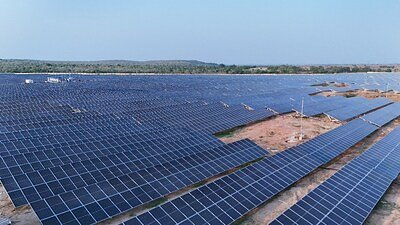
BPCL Fuels Green Shift with 71 MWp Prayagraj Solar Plant
PRAYAGRAJ, India – February 18, 2026 – Bharat Petroleum Corporation Limited (BPCL), one of India's leading energy companies, today marked a major advance in its sustainability efforts with the inauguration of a 71 megawatt-peak (MWp) solar power plant in Prayagraj, Uttar Pradesh. The project, a cornerstone of the company's strategy to diversify its energy portfolio, was virtually inaugurated by Union Minister Shri Hardeep Singh Puri during the prestigious India Energy Week.
Spanning 210 acres, the sprawling facility is projected to generate approximately 103.61 million units of green electricity annually. This output is expected to offset an estimated 75,150 metric tonnes of carbon emissions each year—an environmental benefit equivalent to the carbon sequestration of nearly 12.5 million trees. The plant represents a significant investment in clean energy infrastructure and a tangible step in the Maharatna PSU's journey towards a low-carbon future.
A Bold Step in a Net-Zero Marathon
The Prayagraj plant is more than just a new asset; it's a powerful symbol of BPCL's strategic pivot. The Fortune Global 500 company has set an ambitious target to achieve net-zero emissions for its Scope 1 and Scope 2 operations by 2040, a goal that necessitates a fundamental shift away from its traditional fossil fuel-centric business model. This solar project is a critical building block in that long-term vision.
BPCL has committed to a phased capital investment of approximately ₹1 lakh crore to realize its net-zero ambitions. The company's renewable energy roadmap is aggressive, with plans to scale its green portfolio from a modest base to 1 GW by 2025 and an impressive 10 GW by 2040. This strategy is not limited to solar power. The corporation is actively developing a diversified clean energy portfolio that includes wind energy projects in Madhya Pradesh and Maharashtra, investments in green hydrogen production at its Bina refinery, and the establishment of multiple second-generation (2G) ethanol bio-refineries. These initiatives, coupled with the expansion of its electric vehicle charging network to over 6,500 fuel stations, illustrate a comprehensive approach to navigating the global energy transition.
Powering Refineries, Cleaning Operations
The immediate impact of the Prayagraj solar plant will be felt at the heart of BPCL's core operations. The green electricity generated will be transmitted via a 132 kV line and supplied to the company's major refineries in Mumbai, Bina, and Kochi. This captive power model is designed to reduce the refineries' reliance on the conventional, often coal-dominated, power grid, thereby lowering their operational carbon footprint and enhancing energy security.
The project's scale is substantial, involving the installation of 1.29 lakh solar modules supported by over 1,300 metric tonnes of steel and nearly 300 kilometers of cabling. With an estimated capital expenditure of around ₹300-308 crore, the investment underscores the economic rationale driving BPCL's green transition. By generating its own clean power, the company aims to achieve significant long-term cost savings on energy expenditure while simultaneously meeting its environmental, social, and governance (ESG) commitments. This dual benefit of economic prudence and environmental stewardship is central to the business case for such large-scale industrial solar projects.
The Competitive Green Race Among Oil Giants
BPCL's push into renewables is not happening in a vacuum. It is part of a broader, competitive trend among India's state-owned Oil Marketing Companies (OMCs), which are racing to reinvent themselves for a post-fossil fuel era. The nation's largest OMCs are now major players in its renewable energy revolution.
Indian Oil Corporation Ltd (IOCL) has set a goal to achieve net-zero operational emissions by 2046 and is targeting a massive 31 GW of renewable energy capacity by 2030. Similarly, Hindustan Petroleum Corporation Ltd (HPCL) is aiming for net-zero by 2040 and plans to build a 10 GW renewable portfolio by 2030. In this context, BPCL's 10 GW target by 2040 positions it as a determined competitor in this high-stakes green race. The collective investments by these public sector giants are critical for achieving India's national climate goals, including its ambitious target of 500 GW of renewable energy capacity by 2030. This strategic shift signals that the companies long responsible for powering India with oil are now poised to power its future with sunshine and wind.
Energizing Uttar Pradesh's Solar Ambitions
Beyond its corporate significance, the commissioning of the 71 MWp plant is a welcome boost for Uttar Pradesh's own renewable energy aspirations. India's most populous state is on a mission to expand its clean energy capacity, targeting 22,000 MW from renewable sources. While the state has immense solar potential, progress has been hampered by challenges such as land acquisition and infrastructure bottlenecks.
The successful integration of BPCL's plant into the state's 132 kV transmission grid demonstrates the feasibility of large-scale solar projects in the region. It not only contributes valuable green electrons to the grid but also serves as a catalyst for further investment. As Uttar Pradesh works to develop solar cities and expand its renewable footprint, projects of this magnitude provide a powerful anchor, contributing to the state's energy security, creating economic opportunities, and solidifying its position as an emerging hub for solar power in India.