
- Project Size: 44,000-square-meter logistics hub
- Timeline: 13-month construction schedule
- AI Tracking: AI monitors up to 150,000 individual components
Experts view this project as a pivotal test case for AI-driven construction, with the potential to significantly improve efficiency, reduce delays, and set a new standard for digital project management in the industry.
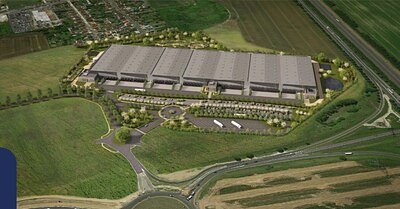
Bouygues Taps AI to Build French Logistics Hub on Ambitious Timeline
PARIS, France – February 26, 2026 – In a significant move highlighting the growing convergence of artificial intelligence and heavy industry, Bouygues Bâtiment Industrie has deployed an advanced AI platform to oversee the construction of a massive logistics hub north of Paris. The Bouygues Construction subsidiary is partnering with technology firm Buildots to ensure its 44,000-square-meter P3 Persan project in Val-d'Oise meets an aggressive 13-month construction schedule, a timeline that leaves little room for error or delay.
This collaboration marks a pivotal moment for the European construction sector, where a global industry leader is entrusting a core component of its project management—progress tracking and risk analysis—to an AI-powered system. The project, a Class A logistics platform set to be completed by November 2026, represents a critical piece of infrastructure for the region and a high-stakes test case for the future of digital construction.
The AI Hard Hat: How Technology is Building the P3 Persan Hub
At the heart of the P3 Persan project's digital strategy is Buildots' unique application of computer vision and artificial intelligence. Rather than relying solely on traditional manual inspections and subjective progress reports, Bouygues Bâtiment Industrie teams are now equipped with 360° cameras mounted on their hard hats. As site managers conduct their routine walks, these cameras passively capture a complete visual record of the interior construction areas.
This raw visual data is then uploaded to Buildots' cloud-based platform, where the AI gets to work. The system processes the imagery and meticulously compares the real-world status of the site against the project's digital blueprint—the Building Information Modeling (BIM) models and the detailed construction schedule. The AI can identify and track the status of up to 150,000 individual components, from structural elements to electrical conduits and plumbing fixtures, determining if they have been installed correctly and in the proper sequence.
This creates a continuously updated “digital twin” of the facility, a virtual replica that mirrors the physical site's progress with remarkable accuracy. This data-rich model provides a single source of truth for all stakeholders, enabling what the companies describe as enhanced control, early detection of execution deviations, and streamlined collaboration. If a section of ductwork is installed in the wrong location or a specific task falls behind schedule, the system flags it almost immediately, allowing project managers to address the issue proactively before it cascades into a significant delay or costly rework.
"With Buildots, we are choosing a truly operational artificial intelligence solution, integrated to support our on-site teams," said William Nippert, Chief Executive Officer of Bouygues Bâtiment Industrie. "This technology enables us to secure ambitious timelines, anticipate risks, and ensure reliable execution through objective and shared data."
A Strategic Leap into Digital Construction
The decision to integrate Buildots' AI is far from an isolated experiment for Bouygues. It represents a calculated step in the parent company's broader, multi-faceted digital transformation strategy. Bouygues Construction has been vocal about its commitment to modernizing the industry, launching initiatives like its "Construction Venture" fund to invest in strategic startups and co-founding the "Impact AI" community to explore the technology's potential.
The company's vision centers on the industrialization of construction—digitizing activities and processes to improve efficiency, sustainability, and quality. This partnership fits perfectly within that framework, moving beyond theoretical applications of AI to embed it directly into daily on-site operations. In a competitive landscape of construction technology that includes firms like OpenSpace and Reconstruct, the choice of Buildots signals a specific focus on granular, automated progress tracking as a key lever for performance.
The construction industry has long been plagued by productivity challenges. Major studies, including those from McKinsey & Company, have shown that large projects frequently run 20% longer than scheduled and up to 80% over budget. The opacity of on-site progress and a reliance on manual, often lagging, reports are significant contributors to this problem. AI-driven platforms aim to shatter this paradigm by providing unprecedented transparency.
The Bigger Picture: AI's Impact on Efficiency and Risk
The potential impact of technologies like the one being used in Persan extends far beyond a single project. Industry-wide data suggests that AI can deliver substantial improvements in an industry ripe for disruption. Reports from various analysts indicate that AI can boost construction productivity by up to 50% and reduce project costs by as much as 20%. Accenture has even estimated that AI adoption could increase profits for construction firms by over 70% by 2035.
These gains are realized through several mechanisms. Predictive analytics can forecast potential bottlenecks in the supply chain or resource allocation. Automated progress tracking, as seen with Buildots, can slash rework by up to 60% by catching errors early. Furthermore, the objective data provided by AI systems removes ambiguity and subjectivity from progress meetings, fostering better collaboration between contractors, clients, and subcontractors. By automating the tedious task of data collection and analysis, project managers are freed up to focus on strategic decision-making and problem-solving.
Beyond efficiency, AI is also enhancing site safety. The same visual data captured for progress tracking can be analyzed to identify potential hazards, non-compliance with safety protocols, or unsafe working conditions, allowing for swift intervention.
Building France's Future, One Data Point at a Time
The P3 Persan project is more than just a building; it's a component of France's wider economic strategy to support reindustrialization and bolster its logistics and supply chain capabilities. The 12-hectare site will offer flexible spaces that can accommodate various tenants, including those requiring specialized facilities for regulated goods. The efficient and timely delivery of such critical infrastructure is a national priority.
For Buildots, this collaboration is a major milestone, solidifying its position in the French market by partnering with one of the world's most respected construction firms. "We are delighted to collaborate with a global player such as Bouygues Construction on a project of this scale," commented Daphna Beer-Gabel, Chief Customer Officer at Buildots. "Buildots provides the precision, transparency, and responsiveness required to ensure operational performance and meet an ambitious schedule."
As construction progresses in Val-d'Oise, the industry will be watching closely. The partnership serves as a powerful demonstration of how AI is moving from a futuristic concept to a practical, indispensable tool for building the world around us. The success of this high-profile deployment could accelerate AI adoption across the European construction landscape, setting a new standard for how complex projects are managed and delivered.