
- 4,000 flight hours and 1,400 flights completed by the 777X test fleet as of mid-2025.
- 235-foot wingspan with folding wingtips, a distinctive feature of the 777X.
- 23.5% market share held by CAE in the civil aviation training sector.
Experts view the FAA and EASA approval of Boeing 777-9 simulators as a critical step toward commercial readiness, signaling progress despite past delays and regulatory scrutiny.
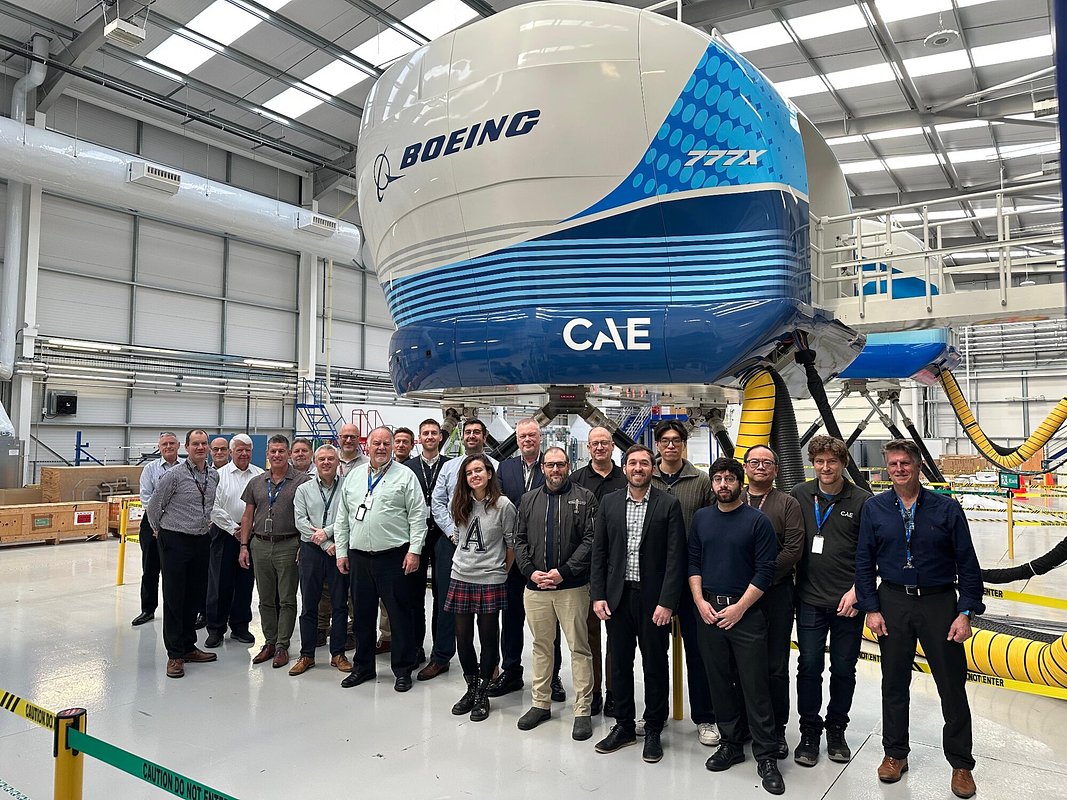
Boeing 777-9 Clears Major Hurdle for Pilot Training and Service Entry
GATWICK, UK – February 19, 2026 – Boeing’s much-anticipated 777-9 widebody jet has achieved a critical milestone on its path to commercial service. The U.S. Federal Aviation Administration (FAA) and the European Union Aviation Safety Agency (EASA) have jointly granted initial qualification for the aircraft's advanced flight training simulators, a move that signals growing momentum for the long-delayed program.
The approval, announced today, certifies that the state-of-the-art training devices, located at the Boeing Training Campus in Gatwick, meet the stringent standards for realism required for pilot instruction. Developed in a multi-year collaboration with simulation leader CAE, these devices are now ready for the next phase of regulatory validation, which will clear the way for airlines to begin training their flight crews on the world's largest and most efficient twin-engine jet.
"Securing these approvals is an important step as we prepare for the start of flight training," said Capt. Gary Mandy, Boeing's 777X chief technical pilot. "Pilots will benefit from an immersive training experience that will help ensure our customers' operational readiness for the 777-9."
Building Momentum Amidst Challenges
This qualification is a significant piece of positive news for the 777X program, which has navigated a series of developmental and regulatory headwinds. Originally slated for entry into service in 2020, the program's timeline has been repeatedly adjusted. Boeing is now targeting early 2027 for the first delivery of the 777-9 to its launch customer, German carrier Lufthansa.
Despite the delays, the flight test program has been making steady progress. All four 777X test aircraft are concurrently active in a rigorous campaign that had amassed nearly 4,000 flight hours over 1,400 flights as of mid-2025. This progress came after the test fleet was briefly grounded in late 2024 to address an issue with an engine component, for which a fix has since been implemented.
The certification pathway for new aircraft has become notably more meticulous in recent years. The FAA, in particular, has adopted a more cautious and hands-on approach to oversight following the 737 MAX crisis. This heightened scrutiny has extended the certification timeline for the 777X, but milestones like the simulator qualification demonstrate tangible progress toward final type certification and delivery.
The Path to Pilot Readiness
The 'initial qualification' is more than a technicality; it is the starting gun for the final phase of training preparation. With this approval, regulatory bodies can now use the simulators to formally validate and approve the specific training curricula that airlines will use. This step ensures that the courseware comprehensively covers all aspects of the 777-9's operation, from its advanced systems to its unique handling characteristics.
Once the courseware is approved, airlines awaiting their 777-9 deliveries, including major customers like Lufthansa and Emirates, can commence the complex and vital process of training their pilots. This lead time is essential for ensuring a smooth and safe entry into service for the new aircraft. The simulators in Gatwick, which include a full-flight simulator and a flight training device, will be central to this effort.
"The qualification of these training devices underscores our commitment to delivering high-quality training solutions that meet the needs of global airline customers and regulators," said Chris Broom, vice president of Commercial Training Solutions for Boeing Global Services.
Inside the Next-Generation Cockpit
The Boeing 777-9 flight deck is an evolution of the familiar 777 and 787 Dreamliner cockpits, designed to enhance pilot comfort and operational efficiency while incorporating cutting-edge technology. The high-fidelity simulators are engineered to replicate this environment with exacting detail.
Key features of the 777-9 cockpit include:
- Large-Format Touchscreen Displays: These provide pilots with a more intuitive and interactive interface for managing flight systems and information.
- Optional Dual Head-Up Displays (HUDs): Similar to the system on the 787, dual HUDs project critical flight data into the pilots' forward line of sight, enhancing situational awareness during all phases of flight, especially takeoff and landing.
- Integrated Electronic Flight Bag (EFB): The cockpit fully integrates portable tablet-based EFBs, replacing paper charts and manuals with a dynamic digital solution for flight planning, performance calculations, and documentation.
Perhaps the most distinctive feature of the 777X is its massive 235-foot wingspan, which incorporates revolutionary folding wingtips. These 11-foot sections fold upward on the ground, allowing the aircraft to fit at standard airport gates designed for the classic 777. The simulators will provide crucial training on the operation of this system, which is controlled by a dedicated switch in the overhead panel. The system's design includes robust safety interlocks to prevent takeoff if the wingtips are not fully extended and locked, a procedure that will become a standard part of pilots' pre-flight checklists.
A Partnership Forged in High-Fidelity Simulation
The development of these sophisticated training devices was a deep, multi-year collaboration between Boeing and CAE, a Canadian firm recognized as a global leader in the flight simulation market. CAE holds a substantial market share of around 23.5% in the civil aviation training sector and has a long-standing partnership with Boeing across both commercial and defense programs.
"This qualification is the result of a multi-year effort between CAE and Boeing's leading experts," noted Alexandre Prevost, President of Civil Aviation at CAE. "We're excited to continue this strong collaboration as we deliver full-flight simulators to our mutual customers around the world."
The partnership also extends to training methodology. In 2023, CAE became the first Boeing Authorized Training Provider to offer the manufacturer's Competency-Based Training and Assessment (CBTA) curriculum. This modern approach moves beyond simply logging flight hours to focus on developing and verifying the essential skills and behaviors required for safe and efficient aircraft operation. The new 777-9 simulators are a cornerstone of this advanced training philosophy, providing a realistic, risk-free environment for pilots to master the next generation of widebody aircraft long before it carries its first passengers.
Topics & Related
Corporate Finance
Hardware & Semiconductors
Related Company Pulse