
- First Bird to Win: Boo is the first bird to be named Pet Partners Pet of the Year.
- Age of Boo: Boo is a 41-year-old cockatoo who regained his sight at age 40 after a decade of blindness.
- Therapy Impact: Boo and his owner Amy Hurst provide therapy to neurodivergent children and senior citizens, challenging traditional therapy animal roles.
Experts in animal-assisted therapy recognize Boo's achievement as a groundbreaking milestone that expands the understanding of therapy animals beyond dogs and cats, demonstrating the unique benefits birds can offer in emotional and cognitive support.
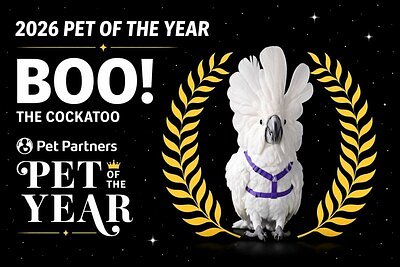
Blind Cockatoo Makes History as Pet Partners Pet of the Year
SMITHFIELD, VA – April 16, 2026 – In an unprecedented recognition, Boo, a 41-year-old cockatoo with a past shrouded in darkness, has been named the 2026 Pet Partners Pet of the Year. The announcement marks a historic moment for the nation's leading animal-assisted intervention nonprofit, as Boo is the first bird to ever receive the esteemed national title. But behind the award lies a profound story of parallel healing, resilience, and the unbreakable bond between an animal and a human who both found a second chance at life.
Boo's journey is one of remarkable survival. For more than half his life, he was a victim of abuse, a life that ended only through the intervention of a police raid. Though rescued, his trials were far from over. A decade ago, Boo lost his vision, plunging him into a world of complete darkness. His story could have ended there, in silence and isolation.
At the same time, his future owner, Amy Hurst of Smithfield, Virginia, was navigating her own profound darkness. While fighting cancer and enduring the grueling effects of chemotherapy, she discovered an unexpected source of solace and strength in her own pet birds. They provided not just companionship, but a form of mental, physical, and occupational therapy that became instrumental in her recovery. This powerful experience ignited a new purpose within her.
A Confluence of Healing
Inspired by the healing power of the human-animal bond, Hurst returned to school during her cancer treatment. She built upon her Bachelor of Science from Purdue University, earning specialized credentials as an Animal-Assisted Intervention Specialist and an Animal-Assisted Therapist through the Association of Animal-Assisted Intervention Professionals (AAAIP) and Husson University, respectively. It was just as she was completing these certifications that her path converged with Boo's in what she describes as "divine timing."
Determined to give the blind, aging cockatoo a chance at a better life, Hurst took him to the veterinary specialists at NC State Exotics. There, Boo underwent a groundbreaking surgical procedure that, after ten long years, restored his sight. At the age of 40, Boo could see the world again. It was a rebirth that set the stage for an entirely new chapter for them both.
Soon after his recovery, Boo was evaluated and registered as a therapy bird with Pet Partners. Together, Amy and Boo began a new mission: ministering to neurodivergent children and senior citizens. In these sessions, Boo offers a unique form of comfort and connection. His gentle presence and quiet companionship create a bridge for individuals who often struggle with conventional social interaction, providing a calm and non-judgmental focus for emotional support.
Redefining the Therapy Animal
Boo's recognition as Pet of the Year is more than just a feel-good story; it is a significant milestone that challenges long-held assumptions about what a therapy animal can be. Pet Partners, founded in 1977, is known for its high standards and registers nine different species for therapeutic work, including dogs, cats, horses, and birds. While birds have been part of the program, Boo is the first to be elevated to the national spotlight as Pet of the Year, an award secured through a fundraising competition that supports the organization's mission.
This historic win powerfully demonstrates the therapeutic potential of animals beyond the traditional canine or feline companion. It highlights the unique benefits birds can offer, from stimulating cognitive function in seniors to providing sensory engagement for children on the autism spectrum. Boo's success opens the door for greater acceptance and utilization of diverse species in animal-assisted interventions, proving that healing can come in many forms, including a feathered one.
A New Model for Lasting Companionship
Driven by her journey with Boo, Hurst founded the Prism Bird Program, an innovative initiative run through her organization, Birds in the Dog House, LLC. The program represents a paradigm shift from conventional animal-assisted therapy models, which often involve short, scheduled visits. Instead, the Prism Bird Program focuses on creating lasting, in-home bonds by placing companion birds with special needs individuals and their families.
This model is designed to provide steady, daily companionship and ongoing emotional support, fostering deep relationships that become an integral part of the individual's life. By integrating a companion animal directly into the home environment, the program aims to deliver sustained therapeutic benefits that can help reduce anxiety, combat loneliness, and encourage responsibility and routine. This forward-thinking approach has garnered national and international attention, showcasing a new frontier in the application of the human-animal bond.
The story of Amy and Boo has resonated globally, a testament to the universal themes of hope and renewal. Their journey from shared adversity to mutual healing and purpose has expanded the very definition of therapy. As Hurst so aptly puts it, "Even after years in darkness, Boo learned to see again. Now he helps others find light in their own lives."
Boo’s journey from a cage of abuse and blindness to a life of purpose and acclaim inspires audiences worldwide and serves as a powerful reminder that it is never too late for a second chance.